



















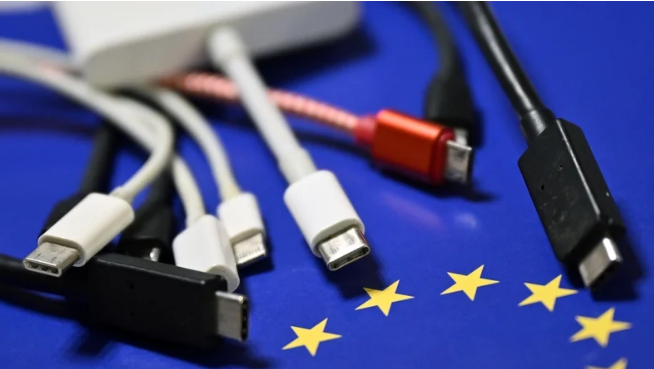
New European Union rules requiring all laptops sold across the bloc to support USB-C charging have come into effect, marking the latest stage in a sweeping effort to standardise electronic chargers and reduce electronic waste.
The regulation extends the EU’s Common Charger Directive, which already applied to mobile phones, tablets, digital cameras, headphones, video game consoles and portable speakers since December 2024. Laptop manufacturers were given additional time to adapt their designs before the rules took effect, allowing for a gradual transition to the unified charging standard.
Under the directive, all new portable electronic devices sold in the European Union must be compatible with USB-C, a move intended to eliminate the need for multiple, device-specific chargers. The European Parliament approved the legislation in 2022, with the European Commission estimating that consumers could collectively save around €250 million as a result of reduced charger purchases.
The rules also require that charging speeds remain consistent when using compatible chargers, addressing previous concerns that standardisation might lead to performance differences between devices and accessories.
EU officials say the measure is designed not only to simplify everyday use for consumers but also to reduce the environmental impact of electronic waste. According to the European Commission, discarded and unused chargers contribute roughly 11,000 tonnes of electronic waste annually within the bloc.
By cutting down on redundant chargers, policymakers expect a significant reduction in production demand for low-use accessories and a corresponding decrease in waste generated when devices are replaced or upgraded.
The shift has already influenced major technology companies. Apple, which previously used its proprietary Lightning connector on iPhones, transitioned to USB-C on its newer models in 2023 in anticipation of the legislation coming into force.
Supporters of the directive argue that the change will make life easier for consumers, who will be able to use a single charger across multiple devices regardless of brand. It also reduces the need to purchase new chargers with each device upgrade, which has been a common source of frustration for users.
Critics, however, have previously raised concerns that mandatory standardisation could limit innovation or force manufacturers to adjust product designs at additional cost. Despite this, the EU has maintained that the long-term benefits for consumers and the environment outweigh the short-term adjustments required by industry.
With laptops now included in the regulation, the EU has completed a major phase of its push towards universal charging standards, further aligning its electronics market under a single, simplified system.