


















Connect with us

Hi, what are you looking for?

Politics

Ethics Push in US Congress Intensifies as Florida Republican Faces Expulsion Efforts

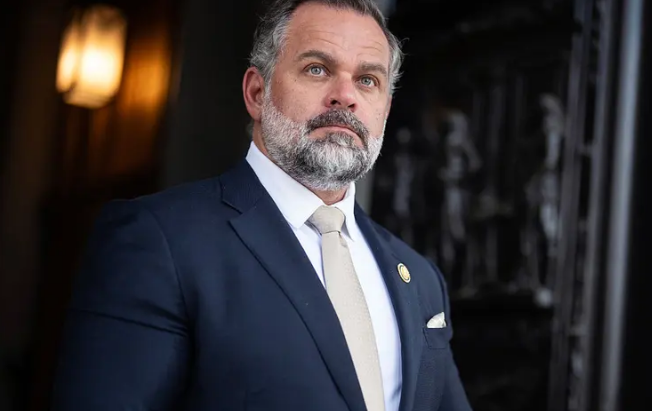
The United States House of Representatives is facing a renewed wave of internal scrutiny as lawmakers move to discipline members accused of misconduct, with Florida Republican Representative Cory Mills now at the center of an escalating expulsion push.

Representative Nancy Mace, a fellow Republican from South Carolina, introduced a resolution on Monday seeking Mills’ removal from Congress. The move follows ongoing investigations by the House Ethics Committee into allegations involving financial irregularities and sexual misconduct, claims Mills has consistently denied.

Mace said in a statement that Congress has tolerated misconduct for too long and argued that lawmakers who oppose expulsion would be “protecting wrongdoing.” Her remarks signal growing tension within the Republican Party, where divisions have emerged over how aggressively to handle ethics investigations involving sitting members.

The push against Mills comes amid broader upheaval on Capitol Hill. Earlier this month, former Representatives Eric Swalwell and Tony Gonzales resigned ahead of potential expulsion votes linked to separate misconduct allegations. Another Florida Democrat, Representative Sheila Cherfilus-McCormick, is also facing a possible expulsion vote this week following ethics-related findings.

Mills, who has served Florida’s 7th Congressional District since 2023 and sits on the Armed Services and Foreign Affairs Committees, has rejected all allegations against him. His office has described the claims as misleading and politically motivated.

The scrutiny surrounding Mills includes several separate incidents. In 2025, Washington police responded to a report of an altercation involving Mills and a woman who later withdrew her complaint. No charges were filed. Separately, a Florida court issued a restraining order last year after an ex-girlfriend accused him of harassment, including allegations of threats tied to private material. Mills has denied those claims.

A 2024 review by the Office of Congressional Conduct also raised questions about potential conflicts of interest involving defense-related contracts linked to companies associated with Mills, as well as concerns about campaign finance disclosures. Some allegations were later dismissed by the Federal Election Commission.

The political stakes are significant. With Republicans holding a narrow majority in the House, any expulsion could further reduce their margin of control. While Mace and several lawmakers have called for swift action, others, including House leadership, have indicated they are awaiting the completion of the Ethics Committee’s investigation before moving forward.

Representative Kat Cammack, also a Florida Republican, has publicly supported accountability measures regardless of party affiliation, while former President Donald Trump has continued to back Mills, endorsing him as an “America First” candidate.

The House Ethics Committee has reiterated its commitment to addressing misconduct allegations and encouraged individuals with relevant information to come forward as its inquiry continues.


Business

Fraudsters are increasingly using AI-generated images and videos to trick people into handing over sensitive personal and financial information, according to FraudSMART, the financial crime awareness initiative operated by the Banking and Payments Federation Ireland (BPFI). The organisation has reported a rise in online adverts promoting fake, State-backed investment schemes. These scams often use fabricated images of well-known politicians and business figures to make the offers appear legitimate and encourage users to click on registration links. Niamh Davenport, head of financial crime at BPFI, said scammers are deliberately exploiting recent media coverage of a planned State-backed savings and investment scheme to give their frauds a sense of credibility. “They often claim the scheme is open to everyone, but that places are limited and being ‘snapped up’ fast, in order to pressure people to act quickly,” she said. “They typically promise guaranteed returns or a guaranteed monthly income.” FraudSMART said that while anyone can be targeted, people in their early 50s are particularly vulnerable to investment scams. This age group is often focused on retirement planning, making them more receptive to financial offers that appear secure or high-yield. According to the organisation, most scams follow a similar pattern. Victims are first directed to click a registration link and complete a short online form providing their contact details. They are then contacted by someone posing as a financial adviser, who urges them to make an immediate “security deposit” to secure participation in the scheme. Once a payment is made, the money is quickly moved through multiple accounts, often overseas, making recovery extremely difficult. Davenport warned that scammers are becoming more sophisticated in their use of technology, particularly AI tools that allow them to create realistic but entirely fake promotional content. These materials are designed to mimic legitimate financial advertisements and build trust with potential victims. Recent figures from An Garda Síochána show investment fraud rose by 20% last year, with losses exceeding €20 million. The scale of individual scams varies widely, ranging from smaller crypto-related frauds involving a few hundred euro to large-scale investment schemes where victims lose tens of thousands. FraudSMART is urging the public to remain cautious when encountering online investment advertisements, especially those promising guaranteed returns or requiring urgent action. It also advises consumers to avoid sharing personal information with unverified sources and to be wary of pressure tactics designed to rush financial decisions. Authorities continue to warn that fraudsters are adapting quickly, using advanced digital tools to target victims across multiple platforms.

Trending

Business

Fraudsters are increasingly using AI-generated images and videos to trick people into handing over sensitive personal and financial information, according to FraudSMART, the financial crime awareness initiative operated by the Banking and Payments Federation Ireland (BPFI). The organisation has reported a rise in online adverts promoting fake, State-backed investment schemes. These scams often use fabricated images of well-known politicians and business figures to make the offers appear legitimate and encourage users to click on registration links. Niamh Davenport, head of financial crime at BPFI, said scammers are deliberately exploiting recent media coverage of a planned State-backed savings and investment scheme to give their frauds a sense of credibility. “They often claim the scheme is open to everyone, but that places are limited and being ‘snapped up’ fast, in order to pressure people to act quickly,” she said. “They typically promise guaranteed returns or a guaranteed monthly income.” FraudSMART said that while anyone can be targeted, people in their early 50s are particularly vulnerable to investment scams. This age group is often focused on retirement planning, making them more receptive to financial offers that appear secure or high-yield. According to the organisation, most scams follow a similar pattern. Victims are first directed to click a registration link and complete a short online form providing their contact details. They are then contacted by someone posing as a financial adviser, who urges them to make an immediate “security deposit” to secure participation in the scheme. Once a payment is made, the money is quickly moved through multiple accounts, often overseas, making recovery extremely difficult. Davenport warned that scammers are becoming more sophisticated in their use of technology, particularly AI tools that allow them to create realistic but entirely fake promotional content. These materials are designed to mimic legitimate financial advertisements and build trust with potential victims. Recent figures from An Garda Síochána show investment fraud rose by 20% last year, with losses exceeding €20 million. The scale of individual scams varies widely, ranging from smaller crypto-related frauds involving a few hundred euro to large-scale investment schemes where victims lose tens of thousands. FraudSMART is urging the public to remain cautious when encountering online investment advertisements, especially those promising guaranteed returns or requiring urgent action. It also advises consumers to avoid sharing personal information with unverified sources and to be wary of pressure tactics designed to rush financial decisions. Authorities continue to warn that fraudsters are adapting quickly, using advanced digital tools to target victims across multiple platforms.

You May Also Like

Politics

WASHINGTON — The Pentagon announced on Sunday that the United States will send a Terminal High Altitude Area Defense (THAAD) battery to Israel, alongside...

Health

NEW YORK — Teen smoking in the United States has reached an all-time low in 2024, with significant declines in overall youth tobacco use,...

Politics

WASHINGTON — As the countdown to the November 5 presidential election continues, former President Donald Trump is urging his supporters to aim for a...

Politics

In September, NASA announced that summer 2024 was the hottest on record. Just days later, the U.S. faced the dual impact of Hurricanes Helene...
















