















Connect with us

Hi, what are you looking for?

Business

Santander Doubles Funding for University of Sunderland Partnership as Student Support Package Expanded

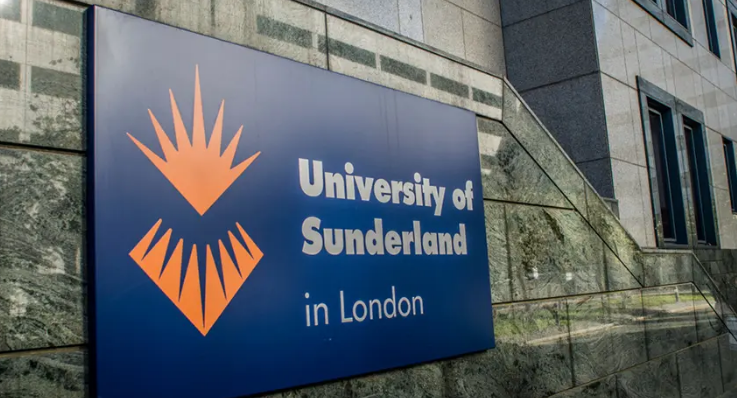
Santander has doubled its annual financial commitment to the University of Sunderland, confirming a renewed partnership that will provide £100,000 each year through to the 2026–2027 academic cycle. The agreement extends a collaboration that has run for nearly eight years and has already supported hundreds of students across the North East institution.

The expanded package will fund a range of student support schemes aimed at easing financial pressure and improving access to education. It includes ten £1,000 Brighter Futures Awards designed to help with everyday costs, alongside six £5,000 Education Awards to assist with tuition fees, accommodation, and course materials. A further 120 Employability Awards worth £250 each will help students cover costs linked to entering the job market, including travel for interviews and work placements.

In addition, six £5,000 Entrepreneurship Awards will be made available to students, graduates, and university staff looking to develop early-stage business ideas.

All members of the university community will also gain access to Santander Open Academy, the bank’s online learning platform offering free courses, training materials, and industry-focused content designed to match labour market needs.

The agreement was signed by University Vice-Chancellor Sir David Bell and Santander UK’s National Partnerships Director Jonathan Powell.

Sir David Bell said the partnership had delivered sustained benefits for students and staff. “Our partnership with Santander Universities has been running for nearly eight years and has brought immense benefit to students and staff alike,” he said. “These new awards will provide the next generation of Sunderland’s most talented people with the opportunity to achieve even greater success in the future.”

For Santander, the Sunderland deal forms part of a wider international education programme that has reached more than 8.3 million individuals and businesses over the past three decades. The bank has invested over €2.5 billion globally through partnerships with more than 1,000 universities across 13 countries, including £115 million in UK higher education since 2007.

Mr Powell said the renewed agreement reflected a strong and productive collaboration. “We believe strongly in the power of collaboration, and that has been clearly demonstrated in our work with Sunderland,” he said.

Beyond education support, the partnership also strengthens Santander’s long-term visibility among students, many of whom may later become banking customers.

The impact of the funding is already evident among recipients. One recent beneficiary, entrepreneurship award winner Kirsty Knott, has used her £5,000 grant to expand her coaching and podcast business, with plans to launch new networking events in Newcastle. Meanwhile, engineering student Kieran Harley said his award would allow him to reduce working hours and focus more fully on his degree while supporting his family.

The University of Sunderland, which focuses heavily on widening participation, said the increased backing comes at a crucial time for UK universities facing financial strain, declining international enrolments, and rising operational costs.


Business

Fraudsters are increasingly using AI-generated images and videos to trick people into handing over sensitive personal and financial information, according to FraudSMART, the financial crime awareness initiative operated by the Banking and Payments Federation Ireland (BPFI). The organisation has reported a rise in online adverts promoting fake, State-backed investment schemes. These scams often use fabricated images of well-known politicians and business figures to make the offers appear legitimate and encourage users to click on registration links. Niamh Davenport, head of financial crime at BPFI, said scammers are deliberately exploiting recent media coverage of a planned State-backed savings and investment scheme to give their frauds a sense of credibility. “They often claim the scheme is open to everyone, but that places are limited and being ‘snapped up’ fast, in order to pressure people to act quickly,” she said. “They typically promise guaranteed returns or a guaranteed monthly income.” FraudSMART said that while anyone can be targeted, people in their early 50s are particularly vulnerable to investment scams. This age group is often focused on retirement planning, making them more receptive to financial offers that appear secure or high-yield. According to the organisation, most scams follow a similar pattern. Victims are first directed to click a registration link and complete a short online form providing their contact details. They are then contacted by someone posing as a financial adviser, who urges them to make an immediate “security deposit” to secure participation in the scheme. Once a payment is made, the money is quickly moved through multiple accounts, often overseas, making recovery extremely difficult. Davenport warned that scammers are becoming more sophisticated in their use of technology, particularly AI tools that allow them to create realistic but entirely fake promotional content. These materials are designed to mimic legitimate financial advertisements and build trust with potential victims. Recent figures from An Garda Síochána show investment fraud rose by 20% last year, with losses exceeding €20 million. The scale of individual scams varies widely, ranging from smaller crypto-related frauds involving a few hundred euro to large-scale investment schemes where victims lose tens of thousands. FraudSMART is urging the public to remain cautious when encountering online investment advertisements, especially those promising guaranteed returns or requiring urgent action. It also advises consumers to avoid sharing personal information with unverified sources and to be wary of pressure tactics designed to rush financial decisions. Authorities continue to warn that fraudsters are adapting quickly, using advanced digital tools to target victims across multiple platforms.

Trending

Business

Fraudsters are increasingly using AI-generated images and videos to trick people into handing over sensitive personal and financial information, according to FraudSMART, the financial crime awareness initiative operated by the Banking and Payments Federation Ireland (BPFI). The organisation has reported a rise in online adverts promoting fake, State-backed investment schemes. These scams often use fabricated images of well-known politicians and business figures to make the offers appear legitimate and encourage users to click on registration links. Niamh Davenport, head of financial crime at BPFI, said scammers are deliberately exploiting recent media coverage of a planned State-backed savings and investment scheme to give their frauds a sense of credibility. “They often claim the scheme is open to everyone, but that places are limited and being ‘snapped up’ fast, in order to pressure people to act quickly,” she said. “They typically promise guaranteed returns or a guaranteed monthly income.” FraudSMART said that while anyone can be targeted, people in their early 50s are particularly vulnerable to investment scams. This age group is often focused on retirement planning, making them more receptive to financial offers that appear secure or high-yield. According to the organisation, most scams follow a similar pattern. Victims are first directed to click a registration link and complete a short online form providing their contact details. They are then contacted by someone posing as a financial adviser, who urges them to make an immediate “security deposit” to secure participation in the scheme. Once a payment is made, the money is quickly moved through multiple accounts, often overseas, making recovery extremely difficult. Davenport warned that scammers are becoming more sophisticated in their use of technology, particularly AI tools that allow them to create realistic but entirely fake promotional content. These materials are designed to mimic legitimate financial advertisements and build trust with potential victims. Recent figures from An Garda Síochána show investment fraud rose by 20% last year, with losses exceeding €20 million. The scale of individual scams varies widely, ranging from smaller crypto-related frauds involving a few hundred euro to large-scale investment schemes where victims lose tens of thousands. FraudSMART is urging the public to remain cautious when encountering online investment advertisements, especially those promising guaranteed returns or requiring urgent action. It also advises consumers to avoid sharing personal information with unverified sources and to be wary of pressure tactics designed to rush financial decisions. Authorities continue to warn that fraudsters are adapting quickly, using advanced digital tools to target victims across multiple platforms.

You May Also Like

Politics

WASHINGTON — The Pentagon announced on Sunday that the United States will send a Terminal High Altitude Area Defense (THAAD) battery to Israel, alongside...

Health

NEW YORK — Teen smoking in the United States has reached an all-time low in 2024, with significant declines in overall youth tobacco use,...

Politics

WASHINGTON — As the countdown to the November 5 presidential election continues, former President Donald Trump is urging his supporters to aim for a...

Politics

In September, NASA announced that summer 2024 was the hottest on record. Just days later, the U.S. faced the dual impact of Hurricanes Helene...