

















Connect with us

Hi, what are you looking for?

Politics

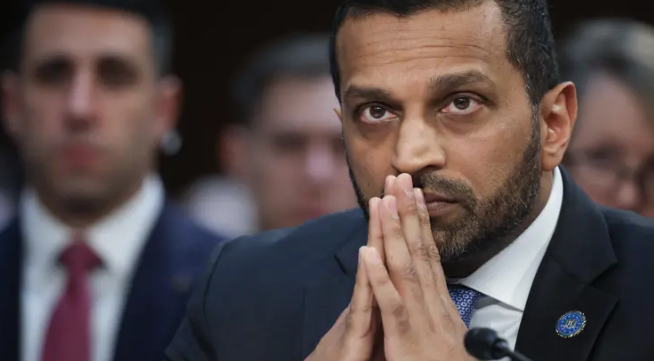
Kash Patel Denies Atlantic Report Alleging Misconduct and Leadership Concerns at FBI

FBI Director Kash Patel has strongly rejected allegations published by The Atlantic, calling the report false and threatening legal action against the outlet and its author. The article, released on Friday, cites more than two dozen unnamed current and former officials who raise concerns about Patel’s conduct, leadership style, and alleged behavior while in office.

In a series of posts on X, Patel dismissed the claims as “fake news” and said the reporting amounted to a “legal layup” for defamation proceedings. He also accused critics of attempting to undermine his role at the bureau, stating that continued scrutiny would not deter his leadership of the FBI.

The Atlantic report alleges multiple instances of what sources described as erratic behavior, including excessive alcohol use at private venues in Washington and Las Vegas. Some officials claimed Patel’s reported intoxication led to delays in scheduled meetings and disruptions to his availability. The article further cites accounts suggesting staff occasionally struggled to reach him during urgent situations, including one incident in which security personnel reportedly considered using breaching equipment after being unable to access him behind locked doors.

The report also raises broader concerns among unnamed officials about decision-making at the top of the agency, which employs roughly 38,000 people. Some sources expressed worry about leadership stability during high-pressure national security events, including recent military operations involving Iran.

White House spokesperson Karoline Leavitt defended Patel in a statement, highlighting a decline in crime rates and recent high-profile arrests. She described him as a key figure in the administration’s law enforcement strategy and reiterated White House support for his work.

The allegations add to a series of controversies surrounding Patel’s tenure. In 2025, he faced bipartisan criticism after prematurely announcing the detention of a suspect in a high-profile manhunt, a move some lawmakers said risked compromising the investigation. Patel later defended his decision, citing transparency.

Separately, Democrats raised questions over his use of government aircraft for personal travel, including trips reportedly linked to social engagements and overseas visits. Patel denied wrongdoing, describing the claims as unfounded.

Earlier this year, he also drew attention after attending an international sporting event where he was filmed celebrating with athletes following a U.S. victory, prompting debate over whether the trip was official or personal in nature.

The latest report comes amid broader scrutiny of Patel’s leadership style and internal management of the bureau. Despite mounting criticism, he has maintained that the FBI remains focused on national security priorities and continues to operate effectively under his direction.


Business

Fraudsters are increasingly using AI-generated images and videos to trick people into handing over sensitive personal and financial information, according to FraudSMART, the financial crime awareness initiative operated by the Banking and Payments Federation Ireland (BPFI). The organisation has reported a rise in online adverts promoting fake, State-backed investment schemes. These scams often use fabricated images of well-known politicians and business figures to make the offers appear legitimate and encourage users to click on registration links. Niamh Davenport, head of financial crime at BPFI, said scammers are deliberately exploiting recent media coverage of a planned State-backed savings and investment scheme to give their frauds a sense of credibility. “They often claim the scheme is open to everyone, but that places are limited and being ‘snapped up’ fast, in order to pressure people to act quickly,” she said. “They typically promise guaranteed returns or a guaranteed monthly income.” FraudSMART said that while anyone can be targeted, people in their early 50s are particularly vulnerable to investment scams. This age group is often focused on retirement planning, making them more receptive to financial offers that appear secure or high-yield. According to the organisation, most scams follow a similar pattern. Victims are first directed to click a registration link and complete a short online form providing their contact details. They are then contacted by someone posing as a financial adviser, who urges them to make an immediate “security deposit” to secure participation in the scheme. Once a payment is made, the money is quickly moved through multiple accounts, often overseas, making recovery extremely difficult. Davenport warned that scammers are becoming more sophisticated in their use of technology, particularly AI tools that allow them to create realistic but entirely fake promotional content. These materials are designed to mimic legitimate financial advertisements and build trust with potential victims. Recent figures from An Garda Síochána show investment fraud rose by 20% last year, with losses exceeding €20 million. The scale of individual scams varies widely, ranging from smaller crypto-related frauds involving a few hundred euro to large-scale investment schemes where victims lose tens of thousands. FraudSMART is urging the public to remain cautious when encountering online investment advertisements, especially those promising guaranteed returns or requiring urgent action. It also advises consumers to avoid sharing personal information with unverified sources and to be wary of pressure tactics designed to rush financial decisions. Authorities continue to warn that fraudsters are adapting quickly, using advanced digital tools to target victims across multiple platforms.

Trending

Business

Fraudsters are increasingly using AI-generated images and videos to trick people into handing over sensitive personal and financial information, according to FraudSMART, the financial crime awareness initiative operated by the Banking and Payments Federation Ireland (BPFI). The organisation has reported a rise in online adverts promoting fake, State-backed investment schemes. These scams often use fabricated images of well-known politicians and business figures to make the offers appear legitimate and encourage users to click on registration links. Niamh Davenport, head of financial crime at BPFI, said scammers are deliberately exploiting recent media coverage of a planned State-backed savings and investment scheme to give their frauds a sense of credibility. “They often claim the scheme is open to everyone, but that places are limited and being ‘snapped up’ fast, in order to pressure people to act quickly,” she said. “They typically promise guaranteed returns or a guaranteed monthly income.” FraudSMART said that while anyone can be targeted, people in their early 50s are particularly vulnerable to investment scams. This age group is often focused on retirement planning, making them more receptive to financial offers that appear secure or high-yield. According to the organisation, most scams follow a similar pattern. Victims are first directed to click a registration link and complete a short online form providing their contact details. They are then contacted by someone posing as a financial adviser, who urges them to make an immediate “security deposit” to secure participation in the scheme. Once a payment is made, the money is quickly moved through multiple accounts, often overseas, making recovery extremely difficult. Davenport warned that scammers are becoming more sophisticated in their use of technology, particularly AI tools that allow them to create realistic but entirely fake promotional content. These materials are designed to mimic legitimate financial advertisements and build trust with potential victims. Recent figures from An Garda Síochána show investment fraud rose by 20% last year, with losses exceeding €20 million. The scale of individual scams varies widely, ranging from smaller crypto-related frauds involving a few hundred euro to large-scale investment schemes where victims lose tens of thousands. FraudSMART is urging the public to remain cautious when encountering online investment advertisements, especially those promising guaranteed returns or requiring urgent action. It also advises consumers to avoid sharing personal information with unverified sources and to be wary of pressure tactics designed to rush financial decisions. Authorities continue to warn that fraudsters are adapting quickly, using advanced digital tools to target victims across multiple platforms.

You May Also Like

Politics

WASHINGTON — The Pentagon announced on Sunday that the United States will send a Terminal High Altitude Area Defense (THAAD) battery to Israel, alongside...

Health

NEW YORK — Teen smoking in the United States has reached an all-time low in 2024, with significant declines in overall youth tobacco use,...

Politics

WASHINGTON — As the countdown to the November 5 presidential election continues, former President Donald Trump is urging his supporters to aim for a...

Politics

In September, NASA announced that summer 2024 was the hottest on record. Just days later, the U.S. faced the dual impact of Hurricanes Helene...