













Connect with us

Hi, what are you looking for?

Politics

Trump Threatens to Invoke Insurrection Act Amid Disputes Over National Guard Deployments

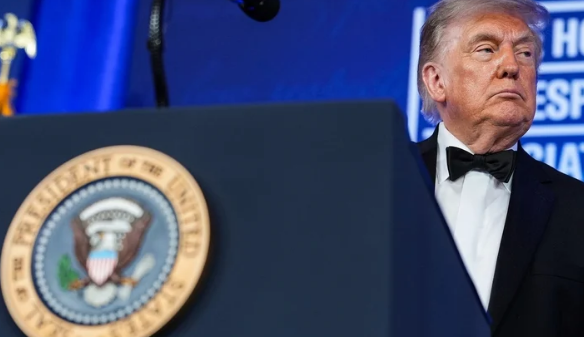
U.S. President Donald Trump has suggested he may invoke the 19th-century Insurrection Act to expand his authority to deploy the military within the United States, as opposition mounts to his use of National Guard troops in cities such as Chicago, Los Angeles and Portland.

The move comes after several governors, city officials, and courts blocked or challenged the federal deployment of Guard units, calling the actions unconstitutional and unnecessary. Trump, however, has argued that the Insurrection Act gives him the power to bypass local objections.

“We have an Insurrection Act for a reason,” Trump told reporters in the Oval Office on Monday. “It’s a way to get around pushback from officials, and I would invoke it if it were necessary — but so far it hasn’t been.” He said he would consider doing so in circumstances where “people were being killed and courts were holding us up, or mayors or governors were holding us up.”

Speaking alongside Canadian Prime Minister Mark Carney a day later, Trump again hinted at using the law, particularly in Chicago. “Chicago is a great city where there’s a lot of crime, and if the governor can’t do the job, we’ll do that job,” he said.

The remarks follow lawsuits filed by Chicago and Illinois officials, who have described Trump’s deployment of hundreds of Guard troops as “patently unlawful.” Federal judges have twice blocked similar actions in Portland, while another court ruled that sending troops to Los Angeles earlier this year violated the 1878 Posse Comitatus Act, which prohibits the use of the military for domestic law enforcement.

The Insurrection Act of 1807 allows the President to deploy the military to enforce federal law or suppress insurrection under certain conditions. However, legal experts note that the statute’s language is vague and subject to interpretation. “The current conditions just don’t rise to the level of past instances,” said Chris Mirasola, a law professor at the University of Houston. He cited historical precedents, including the 1992 Los Angeles riots and the 1957 integration crisis in Little Rock, where the law was invoked amid widespread violence and obstruction.

If Trump were to invoke the act, he would first need to issue a proclamation ordering demonstrators to disperse, followed by an executive order authorising military intervention. Mirasola said such a move would almost certainly trigger legal challenges questioning whether the conditions outlined in the law had been met.

Legal scholars and state officials have warned that invoking the act could infringe on states’ rights and strain federal-state relations. Rachel Van Cleave, professor at McGeorge School of Law, said deploying federal troops over state objections represents “an actual physical intrusion on a state’s sovereignty.”

As tensions escalate, critics argue that Trump’s stance risks politicising the military and undermining constitutional protections designed to limit federal intervention in domestic affairs.


Business

Fraudsters are increasingly using AI-generated images and videos to trick people into handing over sensitive personal and financial information, according to FraudSMART, the financial crime awareness initiative operated by the Banking and Payments Federation Ireland (BPFI). The organisation has reported a rise in online adverts promoting fake, State-backed investment schemes. These scams often use fabricated images of well-known politicians and business figures to make the offers appear legitimate and encourage users to click on registration links. Niamh Davenport, head of financial crime at BPFI, said scammers are deliberately exploiting recent media coverage of a planned State-backed savings and investment scheme to give their frauds a sense of credibility. “They often claim the scheme is open to everyone, but that places are limited and being ‘snapped up’ fast, in order to pressure people to act quickly,” she said. “They typically promise guaranteed returns or a guaranteed monthly income.” FraudSMART said that while anyone can be targeted, people in their early 50s are particularly vulnerable to investment scams. This age group is often focused on retirement planning, making them more receptive to financial offers that appear secure or high-yield. According to the organisation, most scams follow a similar pattern. Victims are first directed to click a registration link and complete a short online form providing their contact details. They are then contacted by someone posing as a financial adviser, who urges them to make an immediate “security deposit” to secure participation in the scheme. Once a payment is made, the money is quickly moved through multiple accounts, often overseas, making recovery extremely difficult. Davenport warned that scammers are becoming more sophisticated in their use of technology, particularly AI tools that allow them to create realistic but entirely fake promotional content. These materials are designed to mimic legitimate financial advertisements and build trust with potential victims. Recent figures from An Garda Síochána show investment fraud rose by 20% last year, with losses exceeding €20 million. The scale of individual scams varies widely, ranging from smaller crypto-related frauds involving a few hundred euro to large-scale investment schemes where victims lose tens of thousands. FraudSMART is urging the public to remain cautious when encountering online investment advertisements, especially those promising guaranteed returns or requiring urgent action. It also advises consumers to avoid sharing personal information with unverified sources and to be wary of pressure tactics designed to rush financial decisions. Authorities continue to warn that fraudsters are adapting quickly, using advanced digital tools to target victims across multiple platforms.

Trending

Business

Fraudsters are increasingly using AI-generated images and videos to trick people into handing over sensitive personal and financial information, according to FraudSMART, the financial crime awareness initiative operated by the Banking and Payments Federation Ireland (BPFI). The organisation has reported a rise in online adverts promoting fake, State-backed investment schemes. These scams often use fabricated images of well-known politicians and business figures to make the offers appear legitimate and encourage users to click on registration links. Niamh Davenport, head of financial crime at BPFI, said scammers are deliberately exploiting recent media coverage of a planned State-backed savings and investment scheme to give their frauds a sense of credibility. “They often claim the scheme is open to everyone, but that places are limited and being ‘snapped up’ fast, in order to pressure people to act quickly,” she said. “They typically promise guaranteed returns or a guaranteed monthly income.” FraudSMART said that while anyone can be targeted, people in their early 50s are particularly vulnerable to investment scams. This age group is often focused on retirement planning, making them more receptive to financial offers that appear secure or high-yield. According to the organisation, most scams follow a similar pattern. Victims are first directed to click a registration link and complete a short online form providing their contact details. They are then contacted by someone posing as a financial adviser, who urges them to make an immediate “security deposit” to secure participation in the scheme. Once a payment is made, the money is quickly moved through multiple accounts, often overseas, making recovery extremely difficult. Davenport warned that scammers are becoming more sophisticated in their use of technology, particularly AI tools that allow them to create realistic but entirely fake promotional content. These materials are designed to mimic legitimate financial advertisements and build trust with potential victims. Recent figures from An Garda Síochána show investment fraud rose by 20% last year, with losses exceeding €20 million. The scale of individual scams varies widely, ranging from smaller crypto-related frauds involving a few hundred euro to large-scale investment schemes where victims lose tens of thousands. FraudSMART is urging the public to remain cautious when encountering online investment advertisements, especially those promising guaranteed returns or requiring urgent action. It also advises consumers to avoid sharing personal information with unverified sources and to be wary of pressure tactics designed to rush financial decisions. Authorities continue to warn that fraudsters are adapting quickly, using advanced digital tools to target victims across multiple platforms.

You May Also Like

Politics

WASHINGTON — The Pentagon announced on Sunday that the United States will send a Terminal High Altitude Area Defense (THAAD) battery to Israel, alongside...

Health

NEW YORK — Teen smoking in the United States has reached an all-time low in 2024, with significant declines in overall youth tobacco use,...

Politics

WASHINGTON — As the countdown to the November 5 presidential election continues, former President Donald Trump is urging his supporters to aim for a...

Politics

In September, NASA announced that summer 2024 was the hottest on record. Just days later, the U.S. faced the dual impact of Hurricanes Helene...