
















Connect with us

Hi, what are you looking for?

Politics

What Trump’s Win Means for LGBTQ+ Rights

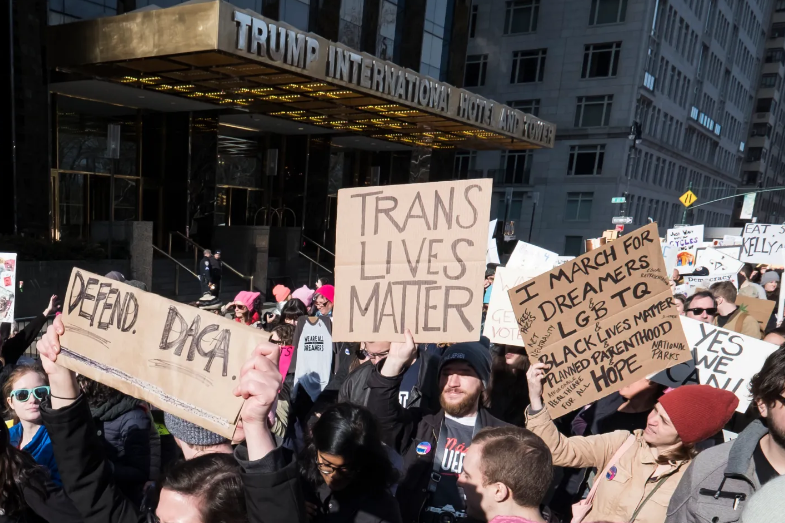
As the reality of President-elect Donald Trump’s victory sets in, LGBTQ+ rights groups and individuals are bracing for the impact of his policies, especially with a GOP-majority Senate to support his agenda. Throughout his campaign, Trump’s rhetoric against the LGBTQ+ community, particularly trans individuals, raised concerns about the future of LGBTQ+ rights under his second term.

Trump’s platform during the election included anti-transgender messaging, with one ad notably criticizing Vice President Kamala Harris for supporting “they/them” pronouns. According to data from Ad Impact, nearly $215 million was spent on anti-trans ads this election cycle, signaling a shift toward conservative policies targeting transgender Americans.

Now, with a second term looming, LGBTQ+ advocates are anxious about potential changes to their rights. Trump’s official policy platform, “Agenda 47,” outlines several proposals that would significantly roll back protections for LGBTQ+ individuals, including his plans to “keep men out of women’s sports” and eliminate federal funding for schools promoting “radical gender ideology.” Experts warn that these moves could lead to increased discrimination and legal battles, particularly for transgender people.

Katie Eyer, a professor at Rutgers Law School, expressed concern that Trump’s presidency could lead to more conservative judicial appointments, potentially shifting the federal courts’ stance on LGBTQ+ discrimination. Eyer notes that while courts have recently sided with transgender individuals in legal battles, a conservative judiciary could reverse these trends.

Three key areas where Trump’s policies could impact LGBTQ+ rights are emerging as major concerns:

Transgender Military Ban
Trump’s first term saw a formal ban on transgender individuals serving openly in the military, which he justified on the grounds of the cost of gender-affirming surgeries. While the Biden administration overturned the ban, legal experts predict that a second Trump term could see a reinstatement, sparking new legal challenges.

Health Care Restrictions
Several states have already implemented bans on gender-affirming care for minors, and Trump has signaled plans to follow suit at the federal level. He has threatened to cut federal funding to hospitals that provide gender-affirming care, making it harder for transgender youth to access critical services. The American Civil Liberties Union (ACLU) has pledged to challenge any federal attempts to restrict such care, with experts predicting a legal battle similar to the abortion rights debate.

Changes to Education and Identification Rights
Trump’s platform includes a push to reinterpret Title IX, which protects against discrimination in educational programs. Trump has voiced support for barring trans women from competing in women’s sports, and experts warn that a rollback of Title IX protections could extend beyond athletics, redefining sex in a way that would harm transgender students. Additionally, Trump has suggested withholding federal funding from schools that teach gender identity, a policy that could further marginalize LGBTQ+ students.

As legal and political battles loom, the LGBTQ+ community is left wondering how much support they will receive from progressive states and advocacy groups. According to civil rights experts, Trump’s policies could reshape the legal landscape for LGBTQ+ individuals, making it harder for them to access necessary healthcare, participate in sports, and obtain legal recognition of their gender identity.


Business

Fraudsters are increasingly using AI-generated images and videos to trick people into handing over sensitive personal and financial information, according to FraudSMART, the financial crime awareness initiative operated by the Banking and Payments Federation Ireland (BPFI). The organisation has reported a rise in online adverts promoting fake, State-backed investment schemes. These scams often use fabricated images of well-known politicians and business figures to make the offers appear legitimate and encourage users to click on registration links. Niamh Davenport, head of financial crime at BPFI, said scammers are deliberately exploiting recent media coverage of a planned State-backed savings and investment scheme to give their frauds a sense of credibility. “They often claim the scheme is open to everyone, but that places are limited and being ‘snapped up’ fast, in order to pressure people to act quickly,” she said. “They typically promise guaranteed returns or a guaranteed monthly income.” FraudSMART said that while anyone can be targeted, people in their early 50s are particularly vulnerable to investment scams. This age group is often focused on retirement planning, making them more receptive to financial offers that appear secure or high-yield. According to the organisation, most scams follow a similar pattern. Victims are first directed to click a registration link and complete a short online form providing their contact details. They are then contacted by someone posing as a financial adviser, who urges them to make an immediate “security deposit” to secure participation in the scheme. Once a payment is made, the money is quickly moved through multiple accounts, often overseas, making recovery extremely difficult. Davenport warned that scammers are becoming more sophisticated in their use of technology, particularly AI tools that allow them to create realistic but entirely fake promotional content. These materials are designed to mimic legitimate financial advertisements and build trust with potential victims. Recent figures from An Garda Síochána show investment fraud rose by 20% last year, with losses exceeding €20 million. The scale of individual scams varies widely, ranging from smaller crypto-related frauds involving a few hundred euro to large-scale investment schemes where victims lose tens of thousands. FraudSMART is urging the public to remain cautious when encountering online investment advertisements, especially those promising guaranteed returns or requiring urgent action. It also advises consumers to avoid sharing personal information with unverified sources and to be wary of pressure tactics designed to rush financial decisions. Authorities continue to warn that fraudsters are adapting quickly, using advanced digital tools to target victims across multiple platforms.

Trending

Business

Fraudsters are increasingly using AI-generated images and videos to trick people into handing over sensitive personal and financial information, according to FraudSMART, the financial crime awareness initiative operated by the Banking and Payments Federation Ireland (BPFI). The organisation has reported a rise in online adverts promoting fake, State-backed investment schemes. These scams often use fabricated images of well-known politicians and business figures to make the offers appear legitimate and encourage users to click on registration links. Niamh Davenport, head of financial crime at BPFI, said scammers are deliberately exploiting recent media coverage of a planned State-backed savings and investment scheme to give their frauds a sense of credibility. “They often claim the scheme is open to everyone, but that places are limited and being ‘snapped up’ fast, in order to pressure people to act quickly,” she said. “They typically promise guaranteed returns or a guaranteed monthly income.” FraudSMART said that while anyone can be targeted, people in their early 50s are particularly vulnerable to investment scams. This age group is often focused on retirement planning, making them more receptive to financial offers that appear secure or high-yield. According to the organisation, most scams follow a similar pattern. Victims are first directed to click a registration link and complete a short online form providing their contact details. They are then contacted by someone posing as a financial adviser, who urges them to make an immediate “security deposit” to secure participation in the scheme. Once a payment is made, the money is quickly moved through multiple accounts, often overseas, making recovery extremely difficult. Davenport warned that scammers are becoming more sophisticated in their use of technology, particularly AI tools that allow them to create realistic but entirely fake promotional content. These materials are designed to mimic legitimate financial advertisements and build trust with potential victims. Recent figures from An Garda Síochána show investment fraud rose by 20% last year, with losses exceeding €20 million. The scale of individual scams varies widely, ranging from smaller crypto-related frauds involving a few hundred euro to large-scale investment schemes where victims lose tens of thousands. FraudSMART is urging the public to remain cautious when encountering online investment advertisements, especially those promising guaranteed returns or requiring urgent action. It also advises consumers to avoid sharing personal information with unverified sources and to be wary of pressure tactics designed to rush financial decisions. Authorities continue to warn that fraudsters are adapting quickly, using advanced digital tools to target victims across multiple platforms.

You May Also Like

Politics

WASHINGTON — The Pentagon announced on Sunday that the United States will send a Terminal High Altitude Area Defense (THAAD) battery to Israel, alongside...

Health

NEW YORK — Teen smoking in the United States has reached an all-time low in 2024, with significant declines in overall youth tobacco use,...

Politics

WASHINGTON — As the countdown to the November 5 presidential election continues, former President Donald Trump is urging his supporters to aim for a...

Politics

In September, NASA announced that summer 2024 was the hottest on record. Just days later, the U.S. faced the dual impact of Hurricanes Helene...