


















Connect with us

Hi, what are you looking for?

Politics

Trump’s Letter to Iran’s Supreme Leader Fuels Uncertainty Amid Nuclear Tensions

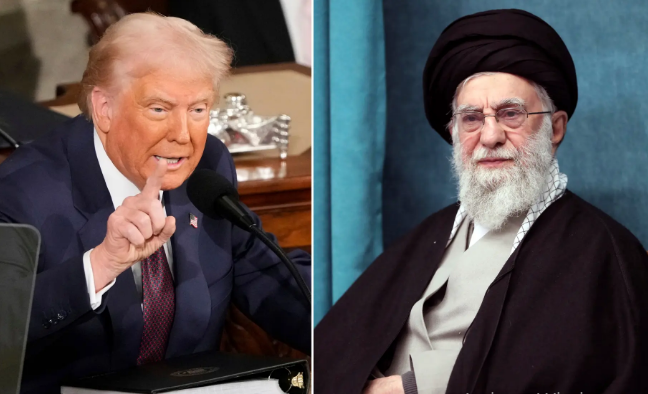
A letter from former U.S. President Donald Trump to Iran’s Supreme Leader Ayatollah Ali Khamenei has reached Tehran, aiming to revive negotiations over Iran’s expanding nuclear program. The letter’s arrival coincides with new U.S. sanctions on Iran and Trump’s renewed warnings that military action remains on the table.

While the exact contents of the letter remain undisclosed, Trump confirmed in a televised interview that he urged Iran to negotiate, warning that military intervention would be a “terrible thing.” This marks another attempt by the former president to engage with Tehran, despite years of escalating tensions between the two nations.

Mixed Reactions from Iran

Iran’s response has been divided. Khamenei has publicly dismissed the idea of talks with what he called a “bullying government.” However, Iranian diplomats, including Foreign Minister Abbas Araghchi, initially suggested that discussions about Iran’s nuclear ambitions and guarantees against weaponization could be possible. Shortly after, Araghchi hardened his stance, stating that negotiations could not take place under U.S. pressure.

Despite Khamenei’s rejection of dialogue, Araghchi still met with the Emirati diplomat who delivered Trump’s letter, leaving room for speculation about Iran’s true stance.

Concerns Over Iran’s Nuclear Program

Iran has long claimed its nuclear program is for peaceful purposes, but Western nations remain skeptical. Currently, Iran is enriching uranium at 60% purity—far beyond the 3.67% limit set by the 2015 nuclear deal and dangerously close to weapons-grade levels. According to the International Atomic Energy Agency (IAEA), Iran’s uranium stockpile now exceeds 18,000 pounds, significantly surpassing the deal’s restrictions.

U.S. intelligence agencies have not confirmed that Iran is actively pursuing nuclear weapons but warn that the country is positioning itself to do so if it chooses.

Decades of U.S.-Iran Hostility

The strained relationship between the U.S. and Iran dates back to the 1979 Islamic Revolution, which overthrew U.S.-backed Shah Mohammad Reza Pahlavi. That same year, Iranian students seized the U.S. Embassy in Tehran, leading to a 444-day hostage crisis that severed diplomatic ties.

The subsequent Iran-Iraq war saw the U.S. support Saddam Hussein, further deepening hostilities. In 1988, tensions escalated when the U.S. Navy shot down an Iranian passenger plane, killing all 290 people on board.

In 2015, relations briefly improved when Iran signed a nuclear agreement with world powers, limiting its enrichment in exchange for sanctions relief. However, Trump’s withdrawal from the deal in 2018 reignited hostilities, leading to years of escalating sanctions, military confrontations, and nuclear advancements.

What’s Next?

Trump’s letter highlights a familiar pattern—attempting to pressure Iran into talks while maintaining the threat of military action. Whether Tehran will engage remains uncertain. As Iran continues to advance its nuclear program, and with the specter of military conflict looming, the delicate balance between diplomacy and confrontation persists.


Business

Fraudsters are increasingly using AI-generated images and videos to trick people into handing over sensitive personal and financial information, according to FraudSMART, the financial crime awareness initiative operated by the Banking and Payments Federation Ireland (BPFI). The organisation has reported a rise in online adverts promoting fake, State-backed investment schemes. These scams often use fabricated images of well-known politicians and business figures to make the offers appear legitimate and encourage users to click on registration links. Niamh Davenport, head of financial crime at BPFI, said scammers are deliberately exploiting recent media coverage of a planned State-backed savings and investment scheme to give their frauds a sense of credibility. “They often claim the scheme is open to everyone, but that places are limited and being ‘snapped up’ fast, in order to pressure people to act quickly,” she said. “They typically promise guaranteed returns or a guaranteed monthly income.” FraudSMART said that while anyone can be targeted, people in their early 50s are particularly vulnerable to investment scams. This age group is often focused on retirement planning, making them more receptive to financial offers that appear secure or high-yield. According to the organisation, most scams follow a similar pattern. Victims are first directed to click a registration link and complete a short online form providing their contact details. They are then contacted by someone posing as a financial adviser, who urges them to make an immediate “security deposit” to secure participation in the scheme. Once a payment is made, the money is quickly moved through multiple accounts, often overseas, making recovery extremely difficult. Davenport warned that scammers are becoming more sophisticated in their use of technology, particularly AI tools that allow them to create realistic but entirely fake promotional content. These materials are designed to mimic legitimate financial advertisements and build trust with potential victims. Recent figures from An Garda Síochána show investment fraud rose by 20% last year, with losses exceeding €20 million. The scale of individual scams varies widely, ranging from smaller crypto-related frauds involving a few hundred euro to large-scale investment schemes where victims lose tens of thousands. FraudSMART is urging the public to remain cautious when encountering online investment advertisements, especially those promising guaranteed returns or requiring urgent action. It also advises consumers to avoid sharing personal information with unverified sources and to be wary of pressure tactics designed to rush financial decisions. Authorities continue to warn that fraudsters are adapting quickly, using advanced digital tools to target victims across multiple platforms.

Trending

Business

Fraudsters are increasingly using AI-generated images and videos to trick people into handing over sensitive personal and financial information, according to FraudSMART, the financial crime awareness initiative operated by the Banking and Payments Federation Ireland (BPFI). The organisation has reported a rise in online adverts promoting fake, State-backed investment schemes. These scams often use fabricated images of well-known politicians and business figures to make the offers appear legitimate and encourage users to click on registration links. Niamh Davenport, head of financial crime at BPFI, said scammers are deliberately exploiting recent media coverage of a planned State-backed savings and investment scheme to give their frauds a sense of credibility. “They often claim the scheme is open to everyone, but that places are limited and being ‘snapped up’ fast, in order to pressure people to act quickly,” she said. “They typically promise guaranteed returns or a guaranteed monthly income.” FraudSMART said that while anyone can be targeted, people in their early 50s are particularly vulnerable to investment scams. This age group is often focused on retirement planning, making them more receptive to financial offers that appear secure or high-yield. According to the organisation, most scams follow a similar pattern. Victims are first directed to click a registration link and complete a short online form providing their contact details. They are then contacted by someone posing as a financial adviser, who urges them to make an immediate “security deposit” to secure participation in the scheme. Once a payment is made, the money is quickly moved through multiple accounts, often overseas, making recovery extremely difficult. Davenport warned that scammers are becoming more sophisticated in their use of technology, particularly AI tools that allow them to create realistic but entirely fake promotional content. These materials are designed to mimic legitimate financial advertisements and build trust with potential victims. Recent figures from An Garda Síochána show investment fraud rose by 20% last year, with losses exceeding €20 million. The scale of individual scams varies widely, ranging from smaller crypto-related frauds involving a few hundred euro to large-scale investment schemes where victims lose tens of thousands. FraudSMART is urging the public to remain cautious when encountering online investment advertisements, especially those promising guaranteed returns or requiring urgent action. It also advises consumers to avoid sharing personal information with unverified sources and to be wary of pressure tactics designed to rush financial decisions. Authorities continue to warn that fraudsters are adapting quickly, using advanced digital tools to target victims across multiple platforms.

You May Also Like

Politics

WASHINGTON — The Pentagon announced on Sunday that the United States will send a Terminal High Altitude Area Defense (THAAD) battery to Israel, alongside...

Health

NEW YORK — Teen smoking in the United States has reached an all-time low in 2024, with significant declines in overall youth tobacco use,...

Politics

WASHINGTON — As the countdown to the November 5 presidential election continues, former President Donald Trump is urging his supporters to aim for a...

Politics

In September, NASA announced that summer 2024 was the hottest on record. Just days later, the U.S. faced the dual impact of Hurricanes Helene...
















