

















Connect with us

Hi, what are you looking for?

Politics

Debt Ceiling Debate Intensifies as Shutdown Looms

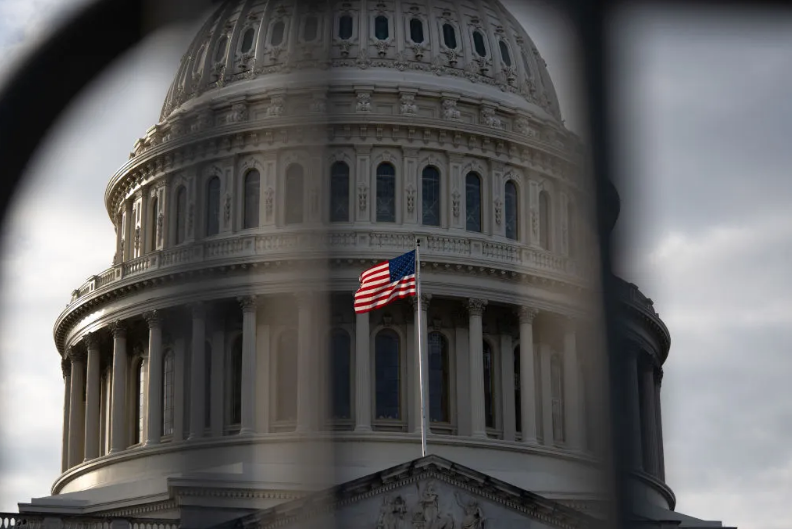
A heated dispute over the U.S. debt ceiling is at the heart of a funding crisis that threatens to push Washington to the brink of a government shutdown. President-elect Donald Trump has demanded that any legislation aimed at averting a shutdown must include a provision to raise or suspend the nation’s debt limit, a measure traditionally resisted by his own party.

In a statement on Wednesday, Trump insisted that the debt ceiling issue must be addressed alongside government funding. “Anything else is a betrayal of our country,” he declared. Responding quickly to Trump’s demands, Republican lawmakers added a provision to a revised government funding bill, proposing to suspend the debt ceiling for two years, until January 30, 2027. However, the bill failed by a wide margin in the House vote on Thursday, leaving the path forward uncertain.

What Is the Debt Ceiling?

The debt ceiling is the total amount of money the U.S. government is authorized to borrow to meet its existing obligations. The Treasury Department must seek approval from Congress to borrow beyond this limit. Currently, the federal debt stands at approximately $36 trillion. Due to the economic impact of the COVID-19 pandemic, inflation has driven up borrowing costs, meaning that debt service costs are expected to exceed national security spending next year.

In June 2023, Congress last raised the debt limit by suspending it until January 1, 2025, at which point the limit will automatically increase to match the amount of debt issued by the Treasury Department.

The Debt Ceiling Dispute

Trump’s insistence on tying the debt ceiling debate to the government funding dispute has fueled tensions. He rejected the proposed spending bill on Wednesday, calling for the debt ceiling issue to be settled before his inauguration next month. In comments to Fox News Digital, Trump warned of consequences for Republicans who support a funding bill without addressing the debt ceiling, declaring they should be “primaried and disposed of as quickly as possible.”

What Happens if the Debt Ceiling Isn’t Raised?

Although the debt ceiling does not need to be raised immediately, the Treasury Department can use “extraordinary measures” starting January 1 to avoid a default on government debt. These accounting techniques could delay a potential default until the summer of 2025. However, Trump’s push for a quick resolution aims to prevent this from happening under his presidency.

Without a debt ceiling increase, the U.S. government could default on its obligations, an unprecedented and potentially catastrophic event that could harm the economy and global markets.

Speaker Mike Johnson’s Dilemma

The debt ceiling debate poses a critical challenge for Speaker Mike Johnson, who is navigating this issue just before the new Congress convenes on January 3. Trump has urged Johnson to act decisively, noting that doing so could secure his position as Speaker. However, Johnson faces significant pressure from within his party, following the downfall of former Speaker Kevin McCarthy, who lost his job after working on a bipartisan debt ceiling deal.

Democratic Pushback

Meanwhile, House Democratic Leader Hakeem Jeffries has rejected the idea of Democrats helping to raise the debt ceiling. He criticized the GOP’s proposal, accusing them of attempting to use the debt ceiling debate to slash Social Security benefits. Jeffries and other Democrats argue that Republicans should adhere to the previous spending agreements, calling the new GOP plan “laughable.”

As the shutdown deadline looms, all eyes are on how Congress will resolve this critical issue.

Business

Fraudsters are increasingly using AI-generated images and videos to trick people into handing over sensitive personal and financial information, according to FraudSMART, the financial crime awareness initiative operated by the Banking and Payments Federation Ireland (BPFI). The organisation has reported a rise in online adverts promoting fake, State-backed investment schemes. These scams often use fabricated images of well-known politicians and business figures to make the offers appear legitimate and encourage users to click on registration links. Niamh Davenport, head of financial crime at BPFI, said scammers are deliberately exploiting recent media coverage of a planned State-backed savings and investment scheme to give their frauds a sense of credibility. “They often claim the scheme is open to everyone, but that places are limited and being ‘snapped up’ fast, in order to pressure people to act quickly,” she said. “They typically promise guaranteed returns or a guaranteed monthly income.” FraudSMART said that while anyone can be targeted, people in their early 50s are particularly vulnerable to investment scams. This age group is often focused on retirement planning, making them more receptive to financial offers that appear secure or high-yield. According to the organisation, most scams follow a similar pattern. Victims are first directed to click a registration link and complete a short online form providing their contact details. They are then contacted by someone posing as a financial adviser, who urges them to make an immediate “security deposit” to secure participation in the scheme. Once a payment is made, the money is quickly moved through multiple accounts, often overseas, making recovery extremely difficult. Davenport warned that scammers are becoming more sophisticated in their use of technology, particularly AI tools that allow them to create realistic but entirely fake promotional content. These materials are designed to mimic legitimate financial advertisements and build trust with potential victims. Recent figures from An Garda Síochána show investment fraud rose by 20% last year, with losses exceeding €20 million. The scale of individual scams varies widely, ranging from smaller crypto-related frauds involving a few hundred euro to large-scale investment schemes where victims lose tens of thousands. FraudSMART is urging the public to remain cautious when encountering online investment advertisements, especially those promising guaranteed returns or requiring urgent action. It also advises consumers to avoid sharing personal information with unverified sources and to be wary of pressure tactics designed to rush financial decisions. Authorities continue to warn that fraudsters are adapting quickly, using advanced digital tools to target victims across multiple platforms.

Trending

Business

Fraudsters are increasingly using AI-generated images and videos to trick people into handing over sensitive personal and financial information, according to FraudSMART, the financial crime awareness initiative operated by the Banking and Payments Federation Ireland (BPFI). The organisation has reported a rise in online adverts promoting fake, State-backed investment schemes. These scams often use fabricated images of well-known politicians and business figures to make the offers appear legitimate and encourage users to click on registration links. Niamh Davenport, head of financial crime at BPFI, said scammers are deliberately exploiting recent media coverage of a planned State-backed savings and investment scheme to give their frauds a sense of credibility. “They often claim the scheme is open to everyone, but that places are limited and being ‘snapped up’ fast, in order to pressure people to act quickly,” she said. “They typically promise guaranteed returns or a guaranteed monthly income.” FraudSMART said that while anyone can be targeted, people in their early 50s are particularly vulnerable to investment scams. This age group is often focused on retirement planning, making them more receptive to financial offers that appear secure or high-yield. According to the organisation, most scams follow a similar pattern. Victims are first directed to click a registration link and complete a short online form providing their contact details. They are then contacted by someone posing as a financial adviser, who urges them to make an immediate “security deposit” to secure participation in the scheme. Once a payment is made, the money is quickly moved through multiple accounts, often overseas, making recovery extremely difficult. Davenport warned that scammers are becoming more sophisticated in their use of technology, particularly AI tools that allow them to create realistic but entirely fake promotional content. These materials are designed to mimic legitimate financial advertisements and build trust with potential victims. Recent figures from An Garda Síochána show investment fraud rose by 20% last year, with losses exceeding €20 million. The scale of individual scams varies widely, ranging from smaller crypto-related frauds involving a few hundred euro to large-scale investment schemes where victims lose tens of thousands. FraudSMART is urging the public to remain cautious when encountering online investment advertisements, especially those promising guaranteed returns or requiring urgent action. It also advises consumers to avoid sharing personal information with unverified sources and to be wary of pressure tactics designed to rush financial decisions. Authorities continue to warn that fraudsters are adapting quickly, using advanced digital tools to target victims across multiple platforms.

You May Also Like

Politics

WASHINGTON — The Pentagon announced on Sunday that the United States will send a Terminal High Altitude Area Defense (THAAD) battery to Israel, alongside...

Health

NEW YORK — Teen smoking in the United States has reached an all-time low in 2024, with significant declines in overall youth tobacco use,...

Politics

WASHINGTON — As the countdown to the November 5 presidential election continues, former President Donald Trump is urging his supporters to aim for a...

Politics

In September, NASA announced that summer 2024 was the hottest on record. Just days later, the U.S. faced the dual impact of Hurricanes Helene...