















Connect with us

Hi, what are you looking for?

Politics

Western North Carolina Farm Sends Christmas Tree to the White House After Hurricane Helene Devastates Crop

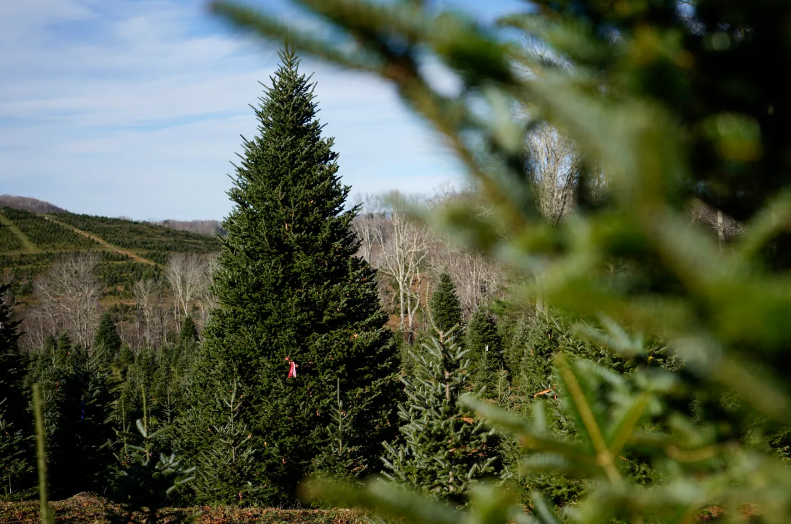
Despite the devastation caused by Hurricane Helene, a family-owned Christmas tree farm in Avery County, North Carolina, will have one of its trees gracing the White House this holiday season. Cartner’s Christmas Tree Farm, a decades-old business, is sending a 20-foot Fraser fir to Washington, D.C., after the farm’s selection as the 2024 National Christmas Tree Association’s grand champion.

Last year, the Cartner family was already aware that one of their trees would be chosen for the White House, but the impact of Hurricane Helene brought unexpected challenges. The storm caused severe flooding and mudslides across western North Carolina, taking out between 5,000 to 6,000 trees, but luckily, many others survived. “We wanted to really be an uplifting symbol for the other farmers and people in western North Carolina who have experienced so many losses,” said Sam Cartner Jr., one of the three brothers who run the farm.

Though much of the damage is hidden in the back of the farm, where rows of dark green trees stand tall, the storm’s impact is evident in the washout of roads and the loss of thousands of smaller trees. Cartner noted that the trees affected weren’t of market size, and he remains optimistic about this year’s harvest. “We’re looking forward to a relatively normal harvest, while others will have a much harder time,” he said.

The storm’s aftermath has created significant challenges for local farmers, particularly in repairing infrastructure like roads. Jennifer Greene, executive director of the North Carolina Christmas Tree Association, explained that while some farms have faced losses, farmers in the region, who harvest between 4 to 5 million trees annually, are resilient and working through the difficulties.

Cartner’s Christmas Tree Farm has been in the family since 1959, initially growing cattle and vegetables alongside Fraser firs. Over the years, the farm has expanded to about 500 acres of trees and employs seasonal workers from Mexico to help with year-round care. The farm’s business mainly consists of selling trees to independent garden centers and stores across the country.

In late October, White House staff visited the farm to select the official tree, which is about 25 years old and weighs between 400 to 500 pounds. The tree, chosen for its color and size, will be transported to Washington using a crane. Cartner and his family will present the tree to First Lady Jill Biden at a ceremony at the White House before returning in December to see it displayed in the Blue Room.

For Cartner, the White House honor is a symbol of hope for his community, which has faced so much hardship due to the storm. “My parents would be proud to see the farm representing western North Carolina during this tough time,” he said. “This tree represents faith, hope, love, joy, and family—values we need to recognize, especially now.”


Business

Fraudsters are increasingly using AI-generated images and videos to trick people into handing over sensitive personal and financial information, according to FraudSMART, the financial crime awareness initiative operated by the Banking and Payments Federation Ireland (BPFI). The organisation has reported a rise in online adverts promoting fake, State-backed investment schemes. These scams often use fabricated images of well-known politicians and business figures to make the offers appear legitimate and encourage users to click on registration links. Niamh Davenport, head of financial crime at BPFI, said scammers are deliberately exploiting recent media coverage of a planned State-backed savings and investment scheme to give their frauds a sense of credibility. “They often claim the scheme is open to everyone, but that places are limited and being ‘snapped up’ fast, in order to pressure people to act quickly,” she said. “They typically promise guaranteed returns or a guaranteed monthly income.” FraudSMART said that while anyone can be targeted, people in their early 50s are particularly vulnerable to investment scams. This age group is often focused on retirement planning, making them more receptive to financial offers that appear secure or high-yield. According to the organisation, most scams follow a similar pattern. Victims are first directed to click a registration link and complete a short online form providing their contact details. They are then contacted by someone posing as a financial adviser, who urges them to make an immediate “security deposit” to secure participation in the scheme. Once a payment is made, the money is quickly moved through multiple accounts, often overseas, making recovery extremely difficult. Davenport warned that scammers are becoming more sophisticated in their use of technology, particularly AI tools that allow them to create realistic but entirely fake promotional content. These materials are designed to mimic legitimate financial advertisements and build trust with potential victims. Recent figures from An Garda Síochána show investment fraud rose by 20% last year, with losses exceeding €20 million. The scale of individual scams varies widely, ranging from smaller crypto-related frauds involving a few hundred euro to large-scale investment schemes where victims lose tens of thousands. FraudSMART is urging the public to remain cautious when encountering online investment advertisements, especially those promising guaranteed returns or requiring urgent action. It also advises consumers to avoid sharing personal information with unverified sources and to be wary of pressure tactics designed to rush financial decisions. Authorities continue to warn that fraudsters are adapting quickly, using advanced digital tools to target victims across multiple platforms.

Trending

Business

Fraudsters are increasingly using AI-generated images and videos to trick people into handing over sensitive personal and financial information, according to FraudSMART, the financial crime awareness initiative operated by the Banking and Payments Federation Ireland (BPFI). The organisation has reported a rise in online adverts promoting fake, State-backed investment schemes. These scams often use fabricated images of well-known politicians and business figures to make the offers appear legitimate and encourage users to click on registration links. Niamh Davenport, head of financial crime at BPFI, said scammers are deliberately exploiting recent media coverage of a planned State-backed savings and investment scheme to give their frauds a sense of credibility. “They often claim the scheme is open to everyone, but that places are limited and being ‘snapped up’ fast, in order to pressure people to act quickly,” she said. “They typically promise guaranteed returns or a guaranteed monthly income.” FraudSMART said that while anyone can be targeted, people in their early 50s are particularly vulnerable to investment scams. This age group is often focused on retirement planning, making them more receptive to financial offers that appear secure or high-yield. According to the organisation, most scams follow a similar pattern. Victims are first directed to click a registration link and complete a short online form providing their contact details. They are then contacted by someone posing as a financial adviser, who urges them to make an immediate “security deposit” to secure participation in the scheme. Once a payment is made, the money is quickly moved through multiple accounts, often overseas, making recovery extremely difficult. Davenport warned that scammers are becoming more sophisticated in their use of technology, particularly AI tools that allow them to create realistic but entirely fake promotional content. These materials are designed to mimic legitimate financial advertisements and build trust with potential victims. Recent figures from An Garda Síochána show investment fraud rose by 20% last year, with losses exceeding €20 million. The scale of individual scams varies widely, ranging from smaller crypto-related frauds involving a few hundred euro to large-scale investment schemes where victims lose tens of thousands. FraudSMART is urging the public to remain cautious when encountering online investment advertisements, especially those promising guaranteed returns or requiring urgent action. It also advises consumers to avoid sharing personal information with unverified sources and to be wary of pressure tactics designed to rush financial decisions. Authorities continue to warn that fraudsters are adapting quickly, using advanced digital tools to target victims across multiple platforms.

You May Also Like

Politics

WASHINGTON — The Pentagon announced on Sunday that the United States will send a Terminal High Altitude Area Defense (THAAD) battery to Israel, alongside...

Health

NEW YORK — Teen smoking in the United States has reached an all-time low in 2024, with significant declines in overall youth tobacco use,...

Politics

WASHINGTON — As the countdown to the November 5 presidential election continues, former President Donald Trump is urging his supporters to aim for a...

Politics

In September, NASA announced that summer 2024 was the hottest on record. Just days later, the U.S. faced the dual impact of Hurricanes Helene...