

















Connect with us

Hi, what are you looking for?

Politics

USA vs. Canada: Hockey Rivalry Heats Up Amid Political Tensions

The U.S. and Canada men’s ice hockey teams are set to face off in the 4 Nations Face-Off tournament final on Thursday night, but the highly anticipated game has taken on a significance beyond the rink. What is usually a fierce but friendly sports rivalry has been tinged with political undertones, reflecting recent tensions between the neighboring nations.

Hockey and Politics Collide

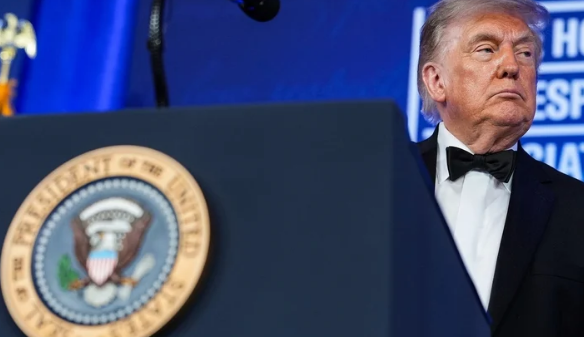
In last Saturday’s matchup between the two teams in Montreal, Canadian fans booed the U.S. national anthem, a trend that has emerged in response to President Donald Trump’s remarks about Canada. Trump has sparked controversy with tariff threats and comments suggesting that Canada could become the “51st U.S. state.”

One Canadian fan explained the reaction on social media, writing, “We’re not booing your hockey players. We’re not booing your country. We’re not even booing you. We’re booing [Trump], who keeps threatening our sovereignty for zero reason. Once he leaves us alone, it’ll stop.”

Canadian Prime Minister Justin Trudeau, who attended the game, appeared to subtly weigh in on the matter. He posted a clip of the crowd singing the Canadian national anthem, captioning it with the song’s closing lyrics: “We stand on guard for thee.”

A Heated Battle on the Ice

Saturday’s game wasn’t just tense in the stands—it was intense on the ice as well. Players from both teams engaged in three separate fights within the first nine seconds of play, setting the tone for an aggressive showdown. The U.S. ultimately secured a 3-1 victory, and American players said the physical play was meant to “send a message” to their longtime rivals.

The game’s outcome was celebrated by Trump supporters online. Pro-Trump influencer Philip Anderson declared, “AMERICA IS BACK.” Conservative author Nick Adams posted, “Mr. President, we are still not sick and tired of winning!”

U.S. team general manager Bill Guerin acknowledged the political tensions surrounding the game in an interview with Fox News on Tuesday. “I think there was a little bit of a political flare to it. It’s just the time that we’re in. I think our guys used that as inspiration,” Guerin said, adding that he would welcome Trump to Thursday’s championship game.

A Rivalry Renewed in the Final

Saturday’s game was the most-watched non-Stanley Cup final hockey broadcast since 2019, according to ESPN, and Thursday’s final is expected to draw even more attention.

The 4 Nations Face-Off is a new tournament featuring top NHL players from the U.S., Canada, Sweden, and Finland, replacing this year’s NHL All-Star Game. Historically, Canada has dominated, winning nine of the 13 best-on-best tournaments, while the U.S. has only won once, defeating Canada in the 1996 World Cup of Hockey.

The round-robin stage, which began on February 12, has been played in Montreal and Boston. Both the U.S. and Canada finished with a 2-1 record, setting the stage for a dramatic final in Boston on Thursday at 8 p.m. ET, airing on ESPN and streaming on Disney+.

With national pride, politics, and sports history on the line, this latest chapter in the USA-Canada hockey rivalry promises to be one of the most intense yet.


Business

Fraudsters are increasingly using AI-generated images and videos to trick people into handing over sensitive personal and financial information, according to FraudSMART, the financial crime awareness initiative operated by the Banking and Payments Federation Ireland (BPFI). The organisation has reported a rise in online adverts promoting fake, State-backed investment schemes. These scams often use fabricated images of well-known politicians and business figures to make the offers appear legitimate and encourage users to click on registration links. Niamh Davenport, head of financial crime at BPFI, said scammers are deliberately exploiting recent media coverage of a planned State-backed savings and investment scheme to give their frauds a sense of credibility. “They often claim the scheme is open to everyone, but that places are limited and being ‘snapped up’ fast, in order to pressure people to act quickly,” she said. “They typically promise guaranteed returns or a guaranteed monthly income.” FraudSMART said that while anyone can be targeted, people in their early 50s are particularly vulnerable to investment scams. This age group is often focused on retirement planning, making them more receptive to financial offers that appear secure or high-yield. According to the organisation, most scams follow a similar pattern. Victims are first directed to click a registration link and complete a short online form providing their contact details. They are then contacted by someone posing as a financial adviser, who urges them to make an immediate “security deposit” to secure participation in the scheme. Once a payment is made, the money is quickly moved through multiple accounts, often overseas, making recovery extremely difficult. Davenport warned that scammers are becoming more sophisticated in their use of technology, particularly AI tools that allow them to create realistic but entirely fake promotional content. These materials are designed to mimic legitimate financial advertisements and build trust with potential victims. Recent figures from An Garda Síochána show investment fraud rose by 20% last year, with losses exceeding €20 million. The scale of individual scams varies widely, ranging from smaller crypto-related frauds involving a few hundred euro to large-scale investment schemes where victims lose tens of thousands. FraudSMART is urging the public to remain cautious when encountering online investment advertisements, especially those promising guaranteed returns or requiring urgent action. It also advises consumers to avoid sharing personal information with unverified sources and to be wary of pressure tactics designed to rush financial decisions. Authorities continue to warn that fraudsters are adapting quickly, using advanced digital tools to target victims across multiple platforms.

Trending

Business

Fraudsters are increasingly using AI-generated images and videos to trick people into handing over sensitive personal and financial information, according to FraudSMART, the financial crime awareness initiative operated by the Banking and Payments Federation Ireland (BPFI). The organisation has reported a rise in online adverts promoting fake, State-backed investment schemes. These scams often use fabricated images of well-known politicians and business figures to make the offers appear legitimate and encourage users to click on registration links. Niamh Davenport, head of financial crime at BPFI, said scammers are deliberately exploiting recent media coverage of a planned State-backed savings and investment scheme to give their frauds a sense of credibility. “They often claim the scheme is open to everyone, but that places are limited and being ‘snapped up’ fast, in order to pressure people to act quickly,” she said. “They typically promise guaranteed returns or a guaranteed monthly income.” FraudSMART said that while anyone can be targeted, people in their early 50s are particularly vulnerable to investment scams. This age group is often focused on retirement planning, making them more receptive to financial offers that appear secure or high-yield. According to the organisation, most scams follow a similar pattern. Victims are first directed to click a registration link and complete a short online form providing their contact details. They are then contacted by someone posing as a financial adviser, who urges them to make an immediate “security deposit” to secure participation in the scheme. Once a payment is made, the money is quickly moved through multiple accounts, often overseas, making recovery extremely difficult. Davenport warned that scammers are becoming more sophisticated in their use of technology, particularly AI tools that allow them to create realistic but entirely fake promotional content. These materials are designed to mimic legitimate financial advertisements and build trust with potential victims. Recent figures from An Garda Síochána show investment fraud rose by 20% last year, with losses exceeding €20 million. The scale of individual scams varies widely, ranging from smaller crypto-related frauds involving a few hundred euro to large-scale investment schemes where victims lose tens of thousands. FraudSMART is urging the public to remain cautious when encountering online investment advertisements, especially those promising guaranteed returns or requiring urgent action. It also advises consumers to avoid sharing personal information with unverified sources and to be wary of pressure tactics designed to rush financial decisions. Authorities continue to warn that fraudsters are adapting quickly, using advanced digital tools to target victims across multiple platforms.

You May Also Like

Politics

WASHINGTON — The Pentagon announced on Sunday that the United States will send a Terminal High Altitude Area Defense (THAAD) battery to Israel, alongside...

Health

NEW YORK — Teen smoking in the United States has reached an all-time low in 2024, with significant declines in overall youth tobacco use,...

Politics

WASHINGTON — As the countdown to the November 5 presidential election continues, former President Donald Trump is urging his supporters to aim for a...

Politics

In September, NASA announced that summer 2024 was the hottest on record. Just days later, the U.S. faced the dual impact of Hurricanes Helene...