












Connect with us

Hi, what are you looking for?

Politics

UK Prime Minister Criticizes Trump Over Greenland Tariff Threats

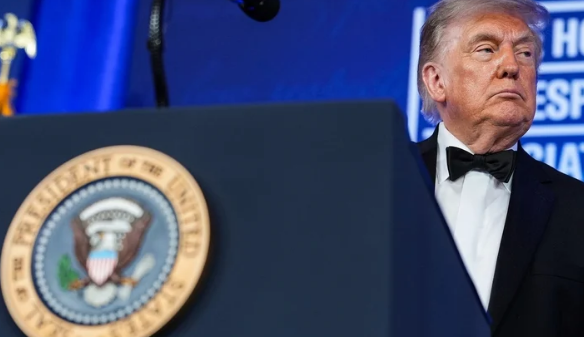
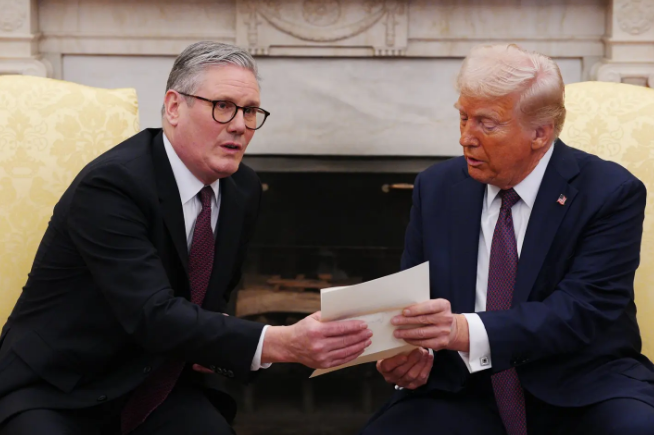
British Prime Minister Keir Starmer publicly opposed US President Donald Trump’s threats to impose tariffs on the United Kingdom and other European allies in a dispute over Greenland. Trump has warned that the United States could levy a 25% tariff on goods from countries opposing his proposal to acquire the territory from Denmark. Starmer called the plan “completely wrong” and urged diplomatic engagement instead of economic pressure.

Speaking at Downing Street on Monday, Starmer said using tariffs against allies “is not the right way to resolve differences within an alliance” and described the situation as “very serious.” He emphasized that any decision about Greenland’s future must involve the people of Greenland and the Kingdom of Denmark. “The security of Greenland matters and it will matter more as climate change reshapes the Arctic,” Starmer said. “The High North will require greater attention, greater investment, and stronger collective defence.”

Starmer stressed that the UK is prepared to assist NATO allies in strengthening Greenland’s security but ruled out retaliatory tariffs against the US for now. He underscored that “a trade war is in no one’s interest” and said maintaining a strong UK-US relationship remains a priority.

The Prime Minister’s comments mark a sharp departure from the close working relationship he has maintained with Trump over the past year, which included the £1 billion UK-US Tech Prosperity Deal and a reciprocal trade agreement during Trump’s initial tariff initiatives. Starmer said he discussed his concerns directly with Trump during a phone call on Sunday, adding that “being pragmatic does not mean being passive.”

Trump announced last Saturday that a 10% tariff would take effect on 1 February on Denmark, Norway, Sweden, France, Germany, the Netherlands, Finland, and the UK unless Greenland is sold. He warned that the rate could rise to 25% on 1 June. The European Union is coordinating a response, with leaders calling the tariffs “undermining transatlantic relations” and signaling that they may activate countermeasures, including tariffs on $107 billion of US goods or restrictions under the EU’s Anti-Coercion Instrument.

Greenlandic and Danish officials have strongly rejected Trump’s attempts to acquire the island. Last week, Greenlandic Prime Minister Jens-Frederik Nielsen said, “if we have to choose between the United States and Denmark here and now, we choose Denmark.” Trump has argued that US control of Greenland is a “national security” matter, citing potential threats from Russia and China, though Moscow declined to comment on the matter.

European leaders are set to hold an emergency summit in Brussels on Thursday to discuss coordinated responses, while NATO officials have highlighted the strategic importance of Greenland as Arctic trade routes and geopolitical competition intensify. Starmer said the UK will support allies’ security efforts but insisted that no plans can proceed without the consent of Greenland and Denmark.

The dispute has heightened tensions across the Atlantic, with markets and governments closely watching developments in one of the world’s most strategically significant regions.


Business

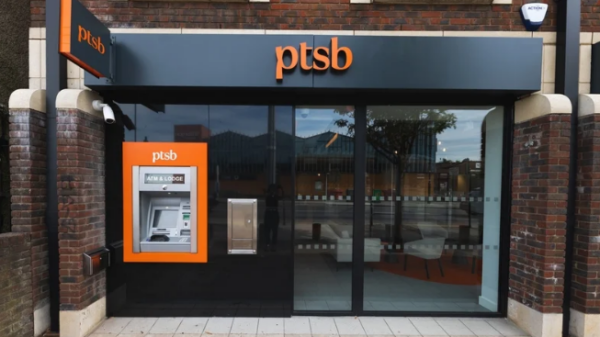
Fraudsters are increasingly using AI-generated images and videos to trick people into handing over sensitive personal and financial information, according to FraudSMART, the financial crime awareness initiative operated by the Banking and Payments Federation Ireland (BPFI). The organisation has reported a rise in online adverts promoting fake, State-backed investment schemes. These scams often use fabricated images of well-known politicians and business figures to make the offers appear legitimate and encourage users to click on registration links. Niamh Davenport, head of financial crime at BPFI, said scammers are deliberately exploiting recent media coverage of a planned State-backed savings and investment scheme to give their frauds a sense of credibility. “They often claim the scheme is open to everyone, but that places are limited and being ‘snapped up’ fast, in order to pressure people to act quickly,” she said. “They typically promise guaranteed returns or a guaranteed monthly income.” FraudSMART said that while anyone can be targeted, people in their early 50s are particularly vulnerable to investment scams. This age group is often focused on retirement planning, making them more receptive to financial offers that appear secure or high-yield. According to the organisation, most scams follow a similar pattern. Victims are first directed to click a registration link and complete a short online form providing their contact details. They are then contacted by someone posing as a financial adviser, who urges them to make an immediate “security deposit” to secure participation in the scheme. Once a payment is made, the money is quickly moved through multiple accounts, often overseas, making recovery extremely difficult. Davenport warned that scammers are becoming more sophisticated in their use of technology, particularly AI tools that allow them to create realistic but entirely fake promotional content. These materials are designed to mimic legitimate financial advertisements and build trust with potential victims. Recent figures from An Garda Síochána show investment fraud rose by 20% last year, with losses exceeding €20 million. The scale of individual scams varies widely, ranging from smaller crypto-related frauds involving a few hundred euro to large-scale investment schemes where victims lose tens of thousands. FraudSMART is urging the public to remain cautious when encountering online investment advertisements, especially those promising guaranteed returns or requiring urgent action. It also advises consumers to avoid sharing personal information with unverified sources and to be wary of pressure tactics designed to rush financial decisions. Authorities continue to warn that fraudsters are adapting quickly, using advanced digital tools to target victims across multiple platforms.

Trending

Business

Fraudsters are increasingly using AI-generated images and videos to trick people into handing over sensitive personal and financial information, according to FraudSMART, the financial crime awareness initiative operated by the Banking and Payments Federation Ireland (BPFI). The organisation has reported a rise in online adverts promoting fake, State-backed investment schemes. These scams often use fabricated images of well-known politicians and business figures to make the offers appear legitimate and encourage users to click on registration links. Niamh Davenport, head of financial crime at BPFI, said scammers are deliberately exploiting recent media coverage of a planned State-backed savings and investment scheme to give their frauds a sense of credibility. “They often claim the scheme is open to everyone, but that places are limited and being ‘snapped up’ fast, in order to pressure people to act quickly,” she said. “They typically promise guaranteed returns or a guaranteed monthly income.” FraudSMART said that while anyone can be targeted, people in their early 50s are particularly vulnerable to investment scams. This age group is often focused on retirement planning, making them more receptive to financial offers that appear secure or high-yield. According to the organisation, most scams follow a similar pattern. Victims are first directed to click a registration link and complete a short online form providing their contact details. They are then contacted by someone posing as a financial adviser, who urges them to make an immediate “security deposit” to secure participation in the scheme. Once a payment is made, the money is quickly moved through multiple accounts, often overseas, making recovery extremely difficult. Davenport warned that scammers are becoming more sophisticated in their use of technology, particularly AI tools that allow them to create realistic but entirely fake promotional content. These materials are designed to mimic legitimate financial advertisements and build trust with potential victims. Recent figures from An Garda Síochána show investment fraud rose by 20% last year, with losses exceeding €20 million. The scale of individual scams varies widely, ranging from smaller crypto-related frauds involving a few hundred euro to large-scale investment schemes where victims lose tens of thousands. FraudSMART is urging the public to remain cautious when encountering online investment advertisements, especially those promising guaranteed returns or requiring urgent action. It also advises consumers to avoid sharing personal information with unverified sources and to be wary of pressure tactics designed to rush financial decisions. Authorities continue to warn that fraudsters are adapting quickly, using advanced digital tools to target victims across multiple platforms.

You May Also Like

Politics

WASHINGTON — The Pentagon announced on Sunday that the United States will send a Terminal High Altitude Area Defense (THAAD) battery to Israel, alongside...

Health

NEW YORK — Teen smoking in the United States has reached an all-time low in 2024, with significant declines in overall youth tobacco use,...

Politics

WASHINGTON — As the countdown to the November 5 presidential election continues, former President Donald Trump is urging his supporters to aim for a...

Politics

In September, NASA announced that summer 2024 was the hottest on record. Just days later, the U.S. faced the dual impact of Hurricanes Helene...