













Connect with us

Hi, what are you looking for?

Politics

U.S. Orders 10% Cut in Flights as Shutdown Strains Air Traffic Control System

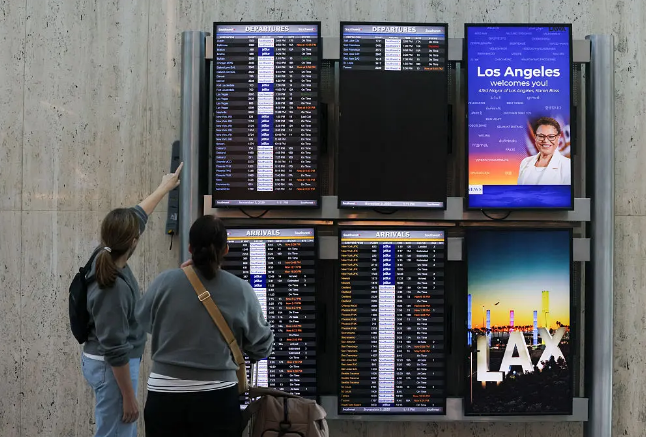
Air travelers across the United States are facing mounting disruptions as the longest government shutdown in American history deepens. With thousands of air traffic controllers working unpaid and under increasing strain, the Federal Aviation Administration (FAA) announced a 10% reduction in flights at 40 major airports starting Friday morning.

Transportation Secretary Sean Duffy confirmed the move on Wednesday, citing growing safety concerns linked to controller fatigue. The FAA will publish the official order on Thursday, and additional restrictions could follow if the situation worsens. “I’m not aware of any situation in my 35 years in aviation where we’ve had to take these kinds of measures,” FAA Administrator Bryan Bedford told reporters. “We’re in new territory when it comes to government shutdowns.”

The FAA currently operates with roughly 3,500 fewer air traffic controllers than normal, forcing those on duty to work six-day weeks with mandatory overtime. Bedford said the decision to cut flights was made after pilots and supervisors submitted reports warning of exhaustion among staff. “We’re starting to see evidence that fatigue is building in the system,” he said. “We need to relieve that pressure before it becomes a safety issue.”

Duffy had raised similar concerns in early October, warning that controllers distracted by financial uncertainty could put air safety at risk. “They’re not just thinking about the airspace,” he said during a visit to Newark Liberty International Airport. “They’re thinking about how to pay their mortgage or if they need to take a second job.”

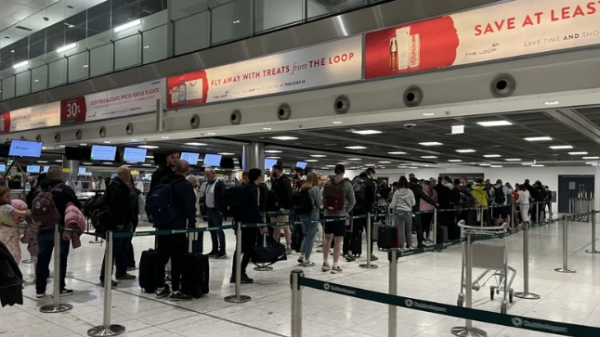
The impact on passengers is already being felt. Nearly 3,900 delays and more than 170 cancellations were recorded nationwide on Wednesday, according to FlightAware. The Association of Flight Attendants-CWA has called the situation an “unsustainable crisis,” urging Congress to end the shutdown immediately.

Major airlines are now preparing for the FAA’s flight reductions. United Airlines said it would offer refunds to all travelers, including those with non-refundable tickets. “Any customer traveling during this period is eligible for a refund if they do not wish to fly,” United CEO Scott Kirby said in a statement. He added that United will provide “rolling updates” to minimize disruption and that international and hub-to-hub routes will be prioritized.

Delta Airlines said it expects to operate most flights as planned, emphasizing that safety remains its “top priority.”

The FAA has not yet released the full list of affected airports but said reductions would apply to “high-volume markets.” In 2024, the 40 busiest U.S. airports each handled over five million passengers, with Atlanta’s Hartsfield-Jackson International, Dallas-Fort Worth, and Denver International among the most trafficked.

Duffy said the duration of the cuts will depend on staffing data and safety evaluations. “We have to make sure the system remains safe for everyone in the air and on the ground,” he said. “These measures will stay in place for as long as necessary.”


Business

Fraudsters are increasingly using AI-generated images and videos to trick people into handing over sensitive personal and financial information, according to FraudSMART, the financial crime awareness initiative operated by the Banking and Payments Federation Ireland (BPFI). The organisation has reported a rise in online adverts promoting fake, State-backed investment schemes. These scams often use fabricated images of well-known politicians and business figures to make the offers appear legitimate and encourage users to click on registration links. Niamh Davenport, head of financial crime at BPFI, said scammers are deliberately exploiting recent media coverage of a planned State-backed savings and investment scheme to give their frauds a sense of credibility. “They often claim the scheme is open to everyone, but that places are limited and being ‘snapped up’ fast, in order to pressure people to act quickly,” she said. “They typically promise guaranteed returns or a guaranteed monthly income.” FraudSMART said that while anyone can be targeted, people in their early 50s are particularly vulnerable to investment scams. This age group is often focused on retirement planning, making them more receptive to financial offers that appear secure or high-yield. According to the organisation, most scams follow a similar pattern. Victims are first directed to click a registration link and complete a short online form providing their contact details. They are then contacted by someone posing as a financial adviser, who urges them to make an immediate “security deposit” to secure participation in the scheme. Once a payment is made, the money is quickly moved through multiple accounts, often overseas, making recovery extremely difficult. Davenport warned that scammers are becoming more sophisticated in their use of technology, particularly AI tools that allow them to create realistic but entirely fake promotional content. These materials are designed to mimic legitimate financial advertisements and build trust with potential victims. Recent figures from An Garda Síochána show investment fraud rose by 20% last year, with losses exceeding €20 million. The scale of individual scams varies widely, ranging from smaller crypto-related frauds involving a few hundred euro to large-scale investment schemes where victims lose tens of thousands. FraudSMART is urging the public to remain cautious when encountering online investment advertisements, especially those promising guaranteed returns or requiring urgent action. It also advises consumers to avoid sharing personal information with unverified sources and to be wary of pressure tactics designed to rush financial decisions. Authorities continue to warn that fraudsters are adapting quickly, using advanced digital tools to target victims across multiple platforms.

Trending

Business

Fraudsters are increasingly using AI-generated images and videos to trick people into handing over sensitive personal and financial information, according to FraudSMART, the financial crime awareness initiative operated by the Banking and Payments Federation Ireland (BPFI). The organisation has reported a rise in online adverts promoting fake, State-backed investment schemes. These scams often use fabricated images of well-known politicians and business figures to make the offers appear legitimate and encourage users to click on registration links. Niamh Davenport, head of financial crime at BPFI, said scammers are deliberately exploiting recent media coverage of a planned State-backed savings and investment scheme to give their frauds a sense of credibility. “They often claim the scheme is open to everyone, but that places are limited and being ‘snapped up’ fast, in order to pressure people to act quickly,” she said. “They typically promise guaranteed returns or a guaranteed monthly income.” FraudSMART said that while anyone can be targeted, people in their early 50s are particularly vulnerable to investment scams. This age group is often focused on retirement planning, making them more receptive to financial offers that appear secure or high-yield. According to the organisation, most scams follow a similar pattern. Victims are first directed to click a registration link and complete a short online form providing their contact details. They are then contacted by someone posing as a financial adviser, who urges them to make an immediate “security deposit” to secure participation in the scheme. Once a payment is made, the money is quickly moved through multiple accounts, often overseas, making recovery extremely difficult. Davenport warned that scammers are becoming more sophisticated in their use of technology, particularly AI tools that allow them to create realistic but entirely fake promotional content. These materials are designed to mimic legitimate financial advertisements and build trust with potential victims. Recent figures from An Garda Síochána show investment fraud rose by 20% last year, with losses exceeding €20 million. The scale of individual scams varies widely, ranging from smaller crypto-related frauds involving a few hundred euro to large-scale investment schemes where victims lose tens of thousands. FraudSMART is urging the public to remain cautious when encountering online investment advertisements, especially those promising guaranteed returns or requiring urgent action. It also advises consumers to avoid sharing personal information with unverified sources and to be wary of pressure tactics designed to rush financial decisions. Authorities continue to warn that fraudsters are adapting quickly, using advanced digital tools to target victims across multiple platforms.

You May Also Like

Politics

WASHINGTON — The Pentagon announced on Sunday that the United States will send a Terminal High Altitude Area Defense (THAAD) battery to Israel, alongside...

Health

NEW YORK — Teen smoking in the United States has reached an all-time low in 2024, with significant declines in overall youth tobacco use,...

Politics

WASHINGTON — As the countdown to the November 5 presidential election continues, former President Donald Trump is urging his supporters to aim for a...

Politics

In September, NASA announced that summer 2024 was the hottest on record. Just days later, the U.S. faced the dual impact of Hurricanes Helene...