















Connect with us

Hi, what are you looking for?

Politics

Trump Targets Citizenship of Foreign-Born Americans, Sparking Legal and Political Concerns

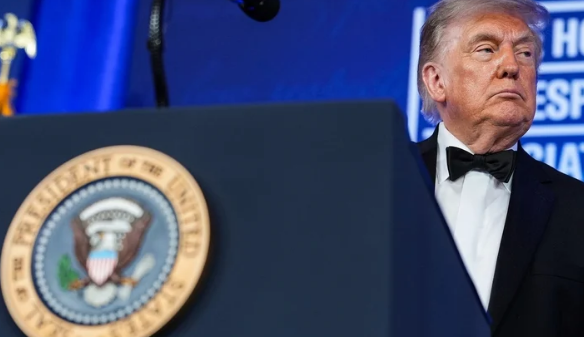
Since returning to the White House, President Donald Trump has intensified his immigration crackdown, raising questions about the citizenship status of some foreign-born Americans. His focus on denaturalization—revoking citizenship from individuals who became naturalized U.S. citizens—has prompted widespread concern among legal experts and civil rights advocates.

Minnesota has emerged as a focal point for Trump’s efforts, with the President citing fraud investigations involving government-funded programs. Trump has repeatedly singled out the state’s Somali community, linking some individuals’ criminal convictions to broader allegations that the community “destroys” the state. In a recent interview with the New York Times, Trump said, “I would do it in a heartbeat if they were dishonest. I think that many of the people that came in from Somalia, they hate our country.” He did not specify which groups might be targeted or what actions would meet the threshold for denaturalization.

This is not the first time Trump or his administration has referenced stripping citizenship. In December, White House press secretary Karoline Leavitt indicated that people of Somali descent convicted in fraud cases could have their citizenship revoked. The President has also previously targeted individuals, including Rep. Ilhan Omar of Minnesota and New York-born comedian Rosie O’Donnell, with threats of denaturalization, though legal mechanisms for removing citizenship from U.S.-born individuals are highly limited.

Reports obtained by the New York Times show that internal documents sent to U.S. Citizenship and Immigration Services (USCIS) field offices set monthly targets of 100–200 denaturalization cases in 2026. The quota represents a sharp increase compared with historical figures: between 1990 and 2017, 305 cases were filed, averaging 11 per year. During Trump’s first term, that number rose to 42 annually.

Trump’s policies have also affected immigration programs, including the termination of Temporary Protected Status (TPS) for Somalis in Minnesota and expanded reviews of green card entries from multiple countries, citing security concerns after violent incidents involving foreign nationals.

Legal experts note that naturalized U.S. citizens can only have their citizenship revoked under specific circumstances. USCIS guidance states that denaturalization may occur if citizenship was obtained through deliberate misrepresentation, illegal means, or affiliation with terrorist or totalitarian organizations within five years of naturalization. Cases must meet legal thresholds and are referred to the Justice Department for review, which maintains that there is no statute of limitations for denaturalization.

Democratic Sen. Ed Markey of Massachusetts condemned the reported denaturalization push, calling it “xenophobia disguised as policy” and emphasizing that all Americans, regardless of birthplace, deserve constitutional protections.

Trump’s statements and administrative directives mark a potential escalation of U.S. immigration enforcement, raising both legal and ethical questions about the scope of presidential authority over citizenship and the treatment of naturalized Americans.


Business

Fraudsters are increasingly using AI-generated images and videos to trick people into handing over sensitive personal and financial information, according to FraudSMART, the financial crime awareness initiative operated by the Banking and Payments Federation Ireland (BPFI). The organisation has reported a rise in online adverts promoting fake, State-backed investment schemes. These scams often use fabricated images of well-known politicians and business figures to make the offers appear legitimate and encourage users to click on registration links. Niamh Davenport, head of financial crime at BPFI, said scammers are deliberately exploiting recent media coverage of a planned State-backed savings and investment scheme to give their frauds a sense of credibility. “They often claim the scheme is open to everyone, but that places are limited and being ‘snapped up’ fast, in order to pressure people to act quickly,” she said. “They typically promise guaranteed returns or a guaranteed monthly income.” FraudSMART said that while anyone can be targeted, people in their early 50s are particularly vulnerable to investment scams. This age group is often focused on retirement planning, making them more receptive to financial offers that appear secure or high-yield. According to the organisation, most scams follow a similar pattern. Victims are first directed to click a registration link and complete a short online form providing their contact details. They are then contacted by someone posing as a financial adviser, who urges them to make an immediate “security deposit” to secure participation in the scheme. Once a payment is made, the money is quickly moved through multiple accounts, often overseas, making recovery extremely difficult. Davenport warned that scammers are becoming more sophisticated in their use of technology, particularly AI tools that allow them to create realistic but entirely fake promotional content. These materials are designed to mimic legitimate financial advertisements and build trust with potential victims. Recent figures from An Garda Síochána show investment fraud rose by 20% last year, with losses exceeding €20 million. The scale of individual scams varies widely, ranging from smaller crypto-related frauds involving a few hundred euro to large-scale investment schemes where victims lose tens of thousands. FraudSMART is urging the public to remain cautious when encountering online investment advertisements, especially those promising guaranteed returns or requiring urgent action. It also advises consumers to avoid sharing personal information with unverified sources and to be wary of pressure tactics designed to rush financial decisions. Authorities continue to warn that fraudsters are adapting quickly, using advanced digital tools to target victims across multiple platforms.

Trending

Business

Fraudsters are increasingly using AI-generated images and videos to trick people into handing over sensitive personal and financial information, according to FraudSMART, the financial crime awareness initiative operated by the Banking and Payments Federation Ireland (BPFI). The organisation has reported a rise in online adverts promoting fake, State-backed investment schemes. These scams often use fabricated images of well-known politicians and business figures to make the offers appear legitimate and encourage users to click on registration links. Niamh Davenport, head of financial crime at BPFI, said scammers are deliberately exploiting recent media coverage of a planned State-backed savings and investment scheme to give their frauds a sense of credibility. “They often claim the scheme is open to everyone, but that places are limited and being ‘snapped up’ fast, in order to pressure people to act quickly,” she said. “They typically promise guaranteed returns or a guaranteed monthly income.” FraudSMART said that while anyone can be targeted, people in their early 50s are particularly vulnerable to investment scams. This age group is often focused on retirement planning, making them more receptive to financial offers that appear secure or high-yield. According to the organisation, most scams follow a similar pattern. Victims are first directed to click a registration link and complete a short online form providing their contact details. They are then contacted by someone posing as a financial adviser, who urges them to make an immediate “security deposit” to secure participation in the scheme. Once a payment is made, the money is quickly moved through multiple accounts, often overseas, making recovery extremely difficult. Davenport warned that scammers are becoming more sophisticated in their use of technology, particularly AI tools that allow them to create realistic but entirely fake promotional content. These materials are designed to mimic legitimate financial advertisements and build trust with potential victims. Recent figures from An Garda Síochána show investment fraud rose by 20% last year, with losses exceeding €20 million. The scale of individual scams varies widely, ranging from smaller crypto-related frauds involving a few hundred euro to large-scale investment schemes where victims lose tens of thousands. FraudSMART is urging the public to remain cautious when encountering online investment advertisements, especially those promising guaranteed returns or requiring urgent action. It also advises consumers to avoid sharing personal information with unverified sources and to be wary of pressure tactics designed to rush financial decisions. Authorities continue to warn that fraudsters are adapting quickly, using advanced digital tools to target victims across multiple platforms.

You May Also Like

Politics

WASHINGTON — The Pentagon announced on Sunday that the United States will send a Terminal High Altitude Area Defense (THAAD) battery to Israel, alongside...

Health

NEW YORK — Teen smoking in the United States has reached an all-time low in 2024, with significant declines in overall youth tobacco use,...

Politics

WASHINGTON — As the countdown to the November 5 presidential election continues, former President Donald Trump is urging his supporters to aim for a...

Politics

In September, NASA announced that summer 2024 was the hottest on record. Just days later, the U.S. faced the dual impact of Hurricanes Helene...