

















Connect with us

Hi, what are you looking for?

Politics

Trump Sanctions ICC Over Netanyahu Arrest Warrant, Raising Concerns About Global War Crimes Prosecutions

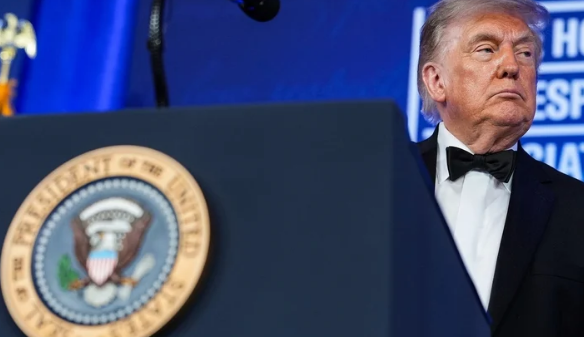
President Donald Trump has signed an executive order imposing sanctions on the International Criminal Court (ICC), escalating tensions with the global tribunal after it issued arrest warrants for Israeli Prime Minister Benjamin Netanyahu and former Defense Minister Yoav Gallant over alleged war crimes in Gaza.

The executive order, signed Thursday, accuses the ICC of “illegitimate and baseless actions targeting America and our close ally Israel.” The move has sparked condemnation from The Hague-based court, which vowed to continue its work.

“The Court stands firmly by its personnel and pledges to continue providing justice and hope to millions of innocent victims of atrocities across the world,” the ICC said in a statement.

What is the ICC?

The International Criminal Court was established in 2002 to prosecute individuals responsible for war crimes, genocide, crimes against humanity, and aggression. It steps in when national governments are unwilling or unable to conduct fair trials for such offenses.

While 125 countries are members of the court under the Rome Statute, the United States and Israel have never joined. The ICC has convicted 11 individuals, including Congolese warlord Thomas Lubanga in 2012 and Ugandan rebel commander Dominic Ongwen in 2021.

Impact of Trump’s Sanctions

Trump’s order invokes emergency powers allowing the U.S. Treasury and State Departments to issue financial and travel sanctions against ICC personnel. The court’s chief prosecutor, Karim Khan, and the judges who approved Netanyahu’s arrest warrant are expected to be among the targets.

This is not the first time Trump has taken action against the ICC. During his first term, he sanctioned former prosecutor Fatou Bensouda over her investigation into alleged U.S. war crimes in Afghanistan, blocking her access to U.S. financial assets and barring her and her family from entering the country.

The new sanctions could severely impact the ICC’s operations, potentially freezing financial assets and restricting international cooperation.

Why Was Netanyahu Issued an Arrest Warrant?

In November, ICC judges approved arrest warrants for Netanyahu and Gallant, accusing them of war crimes and crimes against humanity, including the use of “starvation as a method of warfare” by restricting humanitarian aid to Gaza.

The decision marked the first time a sitting leader of a major Western ally has faced such charges from the ICC, putting Netanyahu and Gallant at risk of arrest when traveling abroad. Israeli officials have strongly denied the allegations.

Could Sanctions Affect Ongoing ICC Cases?

The ICC currently has no active trials for the first time since its founding. However, it has issued 33 unsealed arrest warrants, including for Russian President Vladimir Putin, Ugandan warlord Joseph Kony, and Georgian official Gamlet Guchmazov.

Three pending verdicts remain, including the cases of Patrice-Edouard Ngaïssona and Alfred Yekatom, accused of war crimes in the Central African Republic. Meanwhile, the trial of Sudanese Janjaweed militia leader Ali Abdul Rahman concluded last year.

The sanctions could complicate future arrests and trials, raising concerns about the ICC’s ability to hold world leaders accountable for war crimes.


Business

Fraudsters are increasingly using AI-generated images and videos to trick people into handing over sensitive personal and financial information, according to FraudSMART, the financial crime awareness initiative operated by the Banking and Payments Federation Ireland (BPFI). The organisation has reported a rise in online adverts promoting fake, State-backed investment schemes. These scams often use fabricated images of well-known politicians and business figures to make the offers appear legitimate and encourage users to click on registration links. Niamh Davenport, head of financial crime at BPFI, said scammers are deliberately exploiting recent media coverage of a planned State-backed savings and investment scheme to give their frauds a sense of credibility. “They often claim the scheme is open to everyone, but that places are limited and being ‘snapped up’ fast, in order to pressure people to act quickly,” she said. “They typically promise guaranteed returns or a guaranteed monthly income.” FraudSMART said that while anyone can be targeted, people in their early 50s are particularly vulnerable to investment scams. This age group is often focused on retirement planning, making them more receptive to financial offers that appear secure or high-yield. According to the organisation, most scams follow a similar pattern. Victims are first directed to click a registration link and complete a short online form providing their contact details. They are then contacted by someone posing as a financial adviser, who urges them to make an immediate “security deposit” to secure participation in the scheme. Once a payment is made, the money is quickly moved through multiple accounts, often overseas, making recovery extremely difficult. Davenport warned that scammers are becoming more sophisticated in their use of technology, particularly AI tools that allow them to create realistic but entirely fake promotional content. These materials are designed to mimic legitimate financial advertisements and build trust with potential victims. Recent figures from An Garda Síochána show investment fraud rose by 20% last year, with losses exceeding €20 million. The scale of individual scams varies widely, ranging from smaller crypto-related frauds involving a few hundred euro to large-scale investment schemes where victims lose tens of thousands. FraudSMART is urging the public to remain cautious when encountering online investment advertisements, especially those promising guaranteed returns or requiring urgent action. It also advises consumers to avoid sharing personal information with unverified sources and to be wary of pressure tactics designed to rush financial decisions. Authorities continue to warn that fraudsters are adapting quickly, using advanced digital tools to target victims across multiple platforms.

Trending

Business

Fraudsters are increasingly using AI-generated images and videos to trick people into handing over sensitive personal and financial information, according to FraudSMART, the financial crime awareness initiative operated by the Banking and Payments Federation Ireland (BPFI). The organisation has reported a rise in online adverts promoting fake, State-backed investment schemes. These scams often use fabricated images of well-known politicians and business figures to make the offers appear legitimate and encourage users to click on registration links. Niamh Davenport, head of financial crime at BPFI, said scammers are deliberately exploiting recent media coverage of a planned State-backed savings and investment scheme to give their frauds a sense of credibility. “They often claim the scheme is open to everyone, but that places are limited and being ‘snapped up’ fast, in order to pressure people to act quickly,” she said. “They typically promise guaranteed returns or a guaranteed monthly income.” FraudSMART said that while anyone can be targeted, people in their early 50s are particularly vulnerable to investment scams. This age group is often focused on retirement planning, making them more receptive to financial offers that appear secure or high-yield. According to the organisation, most scams follow a similar pattern. Victims are first directed to click a registration link and complete a short online form providing their contact details. They are then contacted by someone posing as a financial adviser, who urges them to make an immediate “security deposit” to secure participation in the scheme. Once a payment is made, the money is quickly moved through multiple accounts, often overseas, making recovery extremely difficult. Davenport warned that scammers are becoming more sophisticated in their use of technology, particularly AI tools that allow them to create realistic but entirely fake promotional content. These materials are designed to mimic legitimate financial advertisements and build trust with potential victims. Recent figures from An Garda Síochána show investment fraud rose by 20% last year, with losses exceeding €20 million. The scale of individual scams varies widely, ranging from smaller crypto-related frauds involving a few hundred euro to large-scale investment schemes where victims lose tens of thousands. FraudSMART is urging the public to remain cautious when encountering online investment advertisements, especially those promising guaranteed returns or requiring urgent action. It also advises consumers to avoid sharing personal information with unverified sources and to be wary of pressure tactics designed to rush financial decisions. Authorities continue to warn that fraudsters are adapting quickly, using advanced digital tools to target victims across multiple platforms.

You May Also Like

Politics

WASHINGTON — The Pentagon announced on Sunday that the United States will send a Terminal High Altitude Area Defense (THAAD) battery to Israel, alongside...

Health

NEW YORK — Teen smoking in the United States has reached an all-time low in 2024, with significant declines in overall youth tobacco use,...

Politics

WASHINGTON — As the countdown to the November 5 presidential election continues, former President Donald Trump is urging his supporters to aim for a...

Politics

In September, NASA announced that summer 2024 was the hottest on record. Just days later, the U.S. faced the dual impact of Hurricanes Helene...