
















Connect with us

Hi, what are you looking for?

Politics

Trump Orders Firing of Top Labor Official After Weak Jobs Report Sparks Economic Concerns

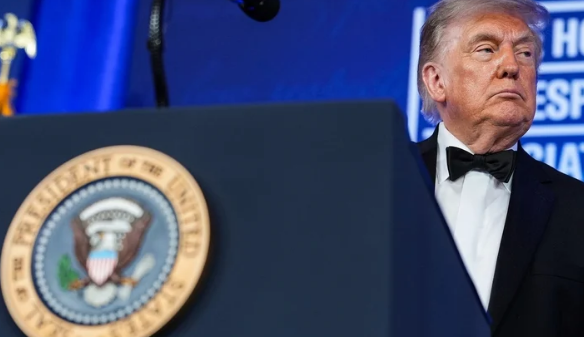
President Donald Trump has ordered the dismissal of Erika McEntarfer, Commissioner of the Bureau of Labor Statistics (BLS), after the agency released a disappointing jobs report for July, showing significantly weaker employment growth than anticipated and sparking concerns about the health of the U.S. economy.

The president made the announcement Friday via Truth Social, where he criticized McEntarfer—appointed under the Biden administration—for allegedly politicizing economic data. “We need accurate jobs numbers,” Trump wrote. “I have directed my team to fire this Biden political appointee, IMMEDIATELY. She will be replaced with someone much more competent and qualified.”

The BLS report showed the U.S. added just 73,000 jobs in July, while the unemployment rate ticked up to 4.2% from 4.1%. More alarmingly, the agency made sharp downward revisions to the previous two months’ job growth figures. May’s total was revised down from 144,000 to just 19,000, and June’s from 147,000 to 14,000—an overall reduction of 258,000 jobs.

Economists say the figures reflect a broader slowdown linked to the Trump administration’s erratic trade and economic policies, including sweeping tariffs and mass federal layoffs. Job losses continued in the federal sector, which shed 12,000 positions in July, bringing total government employment losses this year to 84,000.

The manufacturing industry also posted its third consecutive month of decline, losing 11,000 jobs in July. Despite the administration’s claims that protectionist tariffs would revitalize domestic manufacturing, industry analysts report rising input costs and weakened demand have dampened growth.

In contrast, healthcare and social assistance remained bright spots. Healthcare added 55,000 jobs in July—well above its 12-month average—and 18,000 more were added in social assistance roles. These sectors, typically resistant to economic downturns, have been key drivers of employment during a period of mounting uncertainty.

The report triggered strong reactions from Democratic lawmakers. Rep. Brendan Boyle (D-Pa.), ranking member of the House Budget Committee, said in a statement: “While Trump hands out tax breaks to billionaires and stokes reckless trade wars, middle-class families are left paying the price.”

The abrupt move to oust McEntarfer has raised alarms among economists and statisticians. Critics warn it threatens the integrity of independent data collection. “Firing a nonpartisan statistician for politically inconvenient numbers undermines the credibility of U.S. economic data,” said a former senior BLS official.

With the labor market faltering and businesses facing uncertainty over tariffs and policy direction, pressure is mounting on the Federal Reserve to cut interest rates to prevent further economic deterioration.


Business

Fraudsters are increasingly using AI-generated images and videos to trick people into handing over sensitive personal and financial information, according to FraudSMART, the financial crime awareness initiative operated by the Banking and Payments Federation Ireland (BPFI). The organisation has reported a rise in online adverts promoting fake, State-backed investment schemes. These scams often use fabricated images of well-known politicians and business figures to make the offers appear legitimate and encourage users to click on registration links. Niamh Davenport, head of financial crime at BPFI, said scammers are deliberately exploiting recent media coverage of a planned State-backed savings and investment scheme to give their frauds a sense of credibility. “They often claim the scheme is open to everyone, but that places are limited and being ‘snapped up’ fast, in order to pressure people to act quickly,” she said. “They typically promise guaranteed returns or a guaranteed monthly income.” FraudSMART said that while anyone can be targeted, people in their early 50s are particularly vulnerable to investment scams. This age group is often focused on retirement planning, making them more receptive to financial offers that appear secure or high-yield. According to the organisation, most scams follow a similar pattern. Victims are first directed to click a registration link and complete a short online form providing their contact details. They are then contacted by someone posing as a financial adviser, who urges them to make an immediate “security deposit” to secure participation in the scheme. Once a payment is made, the money is quickly moved through multiple accounts, often overseas, making recovery extremely difficult. Davenport warned that scammers are becoming more sophisticated in their use of technology, particularly AI tools that allow them to create realistic but entirely fake promotional content. These materials are designed to mimic legitimate financial advertisements and build trust with potential victims. Recent figures from An Garda Síochána show investment fraud rose by 20% last year, with losses exceeding €20 million. The scale of individual scams varies widely, ranging from smaller crypto-related frauds involving a few hundred euro to large-scale investment schemes where victims lose tens of thousands. FraudSMART is urging the public to remain cautious when encountering online investment advertisements, especially those promising guaranteed returns or requiring urgent action. It also advises consumers to avoid sharing personal information with unverified sources and to be wary of pressure tactics designed to rush financial decisions. Authorities continue to warn that fraudsters are adapting quickly, using advanced digital tools to target victims across multiple platforms.

Trending

Business

Fraudsters are increasingly using AI-generated images and videos to trick people into handing over sensitive personal and financial information, according to FraudSMART, the financial crime awareness initiative operated by the Banking and Payments Federation Ireland (BPFI). The organisation has reported a rise in online adverts promoting fake, State-backed investment schemes. These scams often use fabricated images of well-known politicians and business figures to make the offers appear legitimate and encourage users to click on registration links. Niamh Davenport, head of financial crime at BPFI, said scammers are deliberately exploiting recent media coverage of a planned State-backed savings and investment scheme to give their frauds a sense of credibility. “They often claim the scheme is open to everyone, but that places are limited and being ‘snapped up’ fast, in order to pressure people to act quickly,” she said. “They typically promise guaranteed returns or a guaranteed monthly income.” FraudSMART said that while anyone can be targeted, people in their early 50s are particularly vulnerable to investment scams. This age group is often focused on retirement planning, making them more receptive to financial offers that appear secure or high-yield. According to the organisation, most scams follow a similar pattern. Victims are first directed to click a registration link and complete a short online form providing their contact details. They are then contacted by someone posing as a financial adviser, who urges them to make an immediate “security deposit” to secure participation in the scheme. Once a payment is made, the money is quickly moved through multiple accounts, often overseas, making recovery extremely difficult. Davenport warned that scammers are becoming more sophisticated in their use of technology, particularly AI tools that allow them to create realistic but entirely fake promotional content. These materials are designed to mimic legitimate financial advertisements and build trust with potential victims. Recent figures from An Garda Síochána show investment fraud rose by 20% last year, with losses exceeding €20 million. The scale of individual scams varies widely, ranging from smaller crypto-related frauds involving a few hundred euro to large-scale investment schemes where victims lose tens of thousands. FraudSMART is urging the public to remain cautious when encountering online investment advertisements, especially those promising guaranteed returns or requiring urgent action. It also advises consumers to avoid sharing personal information with unverified sources and to be wary of pressure tactics designed to rush financial decisions. Authorities continue to warn that fraudsters are adapting quickly, using advanced digital tools to target victims across multiple platforms.

You May Also Like

Politics

WASHINGTON — The Pentagon announced on Sunday that the United States will send a Terminal High Altitude Area Defense (THAAD) battery to Israel, alongside...

Health

NEW YORK — Teen smoking in the United States has reached an all-time low in 2024, with significant declines in overall youth tobacco use,...

Politics

WASHINGTON — As the countdown to the November 5 presidential election continues, former President Donald Trump is urging his supporters to aim for a...

Politics

In September, NASA announced that summer 2024 was the hottest on record. Just days later, the U.S. faced the dual impact of Hurricanes Helene...