





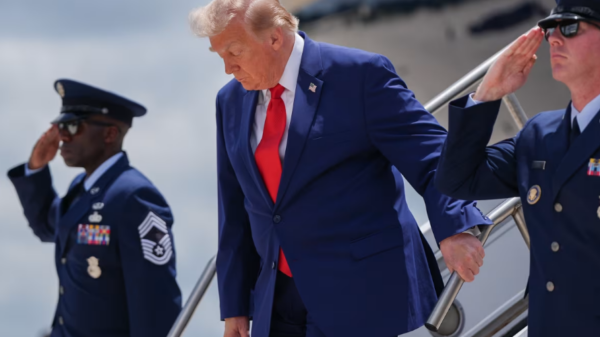







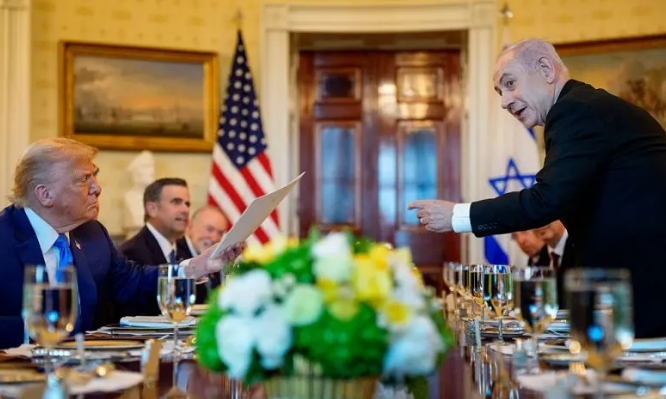
Former U.S. President Donald Trump has once again entered the spotlight in his long-running campaign for a Nobel Peace Prize, following a formal nomination by Israeli Prime Minister Benjamin Netanyahu during a visit to the White House earlier this week.
In a symbolic gesture, Netanyahu handed Trump a copy of a letter he claimed to have sent to the Nobel committee, nominating the former president for the prestigious international award. “It’s nominating you for the Peace Prize, which is well-deserved. And you should get it,” Netanyahu told Trump, who responded, “Coming from you, in particular, this is very meaningful.”
The Nobel Peace Prize, awarded annually since 1901 by a Norwegian committee, recognizes efforts to foster peace, reduce armed conflict, and promote diplomacy. Past recipients include anti-nuclear activists, human rights defenders, and leaders who helped end longstanding conflicts.
Trump has repeatedly voiced his desire for the honour and expressed frustration over what he perceives as a lack of recognition, particularly after former President Barack Obama received the prize in 2009 during his first year in office. In recent months, Trump has pointed to his administration’s role in brokering the Abraham Accords in the Middle East and facilitating diplomatic breakthroughs in regions such as Kosovo, Serbia, and East Africa as justification for being considered.
In a recent post on his platform Truth Social, Trump wrote, “I won’t get a Nobel Peace Prize no matter what I do… but the people know, and that’s all that matters to me!”
Netanyahu’s nomination has sparked criticism, given his own controversial record. The Israeli leader is facing accusations of war crimes over Israel’s ongoing military campaign in Gaza, which has resulted in tens of thousands of Palestinian deaths. Critics have dismissed the nomination as a political stunt rather than a serious endorsement.
Despite the controversy, Netanyahu is not alone in putting Trump forward. Several others have nominated the former president this year, including Republican lawmakers such as Rep. Buddy Carter (Georgia), who cited Trump’s role in securing a ceasefire between Israel and Iran, and Pakistani officials, who referenced his mediation efforts between India and Pakistan.
Nominations for the Nobel Peace Prize can be submitted by a wide range of individuals, including heads of state, parliamentarians, university professors, and former laureates. However, the Nobel committee does not publicly confirm nominations, and final decisions are announced in October.
While some former nominees, including a Ukrainian politician, have since withdrawn their support, citing disillusionment over Trump’s handling of international conflicts, others remain committed to seeing him recognised.
As anticipation builds ahead of this year’s announcement, Trump’s persistent focus on the prize continues to stir both support and controversy—adding another chapter to his complex legacy on the world stage.