







Connect with us

Hi, what are you looking for?

Politics

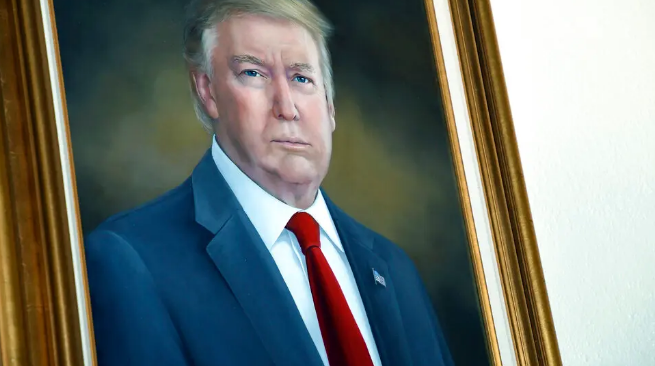
Trump Demands Removal of His Portrait from Colorado State Capitol

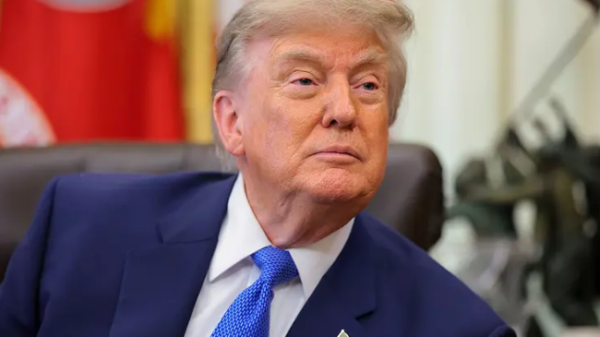
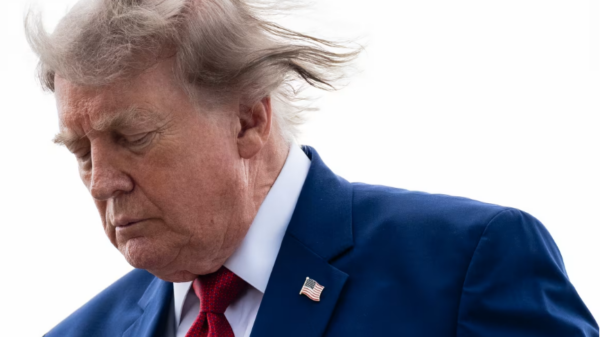
Former President Donald Trump has called for the removal of his portrait from the Colorado State Capitol, claiming the painting is unflattering and intentionally distorted.

In a post on Truth Social, Trump expressed his dissatisfaction with the artwork, stating, “Nobody likes a bad picture or painting of themselves, but the one in Colorado, in the State Capitol, put up by the Governor, along with all other Presidents, was purposefully distorted to a level that even I, perhaps, have never seen before.” He added that many Colorado residents have voiced complaints about the portrait, prompting him to contact Governor Jared Polis for its removal.

A spokesperson for Governor Polis responded to the controversy, telling Denver’s 9News that the governor was “surprised to learn the President of the United States is an aficionado of our Colorado State Capitol and its artwork.” The statement added that the state welcomes interest in its capitol and is always looking to improve the visitor experience.

The portrait in question was not commissioned by Polis or any political opponent of Trump. Instead, it was funded through private donations collected by Colorado Citizens for Culture, a grassroots organization supporting the arts. The group initially struggled to raise the $10,000 required for the portrait, prompting then-State Senate President Kevin Grantham to launch a GoFundMe campaign in 2018. The fundraiser quickly met its goal in just over a day, with support from approximately 200 donors, including notable state Republicans and a former Democratic state representative.

The painting, created by Colorado Springs-based artist Sarah A. Boardman, was unveiled in August 2019 during a bipartisan ceremony at the State Capitol. Boardman, who also painted Barack Obama’s portrait for the Capitol, stated at the time that she aimed to match the classical realist style of previous presidential portraits. “My portrait of President Trump has been called thoughtful, non-confrontational, not angry, not happy, not tweeting,” she said. “In five, 10, 15, 20 years, he will be another President on the wall who is only historical background, and he needs to look neutral.”

The controversy surrounding Trump’s portrait is not the first time an image of the former president has sparked debate in Colorado’s Capitol. In 2018, before the official portrait was commissioned, activists from ProgressNow Colorado placed a framed picture of Russian President Vladimir Putin in the empty space reserved for Trump’s portrait as a protest against Russian influence in U.S. politics. The incident drew national attention and disciplinary action against the legislative staffer involved.

Trump’s dissatisfaction with his Colorado portrait is reminiscent of past presidential reactions to their official likenesses. Theodore Roosevelt famously despised his White House portrait by French artist Theobald Chartran, calling it unflattering and ultimately having it destroyed. Whether Trump’s portrait in Colorado faces a similar fate remains uncertain. However, reports indicate that Trump was recently gifted a portrait by a leading Russian artist, commissioned by Putin, which he reportedly appreciated.

As the debate over the Colorado portrait unfolds, state officials have yet to announce any plans to remove or replace the artwork.


Business

Fraudsters are increasingly using AI-generated images and videos to trick people into handing over sensitive personal and financial information, according to FraudSMART, the financial crime awareness initiative operated by the Banking and Payments Federation Ireland (BPFI). The organisation has reported a rise in online adverts promoting fake, State-backed investment schemes. These scams often use fabricated images of well-known politicians and business figures to make the offers appear legitimate and encourage users to click on registration links. Niamh Davenport, head of financial crime at BPFI, said scammers are deliberately exploiting recent media coverage of a planned State-backed savings and investment scheme to give their frauds a sense of credibility. “They often claim the scheme is open to everyone, but that places are limited and being ‘snapped up’ fast, in order to pressure people to act quickly,” she said. “They typically promise guaranteed returns or a guaranteed monthly income.” FraudSMART said that while anyone can be targeted, people in their early 50s are particularly vulnerable to investment scams. This age group is often focused on retirement planning, making them more receptive to financial offers that appear secure or high-yield. According to the organisation, most scams follow a similar pattern. Victims are first directed to click a registration link and complete a short online form providing their contact details. They are then contacted by someone posing as a financial adviser, who urges them to make an immediate “security deposit” to secure participation in the scheme. Once a payment is made, the money is quickly moved through multiple accounts, often overseas, making recovery extremely difficult. Davenport warned that scammers are becoming more sophisticated in their use of technology, particularly AI tools that allow them to create realistic but entirely fake promotional content. These materials are designed to mimic legitimate financial advertisements and build trust with potential victims. Recent figures from An Garda Síochána show investment fraud rose by 20% last year, with losses exceeding €20 million. The scale of individual scams varies widely, ranging from smaller crypto-related frauds involving a few hundred euro to large-scale investment schemes where victims lose tens of thousands. FraudSMART is urging the public to remain cautious when encountering online investment advertisements, especially those promising guaranteed returns or requiring urgent action. It also advises consumers to avoid sharing personal information with unverified sources and to be wary of pressure tactics designed to rush financial decisions. Authorities continue to warn that fraudsters are adapting quickly, using advanced digital tools to target victims across multiple platforms.

Trending

Business

Fraudsters are increasingly using AI-generated images and videos to trick people into handing over sensitive personal and financial information, according to FraudSMART, the financial crime awareness initiative operated by the Banking and Payments Federation Ireland (BPFI). The organisation has reported a rise in online adverts promoting fake, State-backed investment schemes. These scams often use fabricated images of well-known politicians and business figures to make the offers appear legitimate and encourage users to click on registration links. Niamh Davenport, head of financial crime at BPFI, said scammers are deliberately exploiting recent media coverage of a planned State-backed savings and investment scheme to give their frauds a sense of credibility. “They often claim the scheme is open to everyone, but that places are limited and being ‘snapped up’ fast, in order to pressure people to act quickly,” she said. “They typically promise guaranteed returns or a guaranteed monthly income.” FraudSMART said that while anyone can be targeted, people in their early 50s are particularly vulnerable to investment scams. This age group is often focused on retirement planning, making them more receptive to financial offers that appear secure or high-yield. According to the organisation, most scams follow a similar pattern. Victims are first directed to click a registration link and complete a short online form providing their contact details. They are then contacted by someone posing as a financial adviser, who urges them to make an immediate “security deposit” to secure participation in the scheme. Once a payment is made, the money is quickly moved through multiple accounts, often overseas, making recovery extremely difficult. Davenport warned that scammers are becoming more sophisticated in their use of technology, particularly AI tools that allow them to create realistic but entirely fake promotional content. These materials are designed to mimic legitimate financial advertisements and build trust with potential victims. Recent figures from An Garda Síochána show investment fraud rose by 20% last year, with losses exceeding €20 million. The scale of individual scams varies widely, ranging from smaller crypto-related frauds involving a few hundred euro to large-scale investment schemes where victims lose tens of thousands. FraudSMART is urging the public to remain cautious when encountering online investment advertisements, especially those promising guaranteed returns or requiring urgent action. It also advises consumers to avoid sharing personal information with unverified sources and to be wary of pressure tactics designed to rush financial decisions. Authorities continue to warn that fraudsters are adapting quickly, using advanced digital tools to target victims across multiple platforms.

You May Also Like

Politics

WASHINGTON — The Pentagon announced on Sunday that the United States will send a Terminal High Altitude Area Defense (THAAD) battery to Israel, alongside...

Health

NEW YORK — Teen smoking in the United States has reached an all-time low in 2024, with significant declines in overall youth tobacco use,...

Politics

WASHINGTON — As the countdown to the November 5 presidential election continues, former President Donald Trump is urging his supporters to aim for a...

Politics

In September, NASA announced that summer 2024 was the hottest on record. Just days later, the U.S. faced the dual impact of Hurricanes Helene...