












Connect with us

Hi, what are you looking for?

Politics

Trump Considers Moving U.S. Postal Service Under Commerce Department

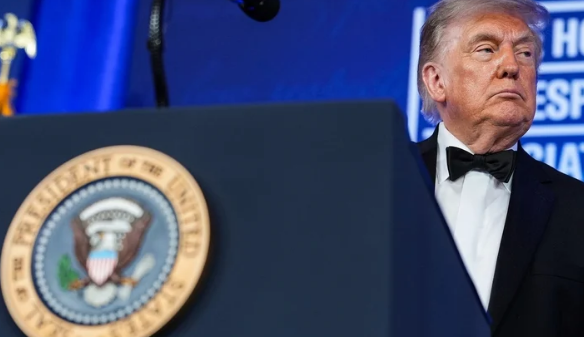
President Donald Trump announced Friday that his administration is considering placing the U.S. Postal Service (USPS) under the control of the Commerce Department. The potential move would mark the first time since 1970 that the agency, which currently operates independently, would be overseen by the executive branch.

“We want to have a post office that works well and doesn’t lose massive amounts of money,” Trump said during the swearing-in ceremony of Commerce Secretary Howard Lutnick. “It’ll be a form of a merger, but it’ll remain the Postal Service, and I think it’ll operate a lot better.”

Trump emphasized Lutnick’s business experience as a key factor in the decision, stating, “He’s got a great business instinct, which is what we need, and we think we can turn it around.”

The USPS, founded during the Second Continental Congress in 1775, became an independent agency through the Postal Reorganization Act of 1970 following an eight-day postal strike. Today, the service employs about 640,000 workers, delivering mail and packages across the nation, including remote areas. Despite its essential role, the USPS has faced financial challenges, accumulating $87 billion in losses between 2007 and 2020 due to declining first-class mail volume and retiree benefit costs.

Louis DeJoy, a Republican donor and former logistics executive, has served as Postmaster General since 2020. His tenure has been marked by efforts to cut costs, streamline operations, and implement a 10-year modernization plan, which includes service changes and rate increases. However, DeJoy announced plans to step down, urging the Postal Service Board of Governors to begin searching for his successor.

The USPS Board of Governors, consisting of up to nine members appointed by the president and confirmed by the Senate, oversees the agency. Currently, the board has six members, with three vacancies awaiting Senate approval. The board’s chair, Amber F. McReynolds, was appointed by President Joe Biden, while Derek Kan, the vice chair, served in Trump’s administration.

Trump has long criticized the Postal Service’s financial performance and its relationship with major shipping companies like Amazon. In 2020, he threatened to withhold COVID-19 relief funding unless USPS raised package rates for large customers. More recently, he has considered privatization, citing competition from Amazon, UPS, and FedEx.

While Trump’s latest proposal to integrate USPS into the Commerce Department aims to reduce financial losses, critics argue it could jeopardize the agency’s independence and public service mandate. The plan would require approval from Congress, where lawmakers are divided over the future of the nation’s mail system.


 

Business

Fraudsters are increasingly using AI-generated images and videos to trick people into handing over sensitive personal and financial information, according to FraudSMART, the financial crime awareness initiative operated by the Banking and Payments Federation Ireland (BPFI). The organisation has reported a rise in online adverts promoting fake, State-backed investment schemes. These scams often use fabricated images of well-known politicians and business figures to make the offers appear legitimate and encourage users to click on registration links. Niamh Davenport, head of financial crime at BPFI, said scammers are deliberately exploiting recent media coverage of a planned State-backed savings and investment scheme to give their frauds a sense of credibility. “They often claim the scheme is open to everyone, but that places are limited and being ‘snapped up’ fast, in order to pressure people to act quickly,” she said. “They typically promise guaranteed returns or a guaranteed monthly income.” FraudSMART said that while anyone can be targeted, people in their early 50s are particularly vulnerable to investment scams. This age group is often focused on retirement planning, making them more receptive to financial offers that appear secure or high-yield. According to the organisation, most scams follow a similar pattern. Victims are first directed to click a registration link and complete a short online form providing their contact details. They are then contacted by someone posing as a financial adviser, who urges them to make an immediate “security deposit” to secure participation in the scheme. Once a payment is made, the money is quickly moved through multiple accounts, often overseas, making recovery extremely difficult. Davenport warned that scammers are becoming more sophisticated in their use of technology, particularly AI tools that allow them to create realistic but entirely fake promotional content. These materials are designed to mimic legitimate financial advertisements and build trust with potential victims. Recent figures from An Garda Síochána show investment fraud rose by 20% last year, with losses exceeding €20 million. The scale of individual scams varies widely, ranging from smaller crypto-related frauds involving a few hundred euro to large-scale investment schemes where victims lose tens of thousands. FraudSMART is urging the public to remain cautious when encountering online investment advertisements, especially those promising guaranteed returns or requiring urgent action. It also advises consumers to avoid sharing personal information with unverified sources and to be wary of pressure tactics designed to rush financial decisions. Authorities continue to warn that fraudsters are adapting quickly, using advanced digital tools to target victims across multiple platforms.

Trending

Business

Fraudsters are increasingly using AI-generated images and videos to trick people into handing over sensitive personal and financial information, according to FraudSMART, the financial crime awareness initiative operated by the Banking and Payments Federation Ireland (BPFI). The organisation has reported a rise in online adverts promoting fake, State-backed investment schemes. These scams often use fabricated images of well-known politicians and business figures to make the offers appear legitimate and encourage users to click on registration links. Niamh Davenport, head of financial crime at BPFI, said scammers are deliberately exploiting recent media coverage of a planned State-backed savings and investment scheme to give their frauds a sense of credibility. “They often claim the scheme is open to everyone, but that places are limited and being ‘snapped up’ fast, in order to pressure people to act quickly,” she said. “They typically promise guaranteed returns or a guaranteed monthly income.” FraudSMART said that while anyone can be targeted, people in their early 50s are particularly vulnerable to investment scams. This age group is often focused on retirement planning, making them more receptive to financial offers that appear secure or high-yield. According to the organisation, most scams follow a similar pattern. Victims are first directed to click a registration link and complete a short online form providing their contact details. They are then contacted by someone posing as a financial adviser, who urges them to make an immediate “security deposit” to secure participation in the scheme. Once a payment is made, the money is quickly moved through multiple accounts, often overseas, making recovery extremely difficult. Davenport warned that scammers are becoming more sophisticated in their use of technology, particularly AI tools that allow them to create realistic but entirely fake promotional content. These materials are designed to mimic legitimate financial advertisements and build trust with potential victims. Recent figures from An Garda Síochána show investment fraud rose by 20% last year, with losses exceeding €20 million. The scale of individual scams varies widely, ranging from smaller crypto-related frauds involving a few hundred euro to large-scale investment schemes where victims lose tens of thousands. FraudSMART is urging the public to remain cautious when encountering online investment advertisements, especially those promising guaranteed returns or requiring urgent action. It also advises consumers to avoid sharing personal information with unverified sources and to be wary of pressure tactics designed to rush financial decisions. Authorities continue to warn that fraudsters are adapting quickly, using advanced digital tools to target victims across multiple platforms.

You May Also Like

Politics

WASHINGTON — The Pentagon announced on Sunday that the United States will send a Terminal High Altitude Area Defense (THAAD) battery to Israel, alongside...

Health

NEW YORK — Teen smoking in the United States has reached an all-time low in 2024, with significant declines in overall youth tobacco use,...

Politics

WASHINGTON — As the countdown to the November 5 presidential election continues, former President Donald Trump is urging his supporters to aim for a...

Politics

In September, NASA announced that summer 2024 was the hottest on record. Just days later, the U.S. faced the dual impact of Hurricanes Helene...