


















Connect with us

Hi, what are you looking for?

Politics

Trump Announces Capture of Venezuelan President Maduro in U.S. Military Operation

President Donald Trump announced on Saturday that Venezuelan President Nicolás Maduro and his wife, Cilia Flores, had been captured in a “large-scale” U.S. military operation, marking the most significant American intervention in Latin America since the 1989 invasion of Panama. Trump described the mission as a “brilliant operation” carried out in conjunction with U.S. law enforcement, and said all personnel involved returned safely.

The strike comes after months of escalating pressure from the Trump Administration, which has repeatedly accused Maduro of running a “narco state” and called for him to step down. Maduro was indicted in 2020 on corruption and drug trafficking charges in the United States, and the State Department had offered a $50 million reward for information leading to his arrest or conviction.

Vice President JD Vance said Trump offered Maduro “multiple off ramps,” but emphasized that drug trafficking must end and that stolen Venezuelan oil must be returned. Attorney General Pam Bondi said both Maduro and Flores would face criminal charges on American soil.

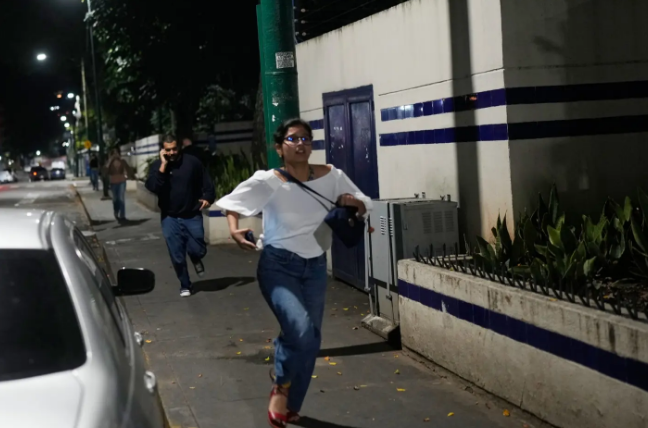
Explosions were reported across Caracas early Saturday, with witnesses seeing strikes around 2 a.m. local time. Videos circulating on social media showed large blasts and low-flying aircraft over the city. Venezuelan officials said attacks occurred not only in the capital but also in the states of Miranda, Aragua, and La Guaira. Photos showed parts of Fuerte Tiuna, the country’s largest military complex, engulfed in flames.

Nahum Fernández, a leader of Venezuela’s ruling party, said Maduro and his wife were captured at their home inside Fuerte Tiuna, calling the operation a “kidnapping” of the president and first lady. Defense Minister Gen. Vladimir Padrino López condemned the U.S. action as an “invasion” and a “blatant outrage,” while Vice President Delcy Rodríguez demanded proof of life and said she did not know the couple’s whereabouts.

Trump reportedly authorized the operation several days ago after months of threats to target Venezuelan drug shipments. The administration has deployed significant military resources to the region, including the U.S.S. Gerald Ford aircraft carrier, eight warships, 10,000 troops, and 10 F-35 fighter jets in Puerto Rico. The CIA also conducted covert operations in support of the raid.

In a post-raid interview, Trump said poor weather had initially delayed the operation. He described Maduro’s location as heavily guarded and likened it to a fortress. The president said a few U.S. personnel were lightly injured but all were in good condition, and he planned to hold a news conference at Mar-a-Lago later Saturday.

The U.S. move drew immediate international attention, with analysts noting questions over the legality of such a strike without congressional approval. At least 115 people have been killed in previous U.S. operations targeting alleged drug shipments since September. Observers warned that the capture of Maduro could trigger broader regional instability.


Business

Fraudsters are increasingly using AI-generated images and videos to trick people into handing over sensitive personal and financial information, according to FraudSMART, the financial crime awareness initiative operated by the Banking and Payments Federation Ireland (BPFI). The organisation has reported a rise in online adverts promoting fake, State-backed investment schemes. These scams often use fabricated images of well-known politicians and business figures to make the offers appear legitimate and encourage users to click on registration links. Niamh Davenport, head of financial crime at BPFI, said scammers are deliberately exploiting recent media coverage of a planned State-backed savings and investment scheme to give their frauds a sense of credibility. “They often claim the scheme is open to everyone, but that places are limited and being ‘snapped up’ fast, in order to pressure people to act quickly,” she said. “They typically promise guaranteed returns or a guaranteed monthly income.” FraudSMART said that while anyone can be targeted, people in their early 50s are particularly vulnerable to investment scams. This age group is often focused on retirement planning, making them more receptive to financial offers that appear secure or high-yield. According to the organisation, most scams follow a similar pattern. Victims are first directed to click a registration link and complete a short online form providing their contact details. They are then contacted by someone posing as a financial adviser, who urges them to make an immediate “security deposit” to secure participation in the scheme. Once a payment is made, the money is quickly moved through multiple accounts, often overseas, making recovery extremely difficult. Davenport warned that scammers are becoming more sophisticated in their use of technology, particularly AI tools that allow them to create realistic but entirely fake promotional content. These materials are designed to mimic legitimate financial advertisements and build trust with potential victims. Recent figures from An Garda Síochána show investment fraud rose by 20% last year, with losses exceeding €20 million. The scale of individual scams varies widely, ranging from smaller crypto-related frauds involving a few hundred euro to large-scale investment schemes where victims lose tens of thousands. FraudSMART is urging the public to remain cautious when encountering online investment advertisements, especially those promising guaranteed returns or requiring urgent action. It also advises consumers to avoid sharing personal information with unverified sources and to be wary of pressure tactics designed to rush financial decisions. Authorities continue to warn that fraudsters are adapting quickly, using advanced digital tools to target victims across multiple platforms.

Trending

Business

Fraudsters are increasingly using AI-generated images and videos to trick people into handing over sensitive personal and financial information, according to FraudSMART, the financial crime awareness initiative operated by the Banking and Payments Federation Ireland (BPFI). The organisation has reported a rise in online adverts promoting fake, State-backed investment schemes. These scams often use fabricated images of well-known politicians and business figures to make the offers appear legitimate and encourage users to click on registration links. Niamh Davenport, head of financial crime at BPFI, said scammers are deliberately exploiting recent media coverage of a planned State-backed savings and investment scheme to give their frauds a sense of credibility. “They often claim the scheme is open to everyone, but that places are limited and being ‘snapped up’ fast, in order to pressure people to act quickly,” she said. “They typically promise guaranteed returns or a guaranteed monthly income.” FraudSMART said that while anyone can be targeted, people in their early 50s are particularly vulnerable to investment scams. This age group is often focused on retirement planning, making them more receptive to financial offers that appear secure or high-yield. According to the organisation, most scams follow a similar pattern. Victims are first directed to click a registration link and complete a short online form providing their contact details. They are then contacted by someone posing as a financial adviser, who urges them to make an immediate “security deposit” to secure participation in the scheme. Once a payment is made, the money is quickly moved through multiple accounts, often overseas, making recovery extremely difficult. Davenport warned that scammers are becoming more sophisticated in their use of technology, particularly AI tools that allow them to create realistic but entirely fake promotional content. These materials are designed to mimic legitimate financial advertisements and build trust with potential victims. Recent figures from An Garda Síochána show investment fraud rose by 20% last year, with losses exceeding €20 million. The scale of individual scams varies widely, ranging from smaller crypto-related frauds involving a few hundred euro to large-scale investment schemes where victims lose tens of thousands. FraudSMART is urging the public to remain cautious when encountering online investment advertisements, especially those promising guaranteed returns or requiring urgent action. It also advises consumers to avoid sharing personal information with unverified sources and to be wary of pressure tactics designed to rush financial decisions. Authorities continue to warn that fraudsters are adapting quickly, using advanced digital tools to target victims across multiple platforms.

You May Also Like

Politics

WASHINGTON — The Pentagon announced on Sunday that the United States will send a Terminal High Altitude Area Defense (THAAD) battery to Israel, alongside...

Health

NEW YORK — Teen smoking in the United States has reached an all-time low in 2024, with significant declines in overall youth tobacco use,...

Politics

WASHINGTON — As the countdown to the November 5 presidential election continues, former President Donald Trump is urging his supporters to aim for a...

Politics

In September, NASA announced that summer 2024 was the hottest on record. Just days later, the U.S. faced the dual impact of Hurricanes Helene...
















