













Connect with us

Hi, what are you looking for?

Politics

Trump Administration Faces MAGA Backlash Over Qatari Air Force Facility in Idaho

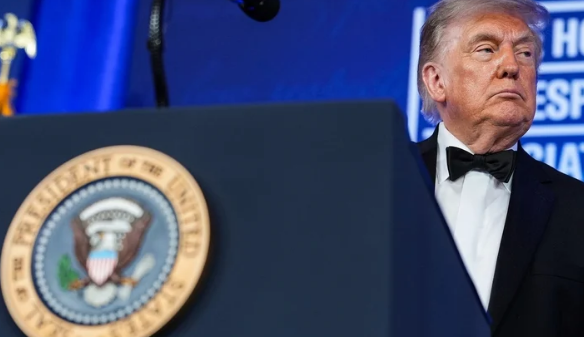
The Trump administration is facing fierce criticism from within its own political base following the announcement that Qatar will fund and operate a new air force training facility at a U.S. Air Force base in Idaho.

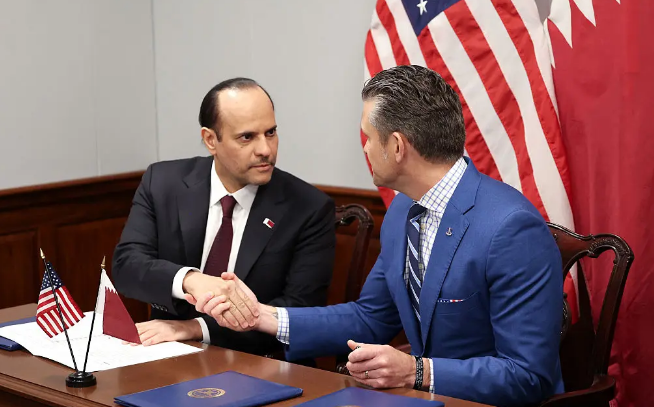
Defense Secretary Pete Hegseth confirmed Friday that a “Qatar Emiri Air Force facility” will be built at Mountain Home Air Base, where Qatari pilots will train on F-15 fighter jets purchased from the United States. While the facility will be financed by Qatar, Hegseth stressed that it will remain under full U.S. jurisdiction.

Despite those assurances, the plan drew immediate outrage from prominent figures in President Donald Trump’s “America First” movement, who view the project as a violation of national sovereignty.

“There should never be a military base of a foreign power on the sacred soil of America,” former White House strategist Steve Bannon told Newsweek.

Right-wing commentator Laura Loomer — a vocal supporter of Trump known for her anti-Islamic rhetoric — went further, accusing the administration of “handing terror-financing Muslims from Qatar a military base on U.S. soil.” Loomer, who has previously taken credit for influencing White House personnel decisions, claimed the decision reflected “Qatari influence out of control.”

Though the Pentagon clarified that the facility would operate within an existing U.S. base and not serve as an independent Qatari outpost, Loomer continued to criticize the plan on social media, citing Trump’s own 2017 remarks that accused Qatar of “funding terrorism at a very high level.”

Criticism extended beyond MAGA circles. National Review columnist Noah Rothman questioned the strategic rationale behind the deal, writing, “What’s the steelman case for this? I’m sure we don’t need to import any more Qatari covert assets into this country.” Republican strategist Mike Madrid mocked the move, comparing it to previous outrage over a Chinese balloon entering U.S. airspace, saying, “They’re giving Qatar an entire air base.”

In a social media post late Friday, Hegseth sought to tamp down the controversy, emphasizing that “the base remains under U.S. control” and that “no foreign military will have sovereign territory on American soil.” The Pentagon referred reporters to Hegseth’s post, while the White House declined to comment.

The uproar comes as Trump’s ties to Qatar face heightened scrutiny following a series of business and diplomatic dealings. Earlier this year, the Trump Organization announced plans to build a luxury golf resort in Qatar, followed by Trump’s acceptance of a $400 million Qatari-funded Boeing jet to replace Air Force One — a move that drew bipartisan criticism.

Despite the backlash, Hegseth defended the arrangement, noting Qatar’s recent role as a key mediator in the Israel-Hamas ceasefire. “No one other than President Trump could have achieved peace in Gaza,” he said. “Qatar played a substantial role from the beginning.”

Business

Fraudsters are increasingly using AI-generated images and videos to trick people into handing over sensitive personal and financial information, according to FraudSMART, the financial crime awareness initiative operated by the Banking and Payments Federation Ireland (BPFI). The organisation has reported a rise in online adverts promoting fake, State-backed investment schemes. These scams often use fabricated images of well-known politicians and business figures to make the offers appear legitimate and encourage users to click on registration links. Niamh Davenport, head of financial crime at BPFI, said scammers are deliberately exploiting recent media coverage of a planned State-backed savings and investment scheme to give their frauds a sense of credibility. “They often claim the scheme is open to everyone, but that places are limited and being ‘snapped up’ fast, in order to pressure people to act quickly,” she said. “They typically promise guaranteed returns or a guaranteed monthly income.” FraudSMART said that while anyone can be targeted, people in their early 50s are particularly vulnerable to investment scams. This age group is often focused on retirement planning, making them more receptive to financial offers that appear secure or high-yield. According to the organisation, most scams follow a similar pattern. Victims are first directed to click a registration link and complete a short online form providing their contact details. They are then contacted by someone posing as a financial adviser, who urges them to make an immediate “security deposit” to secure participation in the scheme. Once a payment is made, the money is quickly moved through multiple accounts, often overseas, making recovery extremely difficult. Davenport warned that scammers are becoming more sophisticated in their use of technology, particularly AI tools that allow them to create realistic but entirely fake promotional content. These materials are designed to mimic legitimate financial advertisements and build trust with potential victims. Recent figures from An Garda Síochána show investment fraud rose by 20% last year, with losses exceeding €20 million. The scale of individual scams varies widely, ranging from smaller crypto-related frauds involving a few hundred euro to large-scale investment schemes where victims lose tens of thousands. FraudSMART is urging the public to remain cautious when encountering online investment advertisements, especially those promising guaranteed returns or requiring urgent action. It also advises consumers to avoid sharing personal information with unverified sources and to be wary of pressure tactics designed to rush financial decisions. Authorities continue to warn that fraudsters are adapting quickly, using advanced digital tools to target victims across multiple platforms.

Trending

Business

Fraudsters are increasingly using AI-generated images and videos to trick people into handing over sensitive personal and financial information, according to FraudSMART, the financial crime awareness initiative operated by the Banking and Payments Federation Ireland (BPFI). The organisation has reported a rise in online adverts promoting fake, State-backed investment schemes. These scams often use fabricated images of well-known politicians and business figures to make the offers appear legitimate and encourage users to click on registration links. Niamh Davenport, head of financial crime at BPFI, said scammers are deliberately exploiting recent media coverage of a planned State-backed savings and investment scheme to give their frauds a sense of credibility. “They often claim the scheme is open to everyone, but that places are limited and being ‘snapped up’ fast, in order to pressure people to act quickly,” she said. “They typically promise guaranteed returns or a guaranteed monthly income.” FraudSMART said that while anyone can be targeted, people in their early 50s are particularly vulnerable to investment scams. This age group is often focused on retirement planning, making them more receptive to financial offers that appear secure or high-yield. According to the organisation, most scams follow a similar pattern. Victims are first directed to click a registration link and complete a short online form providing their contact details. They are then contacted by someone posing as a financial adviser, who urges them to make an immediate “security deposit” to secure participation in the scheme. Once a payment is made, the money is quickly moved through multiple accounts, often overseas, making recovery extremely difficult. Davenport warned that scammers are becoming more sophisticated in their use of technology, particularly AI tools that allow them to create realistic but entirely fake promotional content. These materials are designed to mimic legitimate financial advertisements and build trust with potential victims. Recent figures from An Garda Síochána show investment fraud rose by 20% last year, with losses exceeding €20 million. The scale of individual scams varies widely, ranging from smaller crypto-related frauds involving a few hundred euro to large-scale investment schemes where victims lose tens of thousands. FraudSMART is urging the public to remain cautious when encountering online investment advertisements, especially those promising guaranteed returns or requiring urgent action. It also advises consumers to avoid sharing personal information with unverified sources and to be wary of pressure tactics designed to rush financial decisions. Authorities continue to warn that fraudsters are adapting quickly, using advanced digital tools to target victims across multiple platforms.

You May Also Like

Politics

WASHINGTON — The Pentagon announced on Sunday that the United States will send a Terminal High Altitude Area Defense (THAAD) battery to Israel, alongside...

Health

NEW YORK — Teen smoking in the United States has reached an all-time low in 2024, with significant declines in overall youth tobacco use,...

Politics

WASHINGTON — As the countdown to the November 5 presidential election continues, former President Donald Trump is urging his supporters to aim for a...

Politics

In September, NASA announced that summer 2024 was the hottest on record. Just days later, the U.S. faced the dual impact of Hurricanes Helene...