
















Connect with us

Hi, what are you looking for?

Politics

Trump Administration Expands Higher Education Overhaul With New Federal Funding Compact

The Trump Administration has widened its campaign to reshape American higher education, extending a controversial federal funding proposal — the Compact for Academic Excellence in Higher Education — to all U.S. universities and colleges.

Originally offered to nine elite institutions, including MIT, Brown, and the University of Texas at Austin, the plan promises preferential federal funding in exchange for sweeping policy changes. The Massachusetts Institute of Technology was the first to reject the compact, describing it as incompatible with academic independence and scientific merit.

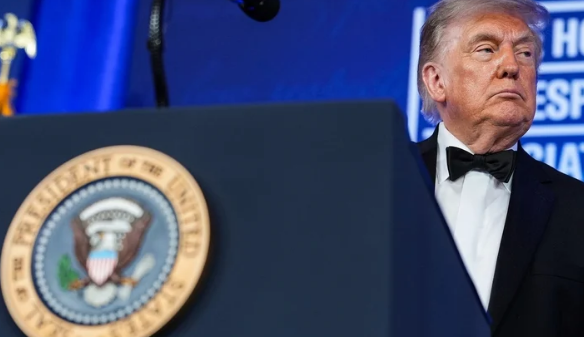
Following MIT’s decision, the White House extended the offer nationwide. “Higher Education has lost its way, and is now corrupting our youth and society with WOKE, SOCIALIST, and ANTI-AMERICAN ideology,” President Donald Trump posted on Truth Social. “My Administration is fixing this, and FAST, with our Great Reform Agenda in Higher Education.”

Under the 10-point proposal, universities would be required to eliminate diversity, equity, and inclusion (DEI) offices, enforce standardized testing, and limit foreign student enrollment to 15 percent. The compact also calls for “single-sex spaces,” a biological definition of gender, and bans on considering race, ethnicity, or political views in admissions and hiring. Institutions agreeing to the terms would receive increased federal funding, while those refusing could face investigations or funding cuts.

White House spokesperson Liz Huston defended the plan, calling it a “once-in-a-lifetime opportunity to transform higher education.” Faculty and student groups across several universities, however, have denounced it as an assault on academic freedom.

Experts warn that widespread adoption of the compact could profoundly reshape higher education. “If successful, it would establish a level of federal control of the national mind that has never been seen before,” said Simon Marginson, professor of higher education at Oxford University. “It cuts across the long tradition of independent university teaching and research.”

Critics argue the compact politicizes academia and curtails free inquiry. The Center for American Progress described it as a tool to “chill expression disfavored by the government and lift up their preferred speech.” MIT’s faculty association added that universities “must not align with the ideological agendas of the administration of the day.”

Some analysts believe the policy could accelerate a “brain drain,” as prominent academics and researchers leave the United States. Nobel laureates Esther Duflo and Abhijit Banerjee recently announced their departure for Switzerland, following months of criticism of Trump’s education policies.

While university leaders weigh the financial benefits of compliance, many warn the compact could fracture the higher education system, dividing institutions between those that conform and those that resist. As Marginson noted, “The Administration’s plan has the potential to divide higher education communities down the middle — and, in doing so, reshape the very purpose of the American university.”


Business

Fraudsters are increasingly using AI-generated images and videos to trick people into handing over sensitive personal and financial information, according to FraudSMART, the financial crime awareness initiative operated by the Banking and Payments Federation Ireland (BPFI). The organisation has reported a rise in online adverts promoting fake, State-backed investment schemes. These scams often use fabricated images of well-known politicians and business figures to make the offers appear legitimate and encourage users to click on registration links. Niamh Davenport, head of financial crime at BPFI, said scammers are deliberately exploiting recent media coverage of a planned State-backed savings and investment scheme to give their frauds a sense of credibility. “They often claim the scheme is open to everyone, but that places are limited and being ‘snapped up’ fast, in order to pressure people to act quickly,” she said. “They typically promise guaranteed returns or a guaranteed monthly income.” FraudSMART said that while anyone can be targeted, people in their early 50s are particularly vulnerable to investment scams. This age group is often focused on retirement planning, making them more receptive to financial offers that appear secure or high-yield. According to the organisation, most scams follow a similar pattern. Victims are first directed to click a registration link and complete a short online form providing their contact details. They are then contacted by someone posing as a financial adviser, who urges them to make an immediate “security deposit” to secure participation in the scheme. Once a payment is made, the money is quickly moved through multiple accounts, often overseas, making recovery extremely difficult. Davenport warned that scammers are becoming more sophisticated in their use of technology, particularly AI tools that allow them to create realistic but entirely fake promotional content. These materials are designed to mimic legitimate financial advertisements and build trust with potential victims. Recent figures from An Garda Síochána show investment fraud rose by 20% last year, with losses exceeding €20 million. The scale of individual scams varies widely, ranging from smaller crypto-related frauds involving a few hundred euro to large-scale investment schemes where victims lose tens of thousands. FraudSMART is urging the public to remain cautious when encountering online investment advertisements, especially those promising guaranteed returns or requiring urgent action. It also advises consumers to avoid sharing personal information with unverified sources and to be wary of pressure tactics designed to rush financial decisions. Authorities continue to warn that fraudsters are adapting quickly, using advanced digital tools to target victims across multiple platforms.

Trending

Business

Fraudsters are increasingly using AI-generated images and videos to trick people into handing over sensitive personal and financial information, according to FraudSMART, the financial crime awareness initiative operated by the Banking and Payments Federation Ireland (BPFI). The organisation has reported a rise in online adverts promoting fake, State-backed investment schemes. These scams often use fabricated images of well-known politicians and business figures to make the offers appear legitimate and encourage users to click on registration links. Niamh Davenport, head of financial crime at BPFI, said scammers are deliberately exploiting recent media coverage of a planned State-backed savings and investment scheme to give their frauds a sense of credibility. “They often claim the scheme is open to everyone, but that places are limited and being ‘snapped up’ fast, in order to pressure people to act quickly,” she said. “They typically promise guaranteed returns or a guaranteed monthly income.” FraudSMART said that while anyone can be targeted, people in their early 50s are particularly vulnerable to investment scams. This age group is often focused on retirement planning, making them more receptive to financial offers that appear secure or high-yield. According to the organisation, most scams follow a similar pattern. Victims are first directed to click a registration link and complete a short online form providing their contact details. They are then contacted by someone posing as a financial adviser, who urges them to make an immediate “security deposit” to secure participation in the scheme. Once a payment is made, the money is quickly moved through multiple accounts, often overseas, making recovery extremely difficult. Davenport warned that scammers are becoming more sophisticated in their use of technology, particularly AI tools that allow them to create realistic but entirely fake promotional content. These materials are designed to mimic legitimate financial advertisements and build trust with potential victims. Recent figures from An Garda Síochána show investment fraud rose by 20% last year, with losses exceeding €20 million. The scale of individual scams varies widely, ranging from smaller crypto-related frauds involving a few hundred euro to large-scale investment schemes where victims lose tens of thousands. FraudSMART is urging the public to remain cautious when encountering online investment advertisements, especially those promising guaranteed returns or requiring urgent action. It also advises consumers to avoid sharing personal information with unverified sources and to be wary of pressure tactics designed to rush financial decisions. Authorities continue to warn that fraudsters are adapting quickly, using advanced digital tools to target victims across multiple platforms.

You May Also Like

Politics

WASHINGTON — The Pentagon announced on Sunday that the United States will send a Terminal High Altitude Area Defense (THAAD) battery to Israel, alongside...

Health

NEW YORK — Teen smoking in the United States has reached an all-time low in 2024, with significant declines in overall youth tobacco use,...

Politics

WASHINGTON — As the countdown to the November 5 presidential election continues, former President Donald Trump is urging his supporters to aim for a...

Politics

In September, NASA announced that summer 2024 was the hottest on record. Just days later, the U.S. faced the dual impact of Hurricanes Helene...