
















Connect with us

Hi, what are you looking for?

Politics

Khanna Calls for Further Action as Epstein Files Release Exposes Global Elite

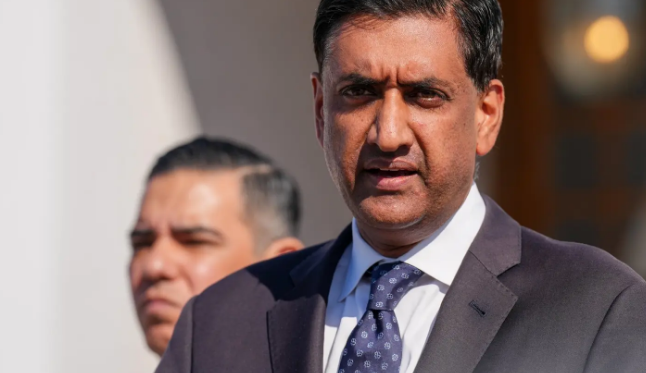
Representative Ro Khanna played a central role in securing one of the largest disclosures of investigative records in modern US history with the passage of the bipartisan Epstein Files Transparency Act last year. The law compelled the Justice Department to release millions of documents related to convicted sex offender Jeffrey Epstein.

Khanna, along with Republican Representative Thomas Massie, introduced the legislation, which was signed into law by President Donald Trump in November. The release has triggered a wave of resignations and investigations across business, politics, and international institutions, highlighting what Khanna describes as a long-overdue “moral reckoning” for the so-called “Epstein class” of powerful figures who believed themselves above the law.

Despite more than three million pages being made public, Khanna says substantial evidence remains hidden. Lawmakers and journalists have identified millions of additional documents still withheld or heavily redacted, including missing FBI interview summaries connected to allegations involving President Trump. “I have no idea on the merits, but I do believe that the problem is the cover-up,” Khanna said. “Why are they hiding these documents?”

Khanna said roughly half of the survivor statements submitted to the FBI remain unreleased. He criticized the Justice Department for citing privilege or survivor protection as reasons for withholding material, calling it protection of the predators instead. He added that legal action could compel the DOJ to comply with the law, including lawsuits in the Southern District of New York or future congressional subpoenas.

The California congressman said further review of the released documents is already exposing individuals who were aware of Epstein’s abuse yet continued business or personal relationships with him. He predicted additional revelations of complicity, trafficking, and sexual abuse as more records are examined.

Khanna urged that accountability extend to all members of the “Epstein class,” including world leaders, Hollywood figures, Wall Street executives, and tech industry elites. He called for congressional hearings and sworn testimony, emphasizing that even President Trump should appear before Congress to provide clarity on his association with Epstein.

“The files are revealing one of the biggest scandals in American history,” Khanna said. “This is a reckoning for people who thought they were untouchable. We need justice for survivors and a new generation of leaders untainted by the moral corruption at the heart of Epstein’s network.”

Khanna’s push highlights ongoing tensions between congressional oversight, the Justice Department, and the limits of transparency laws, as investigators, journalists, and lawmakers continue to sift through the unprecedented volume of material.


Business

Fraudsters are increasingly using AI-generated images and videos to trick people into handing over sensitive personal and financial information, according to FraudSMART, the financial crime awareness initiative operated by the Banking and Payments Federation Ireland (BPFI). The organisation has reported a rise in online adverts promoting fake, State-backed investment schemes. These scams often use fabricated images of well-known politicians and business figures to make the offers appear legitimate and encourage users to click on registration links. Niamh Davenport, head of financial crime at BPFI, said scammers are deliberately exploiting recent media coverage of a planned State-backed savings and investment scheme to give their frauds a sense of credibility. “They often claim the scheme is open to everyone, but that places are limited and being ‘snapped up’ fast, in order to pressure people to act quickly,” she said. “They typically promise guaranteed returns or a guaranteed monthly income.” FraudSMART said that while anyone can be targeted, people in their early 50s are particularly vulnerable to investment scams. This age group is often focused on retirement planning, making them more receptive to financial offers that appear secure or high-yield. According to the organisation, most scams follow a similar pattern. Victims are first directed to click a registration link and complete a short online form providing their contact details. They are then contacted by someone posing as a financial adviser, who urges them to make an immediate “security deposit” to secure participation in the scheme. Once a payment is made, the money is quickly moved through multiple accounts, often overseas, making recovery extremely difficult. Davenport warned that scammers are becoming more sophisticated in their use of technology, particularly AI tools that allow them to create realistic but entirely fake promotional content. These materials are designed to mimic legitimate financial advertisements and build trust with potential victims. Recent figures from An Garda Síochána show investment fraud rose by 20% last year, with losses exceeding €20 million. The scale of individual scams varies widely, ranging from smaller crypto-related frauds involving a few hundred euro to large-scale investment schemes where victims lose tens of thousands. FraudSMART is urging the public to remain cautious when encountering online investment advertisements, especially those promising guaranteed returns or requiring urgent action. It also advises consumers to avoid sharing personal information with unverified sources and to be wary of pressure tactics designed to rush financial decisions. Authorities continue to warn that fraudsters are adapting quickly, using advanced digital tools to target victims across multiple platforms.

Trending

Business

Fraudsters are increasingly using AI-generated images and videos to trick people into handing over sensitive personal and financial information, according to FraudSMART, the financial crime awareness initiative operated by the Banking and Payments Federation Ireland (BPFI). The organisation has reported a rise in online adverts promoting fake, State-backed investment schemes. These scams often use fabricated images of well-known politicians and business figures to make the offers appear legitimate and encourage users to click on registration links. Niamh Davenport, head of financial crime at BPFI, said scammers are deliberately exploiting recent media coverage of a planned State-backed savings and investment scheme to give their frauds a sense of credibility. “They often claim the scheme is open to everyone, but that places are limited and being ‘snapped up’ fast, in order to pressure people to act quickly,” she said. “They typically promise guaranteed returns or a guaranteed monthly income.” FraudSMART said that while anyone can be targeted, people in their early 50s are particularly vulnerable to investment scams. This age group is often focused on retirement planning, making them more receptive to financial offers that appear secure or high-yield. According to the organisation, most scams follow a similar pattern. Victims are first directed to click a registration link and complete a short online form providing their contact details. They are then contacted by someone posing as a financial adviser, who urges them to make an immediate “security deposit” to secure participation in the scheme. Once a payment is made, the money is quickly moved through multiple accounts, often overseas, making recovery extremely difficult. Davenport warned that scammers are becoming more sophisticated in their use of technology, particularly AI tools that allow them to create realistic but entirely fake promotional content. These materials are designed to mimic legitimate financial advertisements and build trust with potential victims. Recent figures from An Garda Síochána show investment fraud rose by 20% last year, with losses exceeding €20 million. The scale of individual scams varies widely, ranging from smaller crypto-related frauds involving a few hundred euro to large-scale investment schemes where victims lose tens of thousands. FraudSMART is urging the public to remain cautious when encountering online investment advertisements, especially those promising guaranteed returns or requiring urgent action. It also advises consumers to avoid sharing personal information with unverified sources and to be wary of pressure tactics designed to rush financial decisions. Authorities continue to warn that fraudsters are adapting quickly, using advanced digital tools to target victims across multiple platforms.

You May Also Like

Politics

WASHINGTON — The Pentagon announced on Sunday that the United States will send a Terminal High Altitude Area Defense (THAAD) battery to Israel, alongside...

Health

NEW YORK — Teen smoking in the United States has reached an all-time low in 2024, with significant declines in overall youth tobacco use,...

Politics

WASHINGTON — As the countdown to the November 5 presidential election continues, former President Donald Trump is urging his supporters to aim for a...

Politics

In September, NASA announced that summer 2024 was the hottest on record. Just days later, the U.S. faced the dual impact of Hurricanes Helene...