
















Connect with us

Hi, what are you looking for?

Politics

House GOP Divided as Trump’s ‘One Big Beautiful Bill’ Hits Roadblocks

A late-night House hearing descended into chaos early Wednesday as deep divisions within the Republican Party threatened to derail former President Donald Trump’s sweeping tax and immigration proposal—dubbed the “One Big Beautiful Bill.”

Originally intended as a procedural step to fast-track the legislation, the 1 a.m. session instead exposed widening cracks in GOP unity. By Wednesday afternoon, lawmakers were still at odds over key provisions, with no clear path to passage.

The bill, a cornerstone of Trump’s domestic agenda, aims to extend the 2017 tax cuts—set to expire at year’s end—and introduce new measures including tax exemptions for tips and overtime wages. It also proposes significant increases in defense and border security spending, alongside deep cuts to Medicaid and federal benefit programs.

However, hardline conservatives remain unconvinced. Despite GOP leadership’s offer to deepen spending cuts, several members of the Freedom Caucus said the bill still doesn’t go far enough. Others expressed concern over concessions to moderate Republicans from high-tax states, particularly a proposed increase to the $10,000 cap on state and local tax (SALT) deductions.

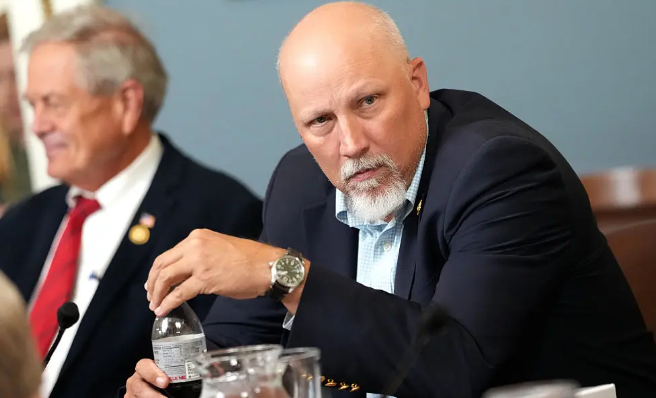
The current draft still misses the mark,” said Rep. Chip Roy of Texas, a vocal conservative holdout. “We’ve got to deliver on what we promised the American people, but we’re not there yet.”

House Speaker Mike Johnson is expected to meet with Trump and several key dissenters at 3 p.m. today in a bid to break the deadlock. A White House official confirmed the meeting, noting the urgency to secure unity ahead of the administration’s self-imposed July 4 deadline.

That timeline, however, has drawn skepticism from within Trump’s own party. “It’s an arbitrary deadline,” said Rep. Scott Perry of Pennsylvania. “This notion that if we don’t act today the whole thing collapses—it’s not true. We can and should get this right.”

Trump has increased pressure on lawmakers, including making a rare in-person appeal at the Capitol on Tuesday. He urged Republicans to rally behind the bill, which he claims would slash taxes by nearly $4 trillion and secure his policy legacy.

Still, as party leaders scramble for votes, it remains unclear whether Trump’s influence will be enough to overcome entrenched divisions—particularly over fiscal priorities.

With negotiations ongoing and the stakes high, the bill’s fate hangs in the balance as Republicans confront the challenge of uniting their fractured conference behind a sprawling and controversial legislative package.


Business

Fraudsters are increasingly using AI-generated images and videos to trick people into handing over sensitive personal and financial information, according to FraudSMART, the financial crime awareness initiative operated by the Banking and Payments Federation Ireland (BPFI). The organisation has reported a rise in online adverts promoting fake, State-backed investment schemes. These scams often use fabricated images of well-known politicians and business figures to make the offers appear legitimate and encourage users to click on registration links. Niamh Davenport, head of financial crime at BPFI, said scammers are deliberately exploiting recent media coverage of a planned State-backed savings and investment scheme to give their frauds a sense of credibility. “They often claim the scheme is open to everyone, but that places are limited and being ‘snapped up’ fast, in order to pressure people to act quickly,” she said. “They typically promise guaranteed returns or a guaranteed monthly income.” FraudSMART said that while anyone can be targeted, people in their early 50s are particularly vulnerable to investment scams. This age group is often focused on retirement planning, making them more receptive to financial offers that appear secure or high-yield. According to the organisation, most scams follow a similar pattern. Victims are first directed to click a registration link and complete a short online form providing their contact details. They are then contacted by someone posing as a financial adviser, who urges them to make an immediate “security deposit” to secure participation in the scheme. Once a payment is made, the money is quickly moved through multiple accounts, often overseas, making recovery extremely difficult. Davenport warned that scammers are becoming more sophisticated in their use of technology, particularly AI tools that allow them to create realistic but entirely fake promotional content. These materials are designed to mimic legitimate financial advertisements and build trust with potential victims. Recent figures from An Garda Síochána show investment fraud rose by 20% last year, with losses exceeding €20 million. The scale of individual scams varies widely, ranging from smaller crypto-related frauds involving a few hundred euro to large-scale investment schemes where victims lose tens of thousands. FraudSMART is urging the public to remain cautious when encountering online investment advertisements, especially those promising guaranteed returns or requiring urgent action. It also advises consumers to avoid sharing personal information with unverified sources and to be wary of pressure tactics designed to rush financial decisions. Authorities continue to warn that fraudsters are adapting quickly, using advanced digital tools to target victims across multiple platforms.

Trending

Business

Fraudsters are increasingly using AI-generated images and videos to trick people into handing over sensitive personal and financial information, according to FraudSMART, the financial crime awareness initiative operated by the Banking and Payments Federation Ireland (BPFI). The organisation has reported a rise in online adverts promoting fake, State-backed investment schemes. These scams often use fabricated images of well-known politicians and business figures to make the offers appear legitimate and encourage users to click on registration links. Niamh Davenport, head of financial crime at BPFI, said scammers are deliberately exploiting recent media coverage of a planned State-backed savings and investment scheme to give their frauds a sense of credibility. “They often claim the scheme is open to everyone, but that places are limited and being ‘snapped up’ fast, in order to pressure people to act quickly,” she said. “They typically promise guaranteed returns or a guaranteed monthly income.” FraudSMART said that while anyone can be targeted, people in their early 50s are particularly vulnerable to investment scams. This age group is often focused on retirement planning, making them more receptive to financial offers that appear secure or high-yield. According to the organisation, most scams follow a similar pattern. Victims are first directed to click a registration link and complete a short online form providing their contact details. They are then contacted by someone posing as a financial adviser, who urges them to make an immediate “security deposit” to secure participation in the scheme. Once a payment is made, the money is quickly moved through multiple accounts, often overseas, making recovery extremely difficult. Davenport warned that scammers are becoming more sophisticated in their use of technology, particularly AI tools that allow them to create realistic but entirely fake promotional content. These materials are designed to mimic legitimate financial advertisements and build trust with potential victims. Recent figures from An Garda Síochána show investment fraud rose by 20% last year, with losses exceeding €20 million. The scale of individual scams varies widely, ranging from smaller crypto-related frauds involving a few hundred euro to large-scale investment schemes where victims lose tens of thousands. FraudSMART is urging the public to remain cautious when encountering online investment advertisements, especially those promising guaranteed returns or requiring urgent action. It also advises consumers to avoid sharing personal information with unverified sources and to be wary of pressure tactics designed to rush financial decisions. Authorities continue to warn that fraudsters are adapting quickly, using advanced digital tools to target victims across multiple platforms.

You May Also Like

Politics

WASHINGTON — The Pentagon announced on Sunday that the United States will send a Terminal High Altitude Area Defense (THAAD) battery to Israel, alongside...

Health

NEW YORK — Teen smoking in the United States has reached an all-time low in 2024, with significant declines in overall youth tobacco use,...

Politics

WASHINGTON — As the countdown to the November 5 presidential election continues, former President Donald Trump is urging his supporters to aim for a...

Politics

In September, NASA announced that summer 2024 was the hottest on record. Just days later, the U.S. faced the dual impact of Hurricanes Helene...