


















Connect with us

Hi, what are you looking for?

Politics

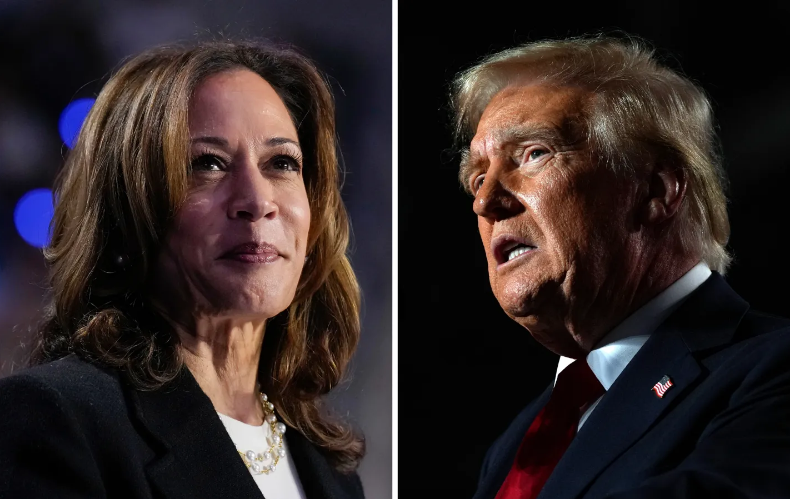
Final Weekend of 2024 Presidential Race Sees Kamala Harris and Donald Trump in Tight Contest

As the 2024 presidential election approaches its final weekend, Democratic nominee Kamala Harris and Republican contender Donald Trump find themselves in a closely contested race. With Election Day just around the corner, every moment counts, and both candidates are mobilizing to secure votes in key battleground states.

While it is unusual for voters to change their minds at this late stage, the campaigns recognize that pivotal developments could influence undecided voters. Both candidates are traversing the country, focusing on delivering clear and concise messages while ramping up efforts to drive turnout during the final early voting period. However, this crucial phase is also marked by an uptick in misinformation.

Trump and Harris’s campaign strategies are evident in their weekend schedules. On Saturday, Trump is expected to make appearances in North Carolina, a state that has not voted for a Democratic presidential candidate since Barack Obama in 2008, and will also stop in Virginia, a state that has consistently leaned Democratic. His focus on North Carolina signals that Trump is looking to solidify support in a state that has been closely contested in recent elections.

Meanwhile, Harris is campaigning in North Carolina and Georgia, states where her team senses potential opportunities. She plans to shift her focus to Michigan on Sunday, a key state for Democratic support.

Both campaigns are keenly aware of the narratives they want to promote. Trump’s team seeks to emphasize the question, “Are you better off today than you were four years ago?” In contrast, Harris’s campaign aims to challenge voters with the question of who they trust to prioritize the nation’s interests.

However, both candidates are navigating turbulent waters. Trump continues to deal with backlash from a recent rally where remarks made about Puerto Rico sparked controversy. Furthermore, his provocative comments regarding Republican rival Liz Cheney have raised concerns among his allies about appealing to women voters. Recent polling indicates a significant gender gap, with Harris enjoying more favorable ratings among women, a demographic that has increasingly distanced itself from the Republican Party amid ongoing debates over reproductive rights.

As of now, over 66 million Americans have already voted, marking a significant increase in early voting compared to the 2020 election. Trump’s supporters are notably more engaged in early voting than in previous cycles, aided by his shift away from insisting on in-person voting on Election Day.

While early voting has ended in some states, including Arizona and Pennsylvania, it remains open in Michigan through Monday and in Wisconsin through Sunday, creating a critical last chance for both campaigns to gather support.

Amid these efforts, concerns about misinformation are escalating, with Trump and his allies amplifying baseless claims of voter fraud. These assertions are reminiscent of the false narratives circulated in the aftermath of the 2020 election. As the election draws near, both campaigns are acutely aware that the final days could prove decisive in an already razor-thin contest, where any misstep could sway the outcome.


Business

Fraudsters are increasingly using AI-generated images and videos to trick people into handing over sensitive personal and financial information, according to FraudSMART, the financial crime awareness initiative operated by the Banking and Payments Federation Ireland (BPFI). The organisation has reported a rise in online adverts promoting fake, State-backed investment schemes. These scams often use fabricated images of well-known politicians and business figures to make the offers appear legitimate and encourage users to click on registration links. Niamh Davenport, head of financial crime at BPFI, said scammers are deliberately exploiting recent media coverage of a planned State-backed savings and investment scheme to give their frauds a sense of credibility. “They often claim the scheme is open to everyone, but that places are limited and being ‘snapped up’ fast, in order to pressure people to act quickly,” she said. “They typically promise guaranteed returns or a guaranteed monthly income.” FraudSMART said that while anyone can be targeted, people in their early 50s are particularly vulnerable to investment scams. This age group is often focused on retirement planning, making them more receptive to financial offers that appear secure or high-yield. According to the organisation, most scams follow a similar pattern. Victims are first directed to click a registration link and complete a short online form providing their contact details. They are then contacted by someone posing as a financial adviser, who urges them to make an immediate “security deposit” to secure participation in the scheme. Once a payment is made, the money is quickly moved through multiple accounts, often overseas, making recovery extremely difficult. Davenport warned that scammers are becoming more sophisticated in their use of technology, particularly AI tools that allow them to create realistic but entirely fake promotional content. These materials are designed to mimic legitimate financial advertisements and build trust with potential victims. Recent figures from An Garda Síochána show investment fraud rose by 20% last year, with losses exceeding €20 million. The scale of individual scams varies widely, ranging from smaller crypto-related frauds involving a few hundred euro to large-scale investment schemes where victims lose tens of thousands. FraudSMART is urging the public to remain cautious when encountering online investment advertisements, especially those promising guaranteed returns or requiring urgent action. It also advises consumers to avoid sharing personal information with unverified sources and to be wary of pressure tactics designed to rush financial decisions. Authorities continue to warn that fraudsters are adapting quickly, using advanced digital tools to target victims across multiple platforms.

Trending

Business

Fraudsters are increasingly using AI-generated images and videos to trick people into handing over sensitive personal and financial information, according to FraudSMART, the financial crime awareness initiative operated by the Banking and Payments Federation Ireland (BPFI). The organisation has reported a rise in online adverts promoting fake, State-backed investment schemes. These scams often use fabricated images of well-known politicians and business figures to make the offers appear legitimate and encourage users to click on registration links. Niamh Davenport, head of financial crime at BPFI, said scammers are deliberately exploiting recent media coverage of a planned State-backed savings and investment scheme to give their frauds a sense of credibility. “They often claim the scheme is open to everyone, but that places are limited and being ‘snapped up’ fast, in order to pressure people to act quickly,” she said. “They typically promise guaranteed returns or a guaranteed monthly income.” FraudSMART said that while anyone can be targeted, people in their early 50s are particularly vulnerable to investment scams. This age group is often focused on retirement planning, making them more receptive to financial offers that appear secure or high-yield. According to the organisation, most scams follow a similar pattern. Victims are first directed to click a registration link and complete a short online form providing their contact details. They are then contacted by someone posing as a financial adviser, who urges them to make an immediate “security deposit” to secure participation in the scheme. Once a payment is made, the money is quickly moved through multiple accounts, often overseas, making recovery extremely difficult. Davenport warned that scammers are becoming more sophisticated in their use of technology, particularly AI tools that allow them to create realistic but entirely fake promotional content. These materials are designed to mimic legitimate financial advertisements and build trust with potential victims. Recent figures from An Garda Síochána show investment fraud rose by 20% last year, with losses exceeding €20 million. The scale of individual scams varies widely, ranging from smaller crypto-related frauds involving a few hundred euro to large-scale investment schemes where victims lose tens of thousands. FraudSMART is urging the public to remain cautious when encountering online investment advertisements, especially those promising guaranteed returns or requiring urgent action. It also advises consumers to avoid sharing personal information with unverified sources and to be wary of pressure tactics designed to rush financial decisions. Authorities continue to warn that fraudsters are adapting quickly, using advanced digital tools to target victims across multiple platforms.

You May Also Like

Politics

WASHINGTON — The Pentagon announced on Sunday that the United States will send a Terminal High Altitude Area Defense (THAAD) battery to Israel, alongside...

Health

NEW YORK — Teen smoking in the United States has reached an all-time low in 2024, with significant declines in overall youth tobacco use,...

Politics

WASHINGTON — As the countdown to the November 5 presidential election continues, former President Donald Trump is urging his supporters to aim for a...

Politics

In September, NASA announced that summer 2024 was the hottest on record. Just days later, the U.S. faced the dual impact of Hurricanes Helene...
















