














Connect with us

Hi, what are you looking for?

Politics

Fallout From Charlie Kirk’s Assassination Triggers Firings, Suspensions, and Immigration Scrutiny

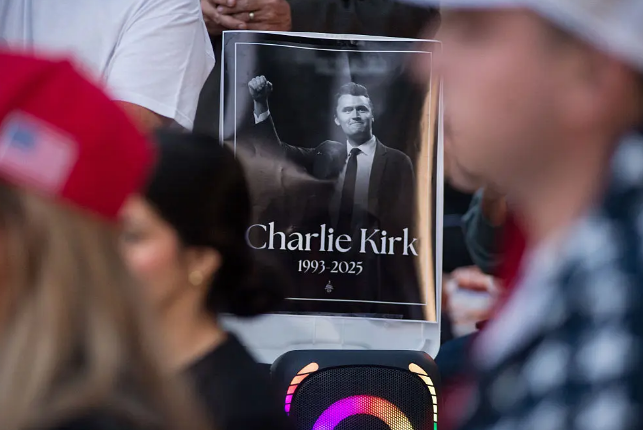
The killing of conservative commentator Charlie Kirk has sparked a wave of disciplinary actions across the United States, with individuals losing jobs, facing suspensions, and coming under public scrutiny for remarks seen as insensitive or celebratory. The fallout has also prompted the Trump Administration to tighten immigration screening, warning that foreigners who glorify political violence could face visa consequences.

Kirk, 31, was shot dead Wednesday while speaking at Utah Valley University, an attack widely condemned by leaders from both major parties. While officials have described the shooting as another alarming sign of rising political violence, the aftermath has deepened divisions, as debates over free speech collide with heightened security concerns.

Several high-profile figures have already faced workplace repercussions. MSNBC announced the departure of political analyst Matthew Dowd after he suggested Kirk’s rhetoric had contributed to the environment leading to his killing. Dowd later apologized, but the network said his comments were “inappropriate, insensitive and unacceptable.”

Elsewhere, universities and media outlets have also taken action. The University of Mississippi and Middle Tennessee State University confirmed they had dismissed staff members over social media remarks deemed offensive. DC Comics ended the contract of a writer who posted comments about the shooting, while PHNX Sports in Arizona fired a journalist after activists highlighted his criticisms of Kirk’s views. A reporter in Florida was suspended after asking a lawmaker about gun control in the immediate aftermath of the attack.

Republican lawmakers and activists have been vocal in demanding accountability. Sen. Marsha Blackburn of Tennessee called for dismissals of university staff and even a Secret Service agent who had posted disparaging remarks about Kirk. Conservative influencers such as Laura Loomer and Scott Presler have used their platforms to crowdsource names and workplaces of individuals celebrating Kirk’s death, vowing to expose them publicly.

The tensions extend beyond U.S. borders. Deputy Secretary of State Christopher Landau said Thursday that visa applicants and holders would be scrutinized for posts “praising, rationalizing, or making light” of Kirk’s death. He urged the public to flag such content, stating, “Foreigners who glorify violence and hatred are not welcome visitors to our country.” A State Department spokesperson later said the policy aligned with broader national security interests.

The administration’s stance follows earlier measures aimed at filtering immigration on ideological grounds, including restrictions targeting foreign students, journalists, and activists accused of anti-American speech. Officials say the goal is to protect free expression in the U.S. by rejecting those seen as undermining it.

Meanwhile, fears of unrest have prompted several historically Black colleges and universities to suspend classes and impose campus lockdowns, citing potential threats linked to the volatile political climate. Lawmakers in Washington have also renewed calls for expanded security protections amid warnings that the sharp rise in political violence could spiral further.


Business

Fraudsters are increasingly using AI-generated images and videos to trick people into handing over sensitive personal and financial information, according to FraudSMART, the financial crime awareness initiative operated by the Banking and Payments Federation Ireland (BPFI). The organisation has reported a rise in online adverts promoting fake, State-backed investment schemes. These scams often use fabricated images of well-known politicians and business figures to make the offers appear legitimate and encourage users to click on registration links. Niamh Davenport, head of financial crime at BPFI, said scammers are deliberately exploiting recent media coverage of a planned State-backed savings and investment scheme to give their frauds a sense of credibility. “They often claim the scheme is open to everyone, but that places are limited and being ‘snapped up’ fast, in order to pressure people to act quickly,” she said. “They typically promise guaranteed returns or a guaranteed monthly income.” FraudSMART said that while anyone can be targeted, people in their early 50s are particularly vulnerable to investment scams. This age group is often focused on retirement planning, making them more receptive to financial offers that appear secure or high-yield. According to the organisation, most scams follow a similar pattern. Victims are first directed to click a registration link and complete a short online form providing their contact details. They are then contacted by someone posing as a financial adviser, who urges them to make an immediate “security deposit” to secure participation in the scheme. Once a payment is made, the money is quickly moved through multiple accounts, often overseas, making recovery extremely difficult. Davenport warned that scammers are becoming more sophisticated in their use of technology, particularly AI tools that allow them to create realistic but entirely fake promotional content. These materials are designed to mimic legitimate financial advertisements and build trust with potential victims. Recent figures from An Garda Síochána show investment fraud rose by 20% last year, with losses exceeding €20 million. The scale of individual scams varies widely, ranging from smaller crypto-related frauds involving a few hundred euro to large-scale investment schemes where victims lose tens of thousands. FraudSMART is urging the public to remain cautious when encountering online investment advertisements, especially those promising guaranteed returns or requiring urgent action. It also advises consumers to avoid sharing personal information with unverified sources and to be wary of pressure tactics designed to rush financial decisions. Authorities continue to warn that fraudsters are adapting quickly, using advanced digital tools to target victims across multiple platforms.

Trending

Business

Fraudsters are increasingly using AI-generated images and videos to trick people into handing over sensitive personal and financial information, according to FraudSMART, the financial crime awareness initiative operated by the Banking and Payments Federation Ireland (BPFI). The organisation has reported a rise in online adverts promoting fake, State-backed investment schemes. These scams often use fabricated images of well-known politicians and business figures to make the offers appear legitimate and encourage users to click on registration links. Niamh Davenport, head of financial crime at BPFI, said scammers are deliberately exploiting recent media coverage of a planned State-backed savings and investment scheme to give their frauds a sense of credibility. “They often claim the scheme is open to everyone, but that places are limited and being ‘snapped up’ fast, in order to pressure people to act quickly,” she said. “They typically promise guaranteed returns or a guaranteed monthly income.” FraudSMART said that while anyone can be targeted, people in their early 50s are particularly vulnerable to investment scams. This age group is often focused on retirement planning, making them more receptive to financial offers that appear secure or high-yield. According to the organisation, most scams follow a similar pattern. Victims are first directed to click a registration link and complete a short online form providing their contact details. They are then contacted by someone posing as a financial adviser, who urges them to make an immediate “security deposit” to secure participation in the scheme. Once a payment is made, the money is quickly moved through multiple accounts, often overseas, making recovery extremely difficult. Davenport warned that scammers are becoming more sophisticated in their use of technology, particularly AI tools that allow them to create realistic but entirely fake promotional content. These materials are designed to mimic legitimate financial advertisements and build trust with potential victims. Recent figures from An Garda Síochána show investment fraud rose by 20% last year, with losses exceeding €20 million. The scale of individual scams varies widely, ranging from smaller crypto-related frauds involving a few hundred euro to large-scale investment schemes where victims lose tens of thousands. FraudSMART is urging the public to remain cautious when encountering online investment advertisements, especially those promising guaranteed returns or requiring urgent action. It also advises consumers to avoid sharing personal information with unverified sources and to be wary of pressure tactics designed to rush financial decisions. Authorities continue to warn that fraudsters are adapting quickly, using advanced digital tools to target victims across multiple platforms.

You May Also Like

Politics

WASHINGTON — The Pentagon announced on Sunday that the United States will send a Terminal High Altitude Area Defense (THAAD) battery to Israel, alongside...

Health

NEW YORK — Teen smoking in the United States has reached an all-time low in 2024, with significant declines in overall youth tobacco use,...

Politics

WASHINGTON — As the countdown to the November 5 presidential election continues, former President Donald Trump is urging his supporters to aim for a...

Politics

In September, NASA announced that summer 2024 was the hottest on record. Just days later, the U.S. faced the dual impact of Hurricanes Helene...