














Connect with us

Hi, what are you looking for?

Politics

European Leaders Eye Greater Autonomy Amid Trump’s Potential Return to the White House

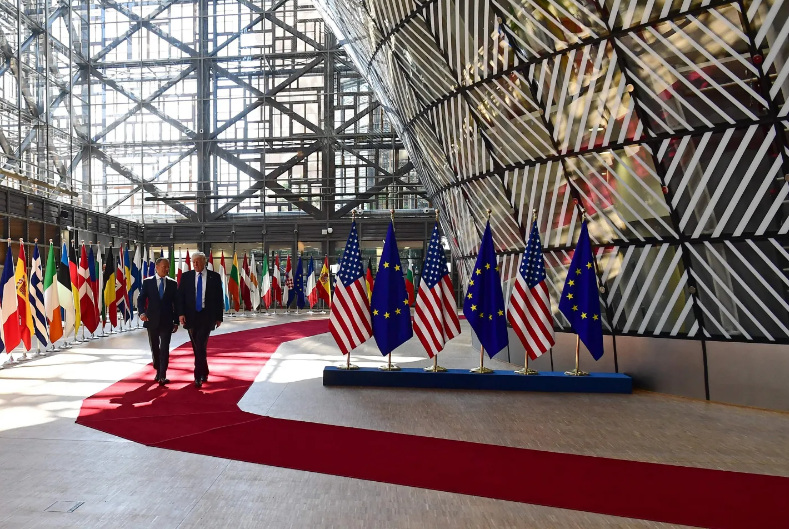
As the possibility of Donald Trump’s return to the White House looms, European leaders are increasingly focused on strengthening the continent’s independence, particularly in defense and economic matters. With Trump having made his intentions clear during his first term, European officials say they are preparing for a future in which they can no longer rely on the United States for security and support.

“We can’t depend on U.S. voters every four years for our security,” says Benjamin Haddad, France’s Minister Delegate for European Affairs. “It’s now time to wake up and defend ours.” This sentiment, shared by other European leaders like French President Emmanuel Macron, reflects a growing realization that Europe must take more responsibility for its future, especially as Trump’s return could lead to a shift in U.S. foreign policy.

Trump’s 2024 victory over Vice President Kamala Harris has reignited concerns among European capitals, who recall the uncertainty and unpredictability of his first term. European leaders, while wary of Trump’s erratic style, now feel more prepared for what a second term could bring. Trump has been outspoken about his stance on trade, defense spending, and the ongoing conflict between Russia and Ukraine, with plans to press Europe on these fronts.

A key issue is Europe’s defense spending, which Trump has long criticized as disproportionate, especially given U.S. military support for Ukraine. In response, European foreign ministers have called for a greater role in securing their own defense, with some countries even pushing to exceed NATO’s defense spending targets. “The view is that we can’t be credible on Ukraine and expect Trump to take into account our sensitivities unless we’re willing to put a lot more money on the table,” says Mujtaba Rahman of Eurasia Group.

European Commission President Ursula von der Leyen has also explored ways to address potential tariffs on European goods, including purchasing more U.S. liquefied natural gas to avoid punitive trade measures. If tariffs are imposed, Europe could retaliate with its own levies, targeting products like Kentucky bourbon and Harley-Davidson motorcycles.

While the EU remains united on key issues like supporting Ukraine—having provided over €120 billion in aid—internal challenges could complicate its ability to respond to Trump. Germany is in the midst of a political crisis, with fresh elections scheduled for February 2024, while France faces a debt crisis that threatens economic stability. This leaves the EU vulnerable to direct dealings between Trump and national leaders, bypassing EU institutions.

For some, the rise of more self-reliant European policies is seen as an opportunity. “Do we want to continue to exist, to carry clout, or just be the passive theater of great power rivalries?” asks Haddad. “Now it’s time to wake up from our vacation from history.” However, others caution that a more autonomous Europe must still be mindful of its reliance on U.S. security guarantees, suggesting a careful balance between independence and collaboration with the U.S.

As Europe faces this new era, its leaders must navigate a complex landscape where Trump’s return may push them toward greater autonomy, but also test their unity and relationships with the U.S.


Business

Fraudsters are increasingly using AI-generated images and videos to trick people into handing over sensitive personal and financial information, according to FraudSMART, the financial crime awareness initiative operated by the Banking and Payments Federation Ireland (BPFI). The organisation has reported a rise in online adverts promoting fake, State-backed investment schemes. These scams often use fabricated images of well-known politicians and business figures to make the offers appear legitimate and encourage users to click on registration links. Niamh Davenport, head of financial crime at BPFI, said scammers are deliberately exploiting recent media coverage of a planned State-backed savings and investment scheme to give their frauds a sense of credibility. “They often claim the scheme is open to everyone, but that places are limited and being ‘snapped up’ fast, in order to pressure people to act quickly,” she said. “They typically promise guaranteed returns or a guaranteed monthly income.” FraudSMART said that while anyone can be targeted, people in their early 50s are particularly vulnerable to investment scams. This age group is often focused on retirement planning, making them more receptive to financial offers that appear secure or high-yield. According to the organisation, most scams follow a similar pattern. Victims are first directed to click a registration link and complete a short online form providing their contact details. They are then contacted by someone posing as a financial adviser, who urges them to make an immediate “security deposit” to secure participation in the scheme. Once a payment is made, the money is quickly moved through multiple accounts, often overseas, making recovery extremely difficult. Davenport warned that scammers are becoming more sophisticated in their use of technology, particularly AI tools that allow them to create realistic but entirely fake promotional content. These materials are designed to mimic legitimate financial advertisements and build trust with potential victims. Recent figures from An Garda Síochána show investment fraud rose by 20% last year, with losses exceeding €20 million. The scale of individual scams varies widely, ranging from smaller crypto-related frauds involving a few hundred euro to large-scale investment schemes where victims lose tens of thousands. FraudSMART is urging the public to remain cautious when encountering online investment advertisements, especially those promising guaranteed returns or requiring urgent action. It also advises consumers to avoid sharing personal information with unverified sources and to be wary of pressure tactics designed to rush financial decisions. Authorities continue to warn that fraudsters are adapting quickly, using advanced digital tools to target victims across multiple platforms.

Trending

Business

Fraudsters are increasingly using AI-generated images and videos to trick people into handing over sensitive personal and financial information, according to FraudSMART, the financial crime awareness initiative operated by the Banking and Payments Federation Ireland (BPFI). The organisation has reported a rise in online adverts promoting fake, State-backed investment schemes. These scams often use fabricated images of well-known politicians and business figures to make the offers appear legitimate and encourage users to click on registration links. Niamh Davenport, head of financial crime at BPFI, said scammers are deliberately exploiting recent media coverage of a planned State-backed savings and investment scheme to give their frauds a sense of credibility. “They often claim the scheme is open to everyone, but that places are limited and being ‘snapped up’ fast, in order to pressure people to act quickly,” she said. “They typically promise guaranteed returns or a guaranteed monthly income.” FraudSMART said that while anyone can be targeted, people in their early 50s are particularly vulnerable to investment scams. This age group is often focused on retirement planning, making them more receptive to financial offers that appear secure or high-yield. According to the organisation, most scams follow a similar pattern. Victims are first directed to click a registration link and complete a short online form providing their contact details. They are then contacted by someone posing as a financial adviser, who urges them to make an immediate “security deposit” to secure participation in the scheme. Once a payment is made, the money is quickly moved through multiple accounts, often overseas, making recovery extremely difficult. Davenport warned that scammers are becoming more sophisticated in their use of technology, particularly AI tools that allow them to create realistic but entirely fake promotional content. These materials are designed to mimic legitimate financial advertisements and build trust with potential victims. Recent figures from An Garda Síochána show investment fraud rose by 20% last year, with losses exceeding €20 million. The scale of individual scams varies widely, ranging from smaller crypto-related frauds involving a few hundred euro to large-scale investment schemes where victims lose tens of thousands. FraudSMART is urging the public to remain cautious when encountering online investment advertisements, especially those promising guaranteed returns or requiring urgent action. It also advises consumers to avoid sharing personal information with unverified sources and to be wary of pressure tactics designed to rush financial decisions. Authorities continue to warn that fraudsters are adapting quickly, using advanced digital tools to target victims across multiple platforms.

You May Also Like

Politics

WASHINGTON — The Pentagon announced on Sunday that the United States will send a Terminal High Altitude Area Defense (THAAD) battery to Israel, alongside...

Health

NEW YORK — Teen smoking in the United States has reached an all-time low in 2024, with significant declines in overall youth tobacco use,...

Politics

WASHINGTON — As the countdown to the November 5 presidential election continues, former President Donald Trump is urging his supporters to aim for a...

Politics

In September, NASA announced that summer 2024 was the hottest on record. Just days later, the U.S. faced the dual impact of Hurricanes Helene...