















Connect with us

Hi, what are you looking for?

Politics

Democrats Divided as Historic U.S. Government Shutdown Drags Into Sixth Week

Two days after Democrats celebrated sweeping victories in state elections, internal divisions have deepened over how to end the ongoing government shutdown, now in its sixth week and the longest in U.S. history.

The standoff centers on the fate of key Affordable Care Act (ACA) subsidies set to expire at year’s end. Progressive lawmakers are pushing to keep the government closed until Republicans agree to extend the health insurance subsidies, while moderates seek a way to reopen federal agencies without such a commitment.

Progressive Senator Bernie Sanders of Vermont urged Democrats to stand firm, warning against accepting any deal without concrete guarantees. “If they cave now and go forward with a meaningless vote, I think it will be a horrible policy decision,” Sanders told reporters. “When we fight, we win. When you cave, you lose.”

However, moderate Democrats such as Senator Ron Wyden of Oregon have remained cautious, saying their focus is on preventing Americans from losing health coverage. “My red line is those people losing health care,” Wyden said.

Republicans have offered no sign of compromise. House Speaker Mike Johnson rejected a request from Senate negotiators to ensure a vote on the subsidies, saying, “I’m not promising anybody anything.” Senate Democrats have repeatedly blocked the House-passed resolution that would reopen the government without addressing health care provisions.

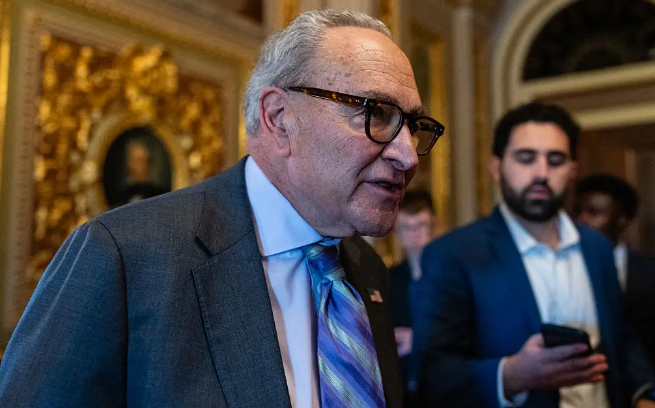
President Donald Trump acknowledged that the shutdown had hurt Republicans in recent elections, calling it a “big factor, negative” in their losses—a statement Democrats seized on as evidence that pressure is mounting on the GOP. “Donald Trump clearly is feeling pressure to bring this shutdown to an end,” Senate Minority Leader Chuck Schumer said. “Well, I have good news for the president: meet with Democrats, reopen the government.”

The shutdown’s toll on public services continues to grow. The Federal Aviation Administration (FAA) announced plans to cut air traffic by 10% across 40 major markets due to staffing shortages, warning of widespread travel delays. Federal workers have missed multiple paychecks, and food assistance programs remain frozen.

Republicans are planning another vote on a temporary funding measure that would reopen the government and allow a future vote on the ACA subsidies, but Democrats say it lacks real guarantees. Some lawmakers have also floated a proposal to reinstate federal employees dismissed during the shutdown and provide back pay, an idea that could become part of a broader reopening deal.

Despite growing frustration, progressives insist on holding firm. “We are winning the hearts and minds of the American people,” said Senator Richard Blumenthal of Connecticut. But others, including Senator John Fetterman of Pennsylvania, warned against political overreach. “We love to overplay our hands,” he said. “That doesn’t mean we’ve changed the dynamic in D.C.”

As talks stall and the FAA prepares for another weekend of disruptions, millions of Americans remain caught in the political deadlock that has paralyzed Washington.

Business

Fraudsters are increasingly using AI-generated images and videos to trick people into handing over sensitive personal and financial information, according to FraudSMART, the financial crime awareness initiative operated by the Banking and Payments Federation Ireland (BPFI). The organisation has reported a rise in online adverts promoting fake, State-backed investment schemes. These scams often use fabricated images of well-known politicians and business figures to make the offers appear legitimate and encourage users to click on registration links. Niamh Davenport, head of financial crime at BPFI, said scammers are deliberately exploiting recent media coverage of a planned State-backed savings and investment scheme to give their frauds a sense of credibility. “They often claim the scheme is open to everyone, but that places are limited and being ‘snapped up’ fast, in order to pressure people to act quickly,” she said. “They typically promise guaranteed returns or a guaranteed monthly income.” FraudSMART said that while anyone can be targeted, people in their early 50s are particularly vulnerable to investment scams. This age group is often focused on retirement planning, making them more receptive to financial offers that appear secure or high-yield. According to the organisation, most scams follow a similar pattern. Victims are first directed to click a registration link and complete a short online form providing their contact details. They are then contacted by someone posing as a financial adviser, who urges them to make an immediate “security deposit” to secure participation in the scheme. Once a payment is made, the money is quickly moved through multiple accounts, often overseas, making recovery extremely difficult. Davenport warned that scammers are becoming more sophisticated in their use of technology, particularly AI tools that allow them to create realistic but entirely fake promotional content. These materials are designed to mimic legitimate financial advertisements and build trust with potential victims. Recent figures from An Garda Síochána show investment fraud rose by 20% last year, with losses exceeding €20 million. The scale of individual scams varies widely, ranging from smaller crypto-related frauds involving a few hundred euro to large-scale investment schemes where victims lose tens of thousands. FraudSMART is urging the public to remain cautious when encountering online investment advertisements, especially those promising guaranteed returns or requiring urgent action. It also advises consumers to avoid sharing personal information with unverified sources and to be wary of pressure tactics designed to rush financial decisions. Authorities continue to warn that fraudsters are adapting quickly, using advanced digital tools to target victims across multiple platforms.

Trending

Business

Fraudsters are increasingly using AI-generated images and videos to trick people into handing over sensitive personal and financial information, according to FraudSMART, the financial crime awareness initiative operated by the Banking and Payments Federation Ireland (BPFI). The organisation has reported a rise in online adverts promoting fake, State-backed investment schemes. These scams often use fabricated images of well-known politicians and business figures to make the offers appear legitimate and encourage users to click on registration links. Niamh Davenport, head of financial crime at BPFI, said scammers are deliberately exploiting recent media coverage of a planned State-backed savings and investment scheme to give their frauds a sense of credibility. “They often claim the scheme is open to everyone, but that places are limited and being ‘snapped up’ fast, in order to pressure people to act quickly,” she said. “They typically promise guaranteed returns or a guaranteed monthly income.” FraudSMART said that while anyone can be targeted, people in their early 50s are particularly vulnerable to investment scams. This age group is often focused on retirement planning, making them more receptive to financial offers that appear secure or high-yield. According to the organisation, most scams follow a similar pattern. Victims are first directed to click a registration link and complete a short online form providing their contact details. They are then contacted by someone posing as a financial adviser, who urges them to make an immediate “security deposit” to secure participation in the scheme. Once a payment is made, the money is quickly moved through multiple accounts, often overseas, making recovery extremely difficult. Davenport warned that scammers are becoming more sophisticated in their use of technology, particularly AI tools that allow them to create realistic but entirely fake promotional content. These materials are designed to mimic legitimate financial advertisements and build trust with potential victims. Recent figures from An Garda Síochána show investment fraud rose by 20% last year, with losses exceeding €20 million. The scale of individual scams varies widely, ranging from smaller crypto-related frauds involving a few hundred euro to large-scale investment schemes where victims lose tens of thousands. FraudSMART is urging the public to remain cautious when encountering online investment advertisements, especially those promising guaranteed returns or requiring urgent action. It also advises consumers to avoid sharing personal information with unverified sources and to be wary of pressure tactics designed to rush financial decisions. Authorities continue to warn that fraudsters are adapting quickly, using advanced digital tools to target victims across multiple platforms.

You May Also Like

Politics

WASHINGTON — The Pentagon announced on Sunday that the United States will send a Terminal High Altitude Area Defense (THAAD) battery to Israel, alongside...

Health

NEW YORK — Teen smoking in the United States has reached an all-time low in 2024, with significant declines in overall youth tobacco use,...

Politics

WASHINGTON — As the countdown to the November 5 presidential election continues, former President Donald Trump is urging his supporters to aim for a...

Politics

In September, NASA announced that summer 2024 was the hottest on record. Just days later, the U.S. faced the dual impact of Hurricanes Helene...