











Connect with us

Hi, what are you looking for?

Politics

Democratic Senators Accuse Homeland Security Chief of Illegal Political Messaging at U.S. Airports

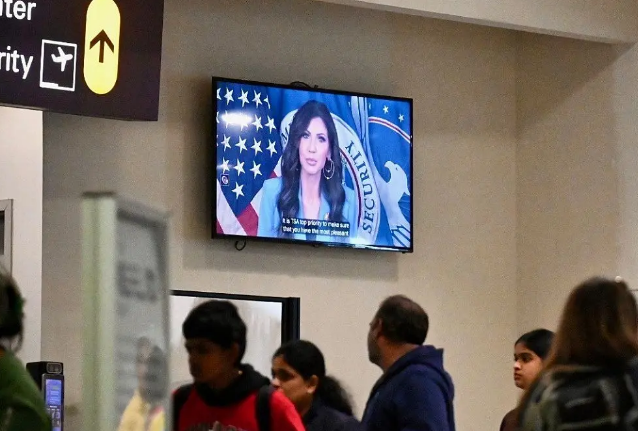
A group of Democratic senators has accused U.S. Secretary of Homeland Security Kristi Noem of violating federal law after she ordered a partisan video to be played on airport monitors across the country. The roughly 30-second clip blamed Democrats for the ongoing government shutdown, which has left thousands of Transportation Security Administration (TSA) and air traffic control employees working without pay.

In the video, Noem tells travelers that “Democrats in Congress refuse to fund the government,” adding that the shutdown has “impacted operations” and left “most TSA employees working without pay.” She concludes by expressing hope that Democrats “will soon recognize the importance of opening the government.”

The message, requested by Noem to be displayed at TSA security checkpoints nationwide, was quickly rejected by several major airports, which cited its overtly political tone. Airport authorities in Atlanta, Chicago, Los Angeles, San Francisco, New York, Las Vegas, and Dallas were among those that refused to broadcast the clip, saying they maintain neutrality and prohibit partisan content in airport advertising.

However, a handful of airports, including those in Detroit, Bismarck, and El Paso, reportedly aired the message, as the TSA operates its own monitors in certain facilities.

Seventeen Democratic senators signed a letter to Noem on Wednesday demanding that the Department of Homeland Security “immediately remove the videos.” They argued that using federal resources for partisan political activity is a “clear violation” of the Hatch Act, a law that prohibits government employees from engaging in political activity while performing official duties.

“Federal law clearly prohibits using taxpayer funds for political propaganda,” the senators wrote. “We will be monitoring your compliance with federal law.”

Legal experts have echoed those concerns. Stanley Brand, a law professor at Penn State Dickinson Law, told NPR the video “seems like a blatant use of political messaging in a forum and by somebody who probably shouldn’t be doing it.” John Berry, an attorney experienced in Hatch Act cases, added that if Noem used government resources to produce the video, she is “clearly covered” by the Act’s restrictions.

The senators also requested a full accounting of how much the video cost to produce and distribute, as well as details on who approved its creation.

Sen. Richard Blumenthal of Connecticut called the video “illegal” and praised airports in his state for refusing to display it. “Our airports are for travelers, not for spreading political propaganda,” he said in a post on X.

The Hatch Act, enacted in 1939, restricts political activities by most federal employees to prevent the use of public resources for partisan purposes. Violations can result in penalties including suspension, fines, or removal from office.

This is not the first time the law has been tested during a government shutdown. The non-profit watchdog group Public Citizen has filed complaints alleging that several federal websites and agency communications have also improperly blamed Democrats for the funding impasse.


Business

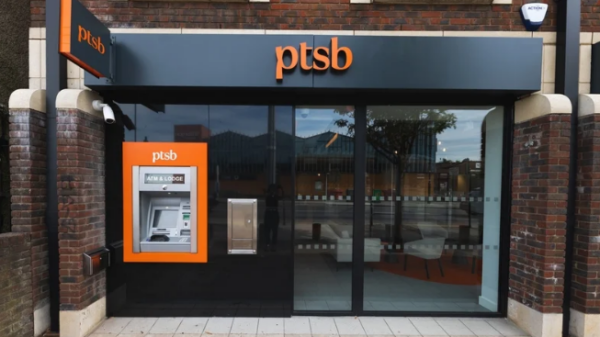
Fraudsters are increasingly using AI-generated images and videos to trick people into handing over sensitive personal and financial information, according to FraudSMART, the financial crime awareness initiative operated by the Banking and Payments Federation Ireland (BPFI). The organisation has reported a rise in online adverts promoting fake, State-backed investment schemes. These scams often use fabricated images of well-known politicians and business figures to make the offers appear legitimate and encourage users to click on registration links. Niamh Davenport, head of financial crime at BPFI, said scammers are deliberately exploiting recent media coverage of a planned State-backed savings and investment scheme to give their frauds a sense of credibility. “They often claim the scheme is open to everyone, but that places are limited and being ‘snapped up’ fast, in order to pressure people to act quickly,” she said. “They typically promise guaranteed returns or a guaranteed monthly income.” FraudSMART said that while anyone can be targeted, people in their early 50s are particularly vulnerable to investment scams. This age group is often focused on retirement planning, making them more receptive to financial offers that appear secure or high-yield. According to the organisation, most scams follow a similar pattern. Victims are first directed to click a registration link and complete a short online form providing their contact details. They are then contacted by someone posing as a financial adviser, who urges them to make an immediate “security deposit” to secure participation in the scheme. Once a payment is made, the money is quickly moved through multiple accounts, often overseas, making recovery extremely difficult. Davenport warned that scammers are becoming more sophisticated in their use of technology, particularly AI tools that allow them to create realistic but entirely fake promotional content. These materials are designed to mimic legitimate financial advertisements and build trust with potential victims. Recent figures from An Garda Síochána show investment fraud rose by 20% last year, with losses exceeding €20 million. The scale of individual scams varies widely, ranging from smaller crypto-related frauds involving a few hundred euro to large-scale investment schemes where victims lose tens of thousands. FraudSMART is urging the public to remain cautious when encountering online investment advertisements, especially those promising guaranteed returns or requiring urgent action. It also advises consumers to avoid sharing personal information with unverified sources and to be wary of pressure tactics designed to rush financial decisions. Authorities continue to warn that fraudsters are adapting quickly, using advanced digital tools to target victims across multiple platforms.

Trending

Business

Fraudsters are increasingly using AI-generated images and videos to trick people into handing over sensitive personal and financial information, according to FraudSMART, the financial crime awareness initiative operated by the Banking and Payments Federation Ireland (BPFI). The organisation has reported a rise in online adverts promoting fake, State-backed investment schemes. These scams often use fabricated images of well-known politicians and business figures to make the offers appear legitimate and encourage users to click on registration links. Niamh Davenport, head of financial crime at BPFI, said scammers are deliberately exploiting recent media coverage of a planned State-backed savings and investment scheme to give their frauds a sense of credibility. “They often claim the scheme is open to everyone, but that places are limited and being ‘snapped up’ fast, in order to pressure people to act quickly,” she said. “They typically promise guaranteed returns or a guaranteed monthly income.” FraudSMART said that while anyone can be targeted, people in their early 50s are particularly vulnerable to investment scams. This age group is often focused on retirement planning, making them more receptive to financial offers that appear secure or high-yield. According to the organisation, most scams follow a similar pattern. Victims are first directed to click a registration link and complete a short online form providing their contact details. They are then contacted by someone posing as a financial adviser, who urges them to make an immediate “security deposit” to secure participation in the scheme. Once a payment is made, the money is quickly moved through multiple accounts, often overseas, making recovery extremely difficult. Davenport warned that scammers are becoming more sophisticated in their use of technology, particularly AI tools that allow them to create realistic but entirely fake promotional content. These materials are designed to mimic legitimate financial advertisements and build trust with potential victims. Recent figures from An Garda Síochána show investment fraud rose by 20% last year, with losses exceeding €20 million. The scale of individual scams varies widely, ranging from smaller crypto-related frauds involving a few hundred euro to large-scale investment schemes where victims lose tens of thousands. FraudSMART is urging the public to remain cautious when encountering online investment advertisements, especially those promising guaranteed returns or requiring urgent action. It also advises consumers to avoid sharing personal information with unverified sources and to be wary of pressure tactics designed to rush financial decisions. Authorities continue to warn that fraudsters are adapting quickly, using advanced digital tools to target victims across multiple platforms.

You May Also Like

Politics

WASHINGTON — The Pentagon announced on Sunday that the United States will send a Terminal High Altitude Area Defense (THAAD) battery to Israel, alongside...

Health

NEW YORK — Teen smoking in the United States has reached an all-time low in 2024, with significant declines in overall youth tobacco use,...

Politics

WASHINGTON — As the countdown to the November 5 presidential election continues, former President Donald Trump is urging his supporters to aim for a...

Politics

In September, NASA announced that summer 2024 was the hottest on record. Just days later, the U.S. faced the dual impact of Hurricanes Helene...