




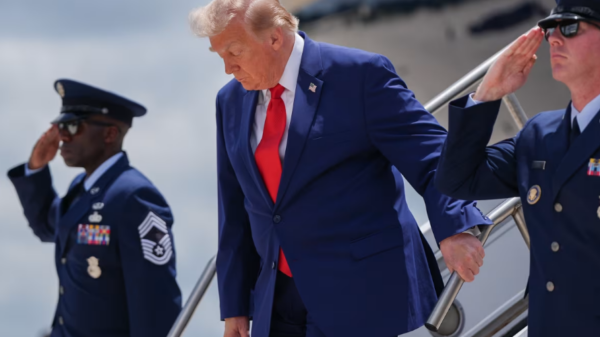



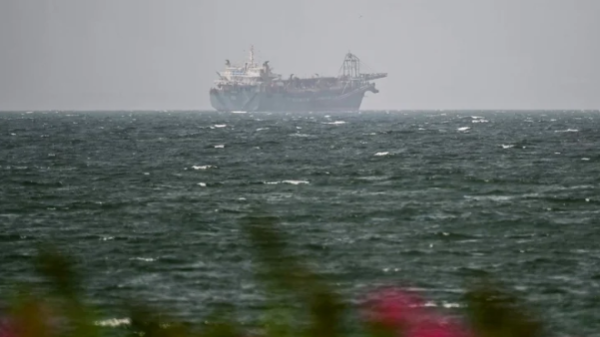
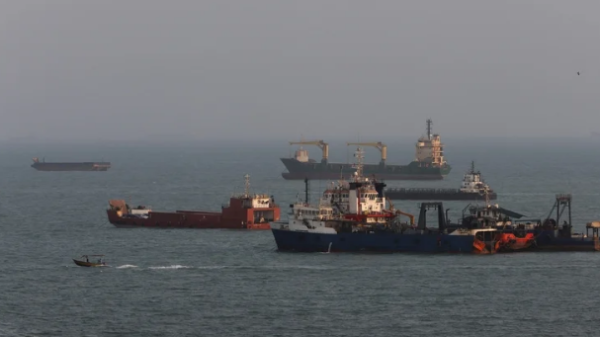





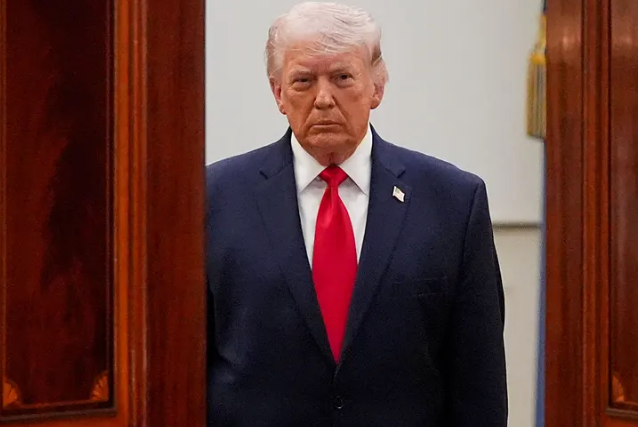
President Donald Trump has intensified concerns among U.S. lawmakers and foreign observers by setting a Tuesday deadline for Iran to reopen the Strait of Hormuz, threatening airstrikes on Iranian civilian infrastructure if demands are not met. The ultimatum comes amid ongoing diplomatic efforts to negotiate a cease-fire, following months of escalating conflict in the region.
Trump’s post on social media over Easter Sunday warned of bombing Iran’s bridges and power plants, stating, “Tuesday will be Power Plant Day, and Bridge Day, all wrapped up in one… Open the Fuckin’ Strait, you crazy bastards, or you’ll be living in Hell—JUST WATCH!” The threat followed a February 28 joint U.S.-Israeli bombing campaign on Iranian targets, carried out despite internal warnings of retaliation and without a publicly articulated rationale.
The president’s critics argue that such actions risk massive civilian casualties and could constitute war crimes. Senator Chris Murphy (D-Conn.) described the threats as “completely, utterly unhinged,” noting that even partial strikes on power plants and bridges could kill thousands of innocent people. Murphy called on Congress and the Trump Cabinet to consider invoking the 25th Amendment, which allows for the removal of a president deemed unable to fulfill their duties.
Iranian embassies worldwide echoed the call, warning the U.S. to consider the 25th Amendment, Section 4. This section allows the vice president and a majority of the Cabinet to declare a president unfit for office, temporarily transferring powers to the vice president. While sections one through three of the amendment have been used several times in U.S. history, section four has never been invoked.
Democratic lawmakers, including Representatives Yassamin Ansari (D-Ariz.) and Melanie Stansbury (D-N.M.), have publicly urged the Cabinet to act. Former Republicans such as Joe Walsh and Anthony Scaramucci have also criticized Trump, highlighting his social media posts and decisions to authorize attacks on civilian targets as evidence of instability.
Even former MAGA ally Marjorie Taylor Greene of Georgia condemned the president, calling his actions “insane” and urging administration officials to intervene. Critics emphasize that the Strait of Hormuz was already open before Trump’s military actions, making the president’s ultimatum appear more retaliatory than strategic.
Observers note that congressional attempts to limit Trump’s war powers have largely failed, and the likelihood of invoking the 25th Amendment remains low. British columnist Simon Jenkins suggested that only a shift in congressional control or impeachment could meaningfully constrain the president, as unilateral executive authority continues to challenge constitutional checks.
As the world watches, Trump’s latest threat has escalated tensions in a region critical to global energy supplies, with international legal and diplomatic consequences looming. The situation highlights growing unease over decision-making at the highest levels of U.S. government and the potential use of the 25th Amendment in response to perceived presidential instability.