
















Connect with us

Hi, what are you looking for?

Politics

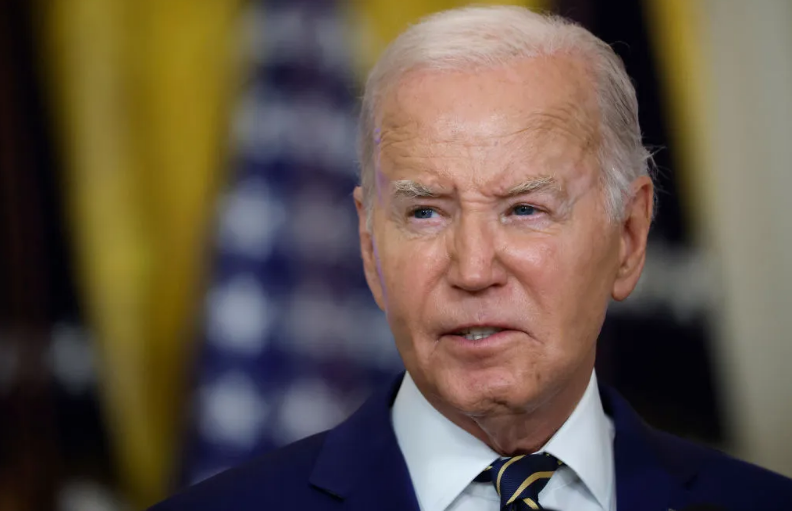
Biden Issues Pardons for Fauci, Milley, and Jan. 6 Investigators Amid Trump’s Return to Power

In his final hours as president, Joe Biden has issued pardons for Dr. Anthony Fauci, retired General Mark Milley, and members of the House committee that investigated the January 6 attack on the U.S. Capitol. The move comes as Biden seeks to protect these individuals from potential retribution by the incoming Trump administration, which has signaled an intent to target those involved in investigations or opposition to former President Donald Trump.

Biden’s decision to grant clemency is seen as a defensive measure, particularly in light of Trump’s warnings of a political “revenge” campaign. Trump has spoken of an enemies list, targeting those who have crossed him politically or helped hold him accountable for the 2020 election loss and his role in the Capitol riot. Trump’s Cabinet nominees, many of whom have supported his election fraud claims, have pledged to penalize individuals involved in efforts to investigate him.

Dr. Anthony Fauci, who served as the director of the National Institute of Allergy and Infectious Diseases for nearly four decades, was a key figure in the U.S. response to the COVID-19 pandemic. As Biden’s chief medical advisor, Fauci became a prominent target for Trump’s supporters, particularly after he disagreed with the former president’s unfounded claims about the virus and public health measures. Fauci has since faced intense criticism and threats, primarily from the political right, over pandemic policies that many saw as infringing on personal freedoms.

General Mark Milley, the former chairman of the Joint Chiefs of Staff, was another key figure in the Trump era, particularly for his outspoken criticism of the former president’s handling of the January 6 insurrection. Milley referred to Trump’s actions surrounding the Capitol attack as “fascist” and provided detailed accounts of Trump’s behavior during the violent attempt to overturn the 2020 election results. Milley’s defense of democracy has drawn backlash from Trump’s supporters, contributing to the growing animosity against him.

Biden’s pardons also extend to members of the House committee that investigated the January 6 Capitol riot, including former GOP Representative Liz Cheney, who played a crucial role in holding Trump accountable for the attack. This act of clemency is seen as an effort to shield public servants who have faced personal and professional threats for their involvement in the investigation.

The pardons issued by Biden on his last day in office underscore the deepening political divides in the U.S. and the uncertainty that looms over the nation’s leadership as Trump returns to power.


Business

Fraudsters are increasingly using AI-generated images and videos to trick people into handing over sensitive personal and financial information, according to FraudSMART, the financial crime awareness initiative operated by the Banking and Payments Federation Ireland (BPFI). The organisation has reported a rise in online adverts promoting fake, State-backed investment schemes. These scams often use fabricated images of well-known politicians and business figures to make the offers appear legitimate and encourage users to click on registration links. Niamh Davenport, head of financial crime at BPFI, said scammers are deliberately exploiting recent media coverage of a planned State-backed savings and investment scheme to give their frauds a sense of credibility. “They often claim the scheme is open to everyone, but that places are limited and being ‘snapped up’ fast, in order to pressure people to act quickly,” she said. “They typically promise guaranteed returns or a guaranteed monthly income.” FraudSMART said that while anyone can be targeted, people in their early 50s are particularly vulnerable to investment scams. This age group is often focused on retirement planning, making them more receptive to financial offers that appear secure or high-yield. According to the organisation, most scams follow a similar pattern. Victims are first directed to click a registration link and complete a short online form providing their contact details. They are then contacted by someone posing as a financial adviser, who urges them to make an immediate “security deposit” to secure participation in the scheme. Once a payment is made, the money is quickly moved through multiple accounts, often overseas, making recovery extremely difficult. Davenport warned that scammers are becoming more sophisticated in their use of technology, particularly AI tools that allow them to create realistic but entirely fake promotional content. These materials are designed to mimic legitimate financial advertisements and build trust with potential victims. Recent figures from An Garda Síochána show investment fraud rose by 20% last year, with losses exceeding €20 million. The scale of individual scams varies widely, ranging from smaller crypto-related frauds involving a few hundred euro to large-scale investment schemes where victims lose tens of thousands. FraudSMART is urging the public to remain cautious when encountering online investment advertisements, especially those promising guaranteed returns or requiring urgent action. It also advises consumers to avoid sharing personal information with unverified sources and to be wary of pressure tactics designed to rush financial decisions. Authorities continue to warn that fraudsters are adapting quickly, using advanced digital tools to target victims across multiple platforms.

Trending

Business

Fraudsters are increasingly using AI-generated images and videos to trick people into handing over sensitive personal and financial information, according to FraudSMART, the financial crime awareness initiative operated by the Banking and Payments Federation Ireland (BPFI). The organisation has reported a rise in online adverts promoting fake, State-backed investment schemes. These scams often use fabricated images of well-known politicians and business figures to make the offers appear legitimate and encourage users to click on registration links. Niamh Davenport, head of financial crime at BPFI, said scammers are deliberately exploiting recent media coverage of a planned State-backed savings and investment scheme to give their frauds a sense of credibility. “They often claim the scheme is open to everyone, but that places are limited and being ‘snapped up’ fast, in order to pressure people to act quickly,” she said. “They typically promise guaranteed returns or a guaranteed monthly income.” FraudSMART said that while anyone can be targeted, people in their early 50s are particularly vulnerable to investment scams. This age group is often focused on retirement planning, making them more receptive to financial offers that appear secure or high-yield. According to the organisation, most scams follow a similar pattern. Victims are first directed to click a registration link and complete a short online form providing their contact details. They are then contacted by someone posing as a financial adviser, who urges them to make an immediate “security deposit” to secure participation in the scheme. Once a payment is made, the money is quickly moved through multiple accounts, often overseas, making recovery extremely difficult. Davenport warned that scammers are becoming more sophisticated in their use of technology, particularly AI tools that allow them to create realistic but entirely fake promotional content. These materials are designed to mimic legitimate financial advertisements and build trust with potential victims. Recent figures from An Garda Síochána show investment fraud rose by 20% last year, with losses exceeding €20 million. The scale of individual scams varies widely, ranging from smaller crypto-related frauds involving a few hundred euro to large-scale investment schemes where victims lose tens of thousands. FraudSMART is urging the public to remain cautious when encountering online investment advertisements, especially those promising guaranteed returns or requiring urgent action. It also advises consumers to avoid sharing personal information with unverified sources and to be wary of pressure tactics designed to rush financial decisions. Authorities continue to warn that fraudsters are adapting quickly, using advanced digital tools to target victims across multiple platforms.

You May Also Like

Politics

WASHINGTON — The Pentagon announced on Sunday that the United States will send a Terminal High Altitude Area Defense (THAAD) battery to Israel, alongside...

Health

NEW YORK — Teen smoking in the United States has reached an all-time low in 2024, with significant declines in overall youth tobacco use,...

Politics

WASHINGTON — As the countdown to the November 5 presidential election continues, former President Donald Trump is urging his supporters to aim for a...

Politics

In September, NASA announced that summer 2024 was the hottest on record. Just days later, the U.S. faced the dual impact of Hurricanes Helene...