



















Connect with us

Hi, what are you looking for?

Politics

Andrew Cuomo Announces Run for NYC Mayor Amid Political Comeback Attempt

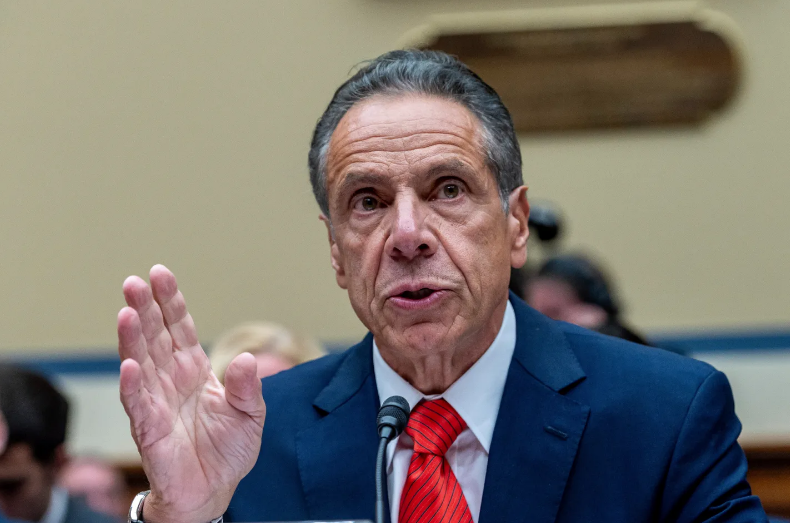
Former New York Governor Andrew Cuomo has officially launched his campaign for Mayor of New York City, marking a dramatic return to politics after a yearslong exile following multiple sexual harassment allegations.

In a 17-minute video released on Saturday, Cuomo positioned himself as a moderate leader with the experience to tackle a city he described as “out of control” and in need of strong leadership. He emphasized his ability to work with Republican President Donald Trump while standing up to him when necessary.

“I am not saying this is going to be easy. It won’t be easy, but I know we can turn the city around, and I believe I can help,” Cuomo said.

A Scandal-Ridden Comeback

Cuomo’s return to the political stage comes despite the sexual harassment scandal that led to his 2021 resignation as governor. While he brings significant fundraising power and a three-term record, it remains unclear whether voters will forgive his past controversies.

Although Cuomo acknowledged past mistakes in his campaign announcement, he did not directly address the allegations made against him.

“Did I always do everything right? Of course not,” he said. “Did I make mistakes? Definitely, and I believe I learned from them and that I am a better person for it.”

His critics, however, remain unconvinced. Lindsey Boylan, the first woman to publicly accuse Cuomo of harassment, published an essay in Vanity Fair on Saturday, arguing that New York deserves better and that Cuomo has spent years trying to discredit his accusers.

“Rather than repent and atone, Cuomo has waged a vengeful legal campaign against his accusers,” Boylan wrote.

A Crowded Democratic Primary

Cuomo enters a competitive race where he will face multiple primary opponents, including incumbent Mayor Eric Adams, who is currently under federal corruption indictment. Other challengers include:

  • City Comptroller Brad Lander
  • State Sen. Zellnor Myrie
  • State Sen. Jessica Ramos
  • State Assemblyman Zohran Mamdani
  • Former City Comptroller Scott Stringer

Criticism of Cuomo’s candidacy was swift. Ramos called him a “corrupt bully”, while Myrie said New Yorkers shouldn’t be forced to relive “The Andrew Cuomo Show.”

Adams’ Political Vulnerability

Mayor Eric Adams, who welcomed Cuomo to the race, is facing serious legal challenges. A federal indictment accuses Adams of accepting illegal campaign contributions and luxury perks from foreign nationals, including a Turkish official.

While Adams has denied wrongdoing, his administration has been thrown into chaos, with some top deputies resigning in protest. Critics allege that Trump’s Justice Department intervened to drop charges in exchange for Adams’ support on immigration policy, further complicating his re-election bid.

Cuomo’s Long Political Career and Rapid Fall

Cuomo, 67, has been a fixture in New York politics for decades. He served as U.S. Housing Secretary under President Bill Clinton, then as New York Attorney General, before winning the governorship in 2010.

During the COVID-19 pandemic, Cuomo’s daily televised briefings won him national praise, leading to a $5 million book deal on leadership. However, his administration later faced accusations of hiding nursing home death data and using taxpayer resources to work on the book.

What’s Next?

Cuomo still has a significant campaign war chest, though transferring funds from his state campaign to a city race will require legal hurdles.

As the Democratic primary approaches in June, Cuomo will have to convince voters that his leadership experience outweighs his controversial past—a challenge that will define one of the most contentious races in recent New York City history.


Business

Fraudsters are increasingly using AI-generated images and videos to trick people into handing over sensitive personal and financial information, according to FraudSMART, the financial crime awareness initiative operated by the Banking and Payments Federation Ireland (BPFI). The organisation has reported a rise in online adverts promoting fake, State-backed investment schemes. These scams often use fabricated images of well-known politicians and business figures to make the offers appear legitimate and encourage users to click on registration links. Niamh Davenport, head of financial crime at BPFI, said scammers are deliberately exploiting recent media coverage of a planned State-backed savings and investment scheme to give their frauds a sense of credibility. “They often claim the scheme is open to everyone, but that places are limited and being ‘snapped up’ fast, in order to pressure people to act quickly,” she said. “They typically promise guaranteed returns or a guaranteed monthly income.” FraudSMART said that while anyone can be targeted, people in their early 50s are particularly vulnerable to investment scams. This age group is often focused on retirement planning, making them more receptive to financial offers that appear secure or high-yield. According to the organisation, most scams follow a similar pattern. Victims are first directed to click a registration link and complete a short online form providing their contact details. They are then contacted by someone posing as a financial adviser, who urges them to make an immediate “security deposit” to secure participation in the scheme. Once a payment is made, the money is quickly moved through multiple accounts, often overseas, making recovery extremely difficult. Davenport warned that scammers are becoming more sophisticated in their use of technology, particularly AI tools that allow them to create realistic but entirely fake promotional content. These materials are designed to mimic legitimate financial advertisements and build trust with potential victims. Recent figures from An Garda Síochána show investment fraud rose by 20% last year, with losses exceeding €20 million. The scale of individual scams varies widely, ranging from smaller crypto-related frauds involving a few hundred euro to large-scale investment schemes where victims lose tens of thousands. FraudSMART is urging the public to remain cautious when encountering online investment advertisements, especially those promising guaranteed returns or requiring urgent action. It also advises consumers to avoid sharing personal information with unverified sources and to be wary of pressure tactics designed to rush financial decisions. Authorities continue to warn that fraudsters are adapting quickly, using advanced digital tools to target victims across multiple platforms.

Trending

Business

Fraudsters are increasingly using AI-generated images and videos to trick people into handing over sensitive personal and financial information, according to FraudSMART, the financial crime awareness initiative operated by the Banking and Payments Federation Ireland (BPFI). The organisation has reported a rise in online adverts promoting fake, State-backed investment schemes. These scams often use fabricated images of well-known politicians and business figures to make the offers appear legitimate and encourage users to click on registration links. Niamh Davenport, head of financial crime at BPFI, said scammers are deliberately exploiting recent media coverage of a planned State-backed savings and investment scheme to give their frauds a sense of credibility. “They often claim the scheme is open to everyone, but that places are limited and being ‘snapped up’ fast, in order to pressure people to act quickly,” she said. “They typically promise guaranteed returns or a guaranteed monthly income.” FraudSMART said that while anyone can be targeted, people in their early 50s are particularly vulnerable to investment scams. This age group is often focused on retirement planning, making them more receptive to financial offers that appear secure or high-yield. According to the organisation, most scams follow a similar pattern. Victims are first directed to click a registration link and complete a short online form providing their contact details. They are then contacted by someone posing as a financial adviser, who urges them to make an immediate “security deposit” to secure participation in the scheme. Once a payment is made, the money is quickly moved through multiple accounts, often overseas, making recovery extremely difficult. Davenport warned that scammers are becoming more sophisticated in their use of technology, particularly AI tools that allow them to create realistic but entirely fake promotional content. These materials are designed to mimic legitimate financial advertisements and build trust with potential victims. Recent figures from An Garda Síochána show investment fraud rose by 20% last year, with losses exceeding €20 million. The scale of individual scams varies widely, ranging from smaller crypto-related frauds involving a few hundred euro to large-scale investment schemes where victims lose tens of thousands. FraudSMART is urging the public to remain cautious when encountering online investment advertisements, especially those promising guaranteed returns or requiring urgent action. It also advises consumers to avoid sharing personal information with unverified sources and to be wary of pressure tactics designed to rush financial decisions. Authorities continue to warn that fraudsters are adapting quickly, using advanced digital tools to target victims across multiple platforms.

You May Also Like

Politics

WASHINGTON — The Pentagon announced on Sunday that the United States will send a Terminal High Altitude Area Defense (THAAD) battery to Israel, alongside...

Health

NEW YORK — Teen smoking in the United States has reached an all-time low in 2024, with significant declines in overall youth tobacco use,...

Politics

WASHINGTON — As the countdown to the November 5 presidential election continues, former President Donald Trump is urging his supporters to aim for a...

Politics

In September, NASA announced that summer 2024 was the hottest on record. Just days later, the U.S. faced the dual impact of Hurricanes Helene...















