
















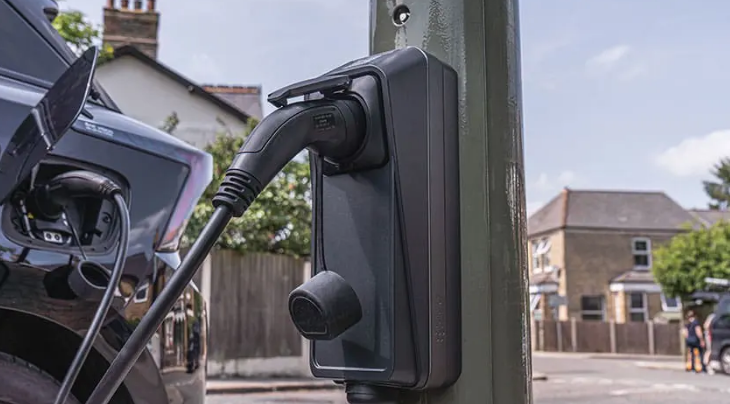
West Northamptonshire is set to launch one of the UK’s largest on-street electric vehicle (EV) charging programmes, with more than 3,000 charging sockets planned for residential streets from mid-2026. Most of the new chargers will be installed on existing lamp posts, providing easier access for residents and businesses that lack private driveways.
West Northamptonshire Council has appointed EV charging operator Char.gy to deliver the project following a competitive procurement process. The scheme is being funded through the UK Government’s Local Electric Vehicle Infrastructure (LEVI) Fund, alongside significant private sector investment. Officials said the network will offer competitive charging tariffs for users.
The rollout is aimed primarily at households that rely on street parking and cannot install home charging points. It is also expected to benefit many small businesses, including sole traders and company vehicle drivers who depend on roadside parking and have been reluctant to switch to electric vehicles because of limited charging options.
Access to convenient charging remains one of the biggest obstacles to wider EV adoption, particularly for businesses considering replacing petrol or diesel vehicles with electric alternatives. The programme comes as the government continues to expand public charging infrastructure, having committed more than £600 million to strengthen the UK’s charging network.
Aviation, Maritime and Decarbonisation Minister Keir Mather said the project would help remove one of the main barriers to electric vehicle ownership.
“Drivers in West Northamptonshire will soon have thousands more reasons to go electric, with over 3,000 new public charge points rolling out thanks to £2.85 million of government funding,” he said.
“We know charging availability is one of the biggest barriers to switching, which is why we’re tackling it head on with over £600 million to rapidly expand the UK’s charging network so drivers can charge at home or on the go with confidence, wherever they are.”
The council said using existing lamp columns will reduce installation costs and minimise disruption by avoiding extensive roadworks and pavement excavation. Officials believe the approach will allow chargers to be installed more quickly while supporting the area’s environmental objectives.
Charging locations have been selected through an evidence-based assessment focused on neighbourhoods with limited off-street parking. Suggestions submitted by residents have also been included, while parish councils are being consulted to help ensure fair and accessible coverage across the region.
Councillor Nigel Stansfield, Cabinet Member for Environment, Recycling and Waste, described the project as a major investment in the area’s future.
“By delivering thousands of accessible, convenient and fairly priced on-street charging points, we are making it easier for residents to choose cleaner travel and invest in electric vehicles if they choose to,” he said.
Char.gy Chief Executive John Lewis said the programme would make charging more accessible for people without driveways by placing facilities closer to where they live.
One issue that remains unresolved is taxation. Public EV charging is currently subject to 20% VAT, compared with 5% for home charging. The difference is the subject of an ongoing legal dispute between HM Revenue & Customs and charge point operators, with the outcome expected to influence the long-term affordability of public charging.
Residents and businesses will receive updates on installation schedules and charging locations through West Northamptonshire Council and Char.gy’s official websites.