

















Connect with us

Hi, what are you looking for?

Business

Equinix Tests Hydrogen Power System at Dublin Data Centre in Push for Cleaner Energy

Data centre operator Equinix has begun trialling a hydrogen-powered energy system at its facility in Blanchardstown, Dublin, as Ireland grapples with rising electricity demand driven by rapid growth in digital infrastructure.

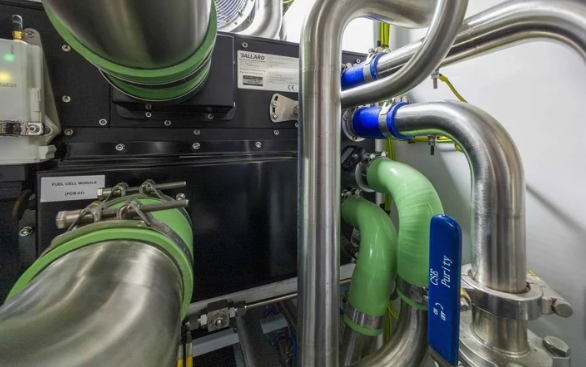
The 12-week pilot project involves the installation of two hydrogen-powered generators developed by clean energy company GeoPura. The units, each housed in container-sized modules, are currently being used to support cooling systems at the data centre site.

According to the companies involved, the generators run in parallel and are designed to provide a zero direct onsite emissions alternative to traditional diesel or gas backup systems. The hydrogen used in the trial is sourced from renewable energy production.

Equinix said the initiative is being carried out in collaboration with Ireland’s national electricity utility ESB. The trial is intended to assess how hydrogen-based systems can support data centre operations while reducing reliance on carbon-intensive backup generation.

Peter Lantry, managing director of Equinix Ireland, described the project as a significant step in exploring alternative energy solutions for the sector. He said the trial could help address challenges related to grid capacity constraints and the increasing difficulty of accessing clean power for large-scale digital infrastructure.

He added that Ireland is making progress in hydrogen development and storage technologies, which could play a role in future energy systems.

ESB’s Head of Asset Development, Paul Lennon, said rising data demand is placing additional pressure on the electricity network. He noted that hydrogen systems could offer a cleaner and more reliable alternative to conventional backup generators, particularly for energy-intensive facilities such as data centres.

Minister of State at the Department of the Environment, Climate and Communications, Timmy Dooley, also welcomed the pilot. He said hydrogen could become an important component of Ireland’s broader transition to a more sustainable energy system. He added that real-world trials such as this are essential for understanding how emerging technologies can support future energy requirements.

The project comes at a time when data centres are playing an increasingly significant role in Ireland’s electricity consumption. In 2024, they accounted for 22 percent of national electricity usage, up from just 5 percent in 2015. Forecasts suggest that share could rise to nearly one-third by 2030.

In response to rising demand, the Irish government has introduced a Large Energy Action Plan aimed at supporting further development of energy-intensive facilities, including data centres, while ensuring grid stability. This follows the lifting of a previous informal pause on new data centre connections.

Regulators have also tightened requirements for new developments. The Commission for the Regulation of Utilities has stated that data centres should only proceed where they can source at least 80 percent of their annual electricity demand from new renewable generation.

The Equinix trial is part of a wider industry effort to explore low-carbon alternatives as pressure increases on energy systems to support the rapid expansion of digital infrastructure.

Click to comment

You must be logged in to post a comment Login

Leave a Reply

Business

Fraudsters are increasingly using AI-generated images and videos to trick people into handing over sensitive personal and financial information, according to FraudSMART, the financial crime awareness initiative operated by the Banking and Payments Federation Ireland (BPFI). The organisation has reported a rise in online adverts promoting fake, State-backed investment schemes. These scams often use fabricated images of well-known politicians and business figures to make the offers appear legitimate and encourage users to click on registration links. Niamh Davenport, head of financial crime at BPFI, said scammers are deliberately exploiting recent media coverage of a planned State-backed savings and investment scheme to give their frauds a sense of credibility. “They often claim the scheme is open to everyone, but that places are limited and being ‘snapped up’ fast, in order to pressure people to act quickly,” she said. “They typically promise guaranteed returns or a guaranteed monthly income.” FraudSMART said that while anyone can be targeted, people in their early 50s are particularly vulnerable to investment scams. This age group is often focused on retirement planning, making them more receptive to financial offers that appear secure or high-yield. According to the organisation, most scams follow a similar pattern. Victims are first directed to click a registration link and complete a short online form providing their contact details. They are then contacted by someone posing as a financial adviser, who urges them to make an immediate “security deposit” to secure participation in the scheme. Once a payment is made, the money is quickly moved through multiple accounts, often overseas, making recovery extremely difficult. Davenport warned that scammers are becoming more sophisticated in their use of technology, particularly AI tools that allow them to create realistic but entirely fake promotional content. These materials are designed to mimic legitimate financial advertisements and build trust with potential victims. Recent figures from An Garda Síochána show investment fraud rose by 20% last year, with losses exceeding €20 million. The scale of individual scams varies widely, ranging from smaller crypto-related frauds involving a few hundred euro to large-scale investment schemes where victims lose tens of thousands. FraudSMART is urging the public to remain cautious when encountering online investment advertisements, especially those promising guaranteed returns or requiring urgent action. It also advises consumers to avoid sharing personal information with unverified sources and to be wary of pressure tactics designed to rush financial decisions. Authorities continue to warn that fraudsters are adapting quickly, using advanced digital tools to target victims across multiple platforms.

Trending

Business

Fraudsters are increasingly using AI-generated images and videos to trick people into handing over sensitive personal and financial information, according to FraudSMART, the financial crime awareness initiative operated by the Banking and Payments Federation Ireland (BPFI). The organisation has reported a rise in online adverts promoting fake, State-backed investment schemes. These scams often use fabricated images of well-known politicians and business figures to make the offers appear legitimate and encourage users to click on registration links. Niamh Davenport, head of financial crime at BPFI, said scammers are deliberately exploiting recent media coverage of a planned State-backed savings and investment scheme to give their frauds a sense of credibility. “They often claim the scheme is open to everyone, but that places are limited and being ‘snapped up’ fast, in order to pressure people to act quickly,” she said. “They typically promise guaranteed returns or a guaranteed monthly income.” FraudSMART said that while anyone can be targeted, people in their early 50s are particularly vulnerable to investment scams. This age group is often focused on retirement planning, making them more receptive to financial offers that appear secure or high-yield. According to the organisation, most scams follow a similar pattern. Victims are first directed to click a registration link and complete a short online form providing their contact details. They are then contacted by someone posing as a financial adviser, who urges them to make an immediate “security deposit” to secure participation in the scheme. Once a payment is made, the money is quickly moved through multiple accounts, often overseas, making recovery extremely difficult. Davenport warned that scammers are becoming more sophisticated in their use of technology, particularly AI tools that allow them to create realistic but entirely fake promotional content. These materials are designed to mimic legitimate financial advertisements and build trust with potential victims. Recent figures from An Garda Síochána show investment fraud rose by 20% last year, with losses exceeding €20 million. The scale of individual scams varies widely, ranging from smaller crypto-related frauds involving a few hundred euro to large-scale investment schemes where victims lose tens of thousands. FraudSMART is urging the public to remain cautious when encountering online investment advertisements, especially those promising guaranteed returns or requiring urgent action. It also advises consumers to avoid sharing personal information with unverified sources and to be wary of pressure tactics designed to rush financial decisions. Authorities continue to warn that fraudsters are adapting quickly, using advanced digital tools to target victims across multiple platforms.

You May Also Like

Politics

WASHINGTON — The Pentagon announced on Sunday that the United States will send a Terminal High Altitude Area Defense (THAAD) battery to Israel, alongside...

Health

NEW YORK — Teen smoking in the United States has reached an all-time low in 2024, with significant declines in overall youth tobacco use,...

Politics

WASHINGTON — As the countdown to the November 5 presidential election continues, former President Donald Trump is urging his supporters to aim for a...

Politics

In September, NASA announced that summer 2024 was the hottest on record. Just days later, the U.S. faced the dual impact of Hurricanes Helene...