















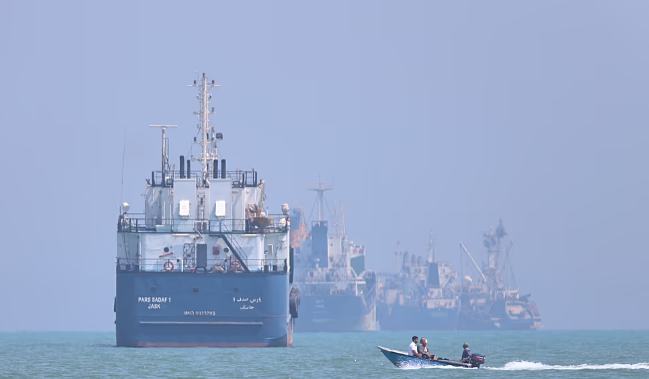
The United States launched a new round of military strikes against Iranian targets on Saturday after Tehran was accused of carrying out another drone attack on a commercial vessel near the Strait of Hormuz, deepening tensions and placing a recently agreed ceasefire under renewed strain.
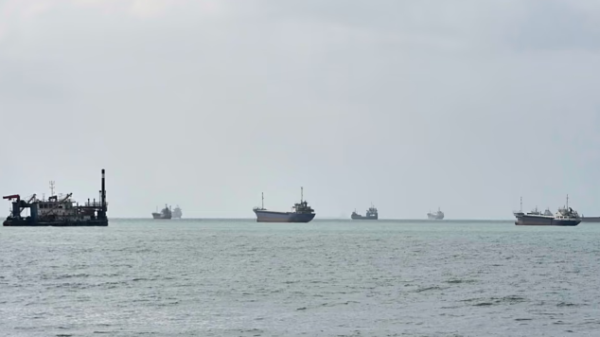
The US Central Command (CENTCOM) said American naval and air forces struck Iranian military surveillance infrastructure, communications systems, air defence positions, drone storage facilities and mine-laying capabilities. The operation came in response to what Washington described as a one-way drone attack on the Panama-flagged oil tanker M/T Kiku while it was transiting near the strategic waterway.
In a statement, CENTCOM said Iran had been given an opportunity to comply with the ceasefire following US strikes a day earlier but instead chose to continue military action.
“After yesterday’s U.S. strikes in response to the Iranian attack on M/V Ever Lovely, Iran was given a chance to honor the ceasefire agreement but elected not to,” the military command said.
CENTCOM also released unclassified video footage on social media that it said showed the latest strikes on Iranian military targets.
Friday’s US operation had targeted Iranian missile and drone storage facilities as well as coastal radar sites after a drone attack on the commercial vessel M/V Ever Lovely. Washington said those strikes were intended as a response to threats against commercial shipping in the Strait of Hormuz.
Iran rejected the US position and accused Washington of violating the terms of the provisional memorandum of understanding signed earlier this month. Tehran responded by launching missile and drone attacks against facilities linked to US forces in Bahrain and Kuwait.
Ebrahim Azizi, chairman of the Iranian parliament’s National Security Commission, said the American strikes demonstrated that President Donald Trump had “no commitment to the principles of negotiation or a ceasefire.”
“This reckless violation of the ceasefire will, as always, lead to retreat and regret on their part,” Azizi wrote on social media.
The latest exchange has raised fresh concerns over the future of the temporary agreement reached between Washington and Tehran. Under the arrangement, both sides committed to a ceasefire and pledged to ensure safe navigation through the Strait of Hormuz, one of the world’s most important oil and gas shipping routes.
The agreement also required the United States to lift its naval blockade of Iran, while Tehran agreed to reopen the strait and reaffirm its commitment not to develop or acquire nuclear weapons. The two countries were given 60 days to negotiate a broader and permanent settlement.
With both sides accusing each other of violating the accord, prospects for those negotiations now appear increasingly uncertain as military activity intensifies across the region.