













Connect with us

Hi, what are you looking for?

News

US Downs Iranian Drones as Hormuz Conflict Escalates Into Wider Regional Crisis

The United States has confirmed that it shot down two Iranian drones near the Strait of Hormuz, marking a fresh escalation in a conflict that has now entered its 100th day with no resolution in sight.

According to US Central Command (CENTCOM), the drones were intercepted after being identified as a threat to international maritime traffic in one of the world’s most critical shipping routes for oil and gas. The announcement followed earlier strikes on four additional drones and radar installations along Iran’s coastal positions, signalling an intensifying cycle of military exchanges.

The latest incident comes amid sustained hostilities between Iran and US-aligned Gulf states, with indirect diplomatic talks failing to produce a ceasefire or restore stability in the region. The Strait of Hormuz, a vital chokepoint for global energy supplies, has become a central flashpoint in the conflict.

Hours before the drone interception, Iran launched a series of ballistic missiles targeting Bahrain and Kuwait. CENTCOM said seven missiles were fired, six of which were intercepted, while one fell short of its target. Iran’s Revolutionary Guards stated that the strikes were aimed at “enemy bases in the region.”

Bahrain, which hosts the US Fifth Fleet, condemned the attacks as “blatant aggression,” while Kuwait described them as a “dangerous escalation.” Air raid sirens were activated in Manama, where residents reported hearing multiple explosions. In Kuwait, blasts were also reported near the international airport, where an earlier strike attributed to Iran had already resulted in casualties.

Eyewitness accounts described scenes of panic. “We woke up to a huge explosion,” said Reem, a mother of two in Kuwait. “My children were terrified, and I couldn’t calm them down.”

Iran’s foreign ministry rejected US military actions, calling them “flagrant violations” and accusing Washington of hostile and provocative behaviour.

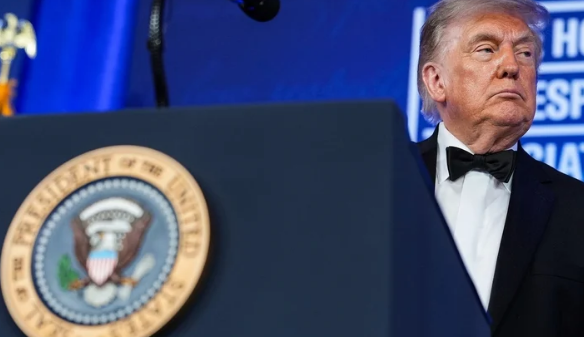
Diplomatic efforts to stabilise the situation have stalled, with mediation attempts involving regional and international actors producing little progress. The war has also created political pressure in Washington, where President Donald Trump faces growing scrutiny ahead of upcoming elections.

Iranian officials have called for the release of frozen assets as part of any potential settlement, while US officials have indicated that seized funds could instead be directed toward rebuilding infrastructure in Gulf states damaged during the conflict.

The violence has also spread across the wider region, including Lebanon, where cross-border attacks have continued despite ceasefire attempts. Both Israeli and Lebanese forces have reported casualties, while humanitarian conditions continue to deteriorate.

Separately, tensions have surfaced in international sports diplomacy after visa restrictions were imposed on members of Iran’s World Cup delegation entering the United States, adding another layer of friction to already strained relations.

As military activity continues across multiple fronts, efforts to contain the conflict remain stalled, with fears growing that the confrontation could widen further if diplomatic channels fail to regain momentum.


Click to comment

You must be logged in to post a comment Login

Leave a Reply

Business

Fraudsters are increasingly using AI-generated images and videos to trick people into handing over sensitive personal and financial information, according to FraudSMART, the financial crime awareness initiative operated by the Banking and Payments Federation Ireland (BPFI). The organisation has reported a rise in online adverts promoting fake, State-backed investment schemes. These scams often use fabricated images of well-known politicians and business figures to make the offers appear legitimate and encourage users to click on registration links. Niamh Davenport, head of financial crime at BPFI, said scammers are deliberately exploiting recent media coverage of a planned State-backed savings and investment scheme to give their frauds a sense of credibility. “They often claim the scheme is open to everyone, but that places are limited and being ‘snapped up’ fast, in order to pressure people to act quickly,” she said. “They typically promise guaranteed returns or a guaranteed monthly income.” FraudSMART said that while anyone can be targeted, people in their early 50s are particularly vulnerable to investment scams. This age group is often focused on retirement planning, making them more receptive to financial offers that appear secure or high-yield. According to the organisation, most scams follow a similar pattern. Victims are first directed to click a registration link and complete a short online form providing their contact details. They are then contacted by someone posing as a financial adviser, who urges them to make an immediate “security deposit” to secure participation in the scheme. Once a payment is made, the money is quickly moved through multiple accounts, often overseas, making recovery extremely difficult. Davenport warned that scammers are becoming more sophisticated in their use of technology, particularly AI tools that allow them to create realistic but entirely fake promotional content. These materials are designed to mimic legitimate financial advertisements and build trust with potential victims. Recent figures from An Garda Síochána show investment fraud rose by 20% last year, with losses exceeding €20 million. The scale of individual scams varies widely, ranging from smaller crypto-related frauds involving a few hundred euro to large-scale investment schemes where victims lose tens of thousands. FraudSMART is urging the public to remain cautious when encountering online investment advertisements, especially those promising guaranteed returns or requiring urgent action. It also advises consumers to avoid sharing personal information with unverified sources and to be wary of pressure tactics designed to rush financial decisions. Authorities continue to warn that fraudsters are adapting quickly, using advanced digital tools to target victims across multiple platforms.

Trending

Business

Fraudsters are increasingly using AI-generated images and videos to trick people into handing over sensitive personal and financial information, according to FraudSMART, the financial crime awareness initiative operated by the Banking and Payments Federation Ireland (BPFI). The organisation has reported a rise in online adverts promoting fake, State-backed investment schemes. These scams often use fabricated images of well-known politicians and business figures to make the offers appear legitimate and encourage users to click on registration links. Niamh Davenport, head of financial crime at BPFI, said scammers are deliberately exploiting recent media coverage of a planned State-backed savings and investment scheme to give their frauds a sense of credibility. “They often claim the scheme is open to everyone, but that places are limited and being ‘snapped up’ fast, in order to pressure people to act quickly,” she said. “They typically promise guaranteed returns or a guaranteed monthly income.” FraudSMART said that while anyone can be targeted, people in their early 50s are particularly vulnerable to investment scams. This age group is often focused on retirement planning, making them more receptive to financial offers that appear secure or high-yield. According to the organisation, most scams follow a similar pattern. Victims are first directed to click a registration link and complete a short online form providing their contact details. They are then contacted by someone posing as a financial adviser, who urges them to make an immediate “security deposit” to secure participation in the scheme. Once a payment is made, the money is quickly moved through multiple accounts, often overseas, making recovery extremely difficult. Davenport warned that scammers are becoming more sophisticated in their use of technology, particularly AI tools that allow them to create realistic but entirely fake promotional content. These materials are designed to mimic legitimate financial advertisements and build trust with potential victims. Recent figures from An Garda Síochána show investment fraud rose by 20% last year, with losses exceeding €20 million. The scale of individual scams varies widely, ranging from smaller crypto-related frauds involving a few hundred euro to large-scale investment schemes where victims lose tens of thousands. FraudSMART is urging the public to remain cautious when encountering online investment advertisements, especially those promising guaranteed returns or requiring urgent action. It also advises consumers to avoid sharing personal information with unverified sources and to be wary of pressure tactics designed to rush financial decisions. Authorities continue to warn that fraudsters are adapting quickly, using advanced digital tools to target victims across multiple platforms.

You May Also Like

Politics

WASHINGTON — The Pentagon announced on Sunday that the United States will send a Terminal High Altitude Area Defense (THAAD) battery to Israel, alongside...

Health

NEW YORK — Teen smoking in the United States has reached an all-time low in 2024, with significant declines in overall youth tobacco use,...

Politics

WASHINGTON — As the countdown to the November 5 presidential election continues, former President Donald Trump is urging his supporters to aim for a...

Politics

In September, NASA announced that summer 2024 was the hottest on record. Just days later, the U.S. faced the dual impact of Hurricanes Helene...