














Connect with us

Hi, what are you looking for?

News

UK Government Unveils Northern Powerhouse Rail Plans with £1.1bn Kickstart

The UK government has released a long-awaited blueprint to revive Northern Powerhouse Rail (NPR), a multibillion-pound project aimed at transforming rail connectivity across northern England and stimulating economic growth. The plan sets out a phased programme of investment in new lines, upgraded routes, and modernised stations, with ministers projecting the scheme could add up to £40 billion to the national economy over time.

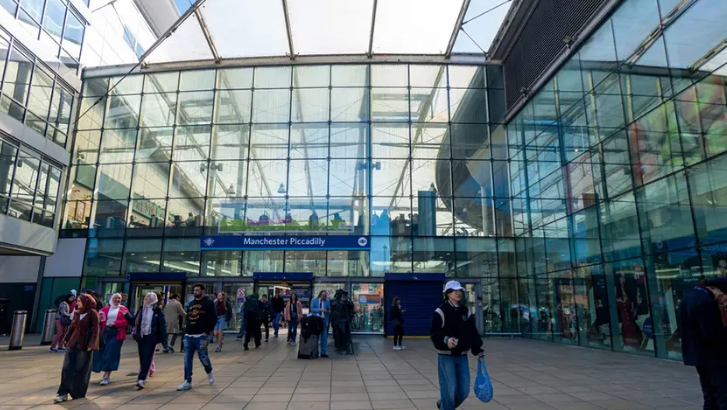
The NPR project, first proposed more than a decade ago, is designed to deliver faster journeys, increased service frequency, and improved capacity between key northern cities. An initial £1.1 billion has been allocated for design and preparatory work, with full construction expected to begin after 2030. Early upgrades will focus on links between Leeds, York, Bradford, and Sheffield, followed by a new Liverpool–Manchester line and longer-term improvements connecting Manchester with other cities across Yorkshire.

Prime Minister Keir Starmer said the plans mark a shift from previous years of unfulfilled promises. “The cycle of paying lip service to the potential of the North has to end,” he said. “This government is rolling up its sleeves to deliver real, lasting change.”

The NPR programme will form the centrepiece of a broader Northern Growth Strategy, due to be published in the spring, which aims to connect transport investment with housing, skills development, and regional regeneration. Transport Secretary Heidi Alexander said the scheme would address decades of underinvestment in northern infrastructure. “This new era of investment will not just speed up journeys, it will mean new jobs and homes for people, making a real difference to millions of lives,” she said.

Planned upgrades include improvements to key stations in Leeds, Sheffield, and York, while long-discussed projects such as a new Bradford station and Rotherham Gateway station are also on the agenda. The government confirmed it would explore reopening the Leamside line in the North East.

Despite these ambitions, ministers have capped central government funding at £45 billion and have not committed beyond 2029, leaving later phases dependent on detailed planning, public finances, and potential contributions from local authorities. The Department for Transport said this cautious approach reflects lessons learned from HS2, which has faced delays, cost overruns, and scaled-back plans.

Industry leaders welcomed the renewed focus on northern infrastructure but warned that credibility would hinge on consistent delivery. Rob Morris, joint chief executive of Siemens Mobility UK & Ireland, said the plans “look very real” but cautioned against repeating the “stop-start” funding cycles of previous governments. Henri Murison, chief executive of the Northern Powerhouse Partnership, said improved rail links could enable businesses and talent to operate more freely across the region, boosting productivity.

Opposition figures criticised the lack of long-term funding and firm timelines, suggesting the plans risk becoming another delayed promise. For northern cities and investors, the next challenge will be turning this long-discussed vision into reality and finally delivering the rail connectivity that has been promised since the Northern Powerhouse was first conceived.


Business

Fraudsters are increasingly using AI-generated images and videos to trick people into handing over sensitive personal and financial information, according to FraudSMART, the financial crime awareness initiative operated by the Banking and Payments Federation Ireland (BPFI). The organisation has reported a rise in online adverts promoting fake, State-backed investment schemes. These scams often use fabricated images of well-known politicians and business figures to make the offers appear legitimate and encourage users to click on registration links. Niamh Davenport, head of financial crime at BPFI, said scammers are deliberately exploiting recent media coverage of a planned State-backed savings and investment scheme to give their frauds a sense of credibility. “They often claim the scheme is open to everyone, but that places are limited and being ‘snapped up’ fast, in order to pressure people to act quickly,” she said. “They typically promise guaranteed returns or a guaranteed monthly income.” FraudSMART said that while anyone can be targeted, people in their early 50s are particularly vulnerable to investment scams. This age group is often focused on retirement planning, making them more receptive to financial offers that appear secure or high-yield. According to the organisation, most scams follow a similar pattern. Victims are first directed to click a registration link and complete a short online form providing their contact details. They are then contacted by someone posing as a financial adviser, who urges them to make an immediate “security deposit” to secure participation in the scheme. Once a payment is made, the money is quickly moved through multiple accounts, often overseas, making recovery extremely difficult. Davenport warned that scammers are becoming more sophisticated in their use of technology, particularly AI tools that allow them to create realistic but entirely fake promotional content. These materials are designed to mimic legitimate financial advertisements and build trust with potential victims. Recent figures from An Garda Síochána show investment fraud rose by 20% last year, with losses exceeding €20 million. The scale of individual scams varies widely, ranging from smaller crypto-related frauds involving a few hundred euro to large-scale investment schemes where victims lose tens of thousands. FraudSMART is urging the public to remain cautious when encountering online investment advertisements, especially those promising guaranteed returns or requiring urgent action. It also advises consumers to avoid sharing personal information with unverified sources and to be wary of pressure tactics designed to rush financial decisions. Authorities continue to warn that fraudsters are adapting quickly, using advanced digital tools to target victims across multiple platforms.

Trending

Business

Fraudsters are increasingly using AI-generated images and videos to trick people into handing over sensitive personal and financial information, according to FraudSMART, the financial crime awareness initiative operated by the Banking and Payments Federation Ireland (BPFI). The organisation has reported a rise in online adverts promoting fake, State-backed investment schemes. These scams often use fabricated images of well-known politicians and business figures to make the offers appear legitimate and encourage users to click on registration links. Niamh Davenport, head of financial crime at BPFI, said scammers are deliberately exploiting recent media coverage of a planned State-backed savings and investment scheme to give their frauds a sense of credibility. “They often claim the scheme is open to everyone, but that places are limited and being ‘snapped up’ fast, in order to pressure people to act quickly,” she said. “They typically promise guaranteed returns or a guaranteed monthly income.” FraudSMART said that while anyone can be targeted, people in their early 50s are particularly vulnerable to investment scams. This age group is often focused on retirement planning, making them more receptive to financial offers that appear secure or high-yield. According to the organisation, most scams follow a similar pattern. Victims are first directed to click a registration link and complete a short online form providing their contact details. They are then contacted by someone posing as a financial adviser, who urges them to make an immediate “security deposit” to secure participation in the scheme. Once a payment is made, the money is quickly moved through multiple accounts, often overseas, making recovery extremely difficult. Davenport warned that scammers are becoming more sophisticated in their use of technology, particularly AI tools that allow them to create realistic but entirely fake promotional content. These materials are designed to mimic legitimate financial advertisements and build trust with potential victims. Recent figures from An Garda Síochána show investment fraud rose by 20% last year, with losses exceeding €20 million. The scale of individual scams varies widely, ranging from smaller crypto-related frauds involving a few hundred euro to large-scale investment schemes where victims lose tens of thousands. FraudSMART is urging the public to remain cautious when encountering online investment advertisements, especially those promising guaranteed returns or requiring urgent action. It also advises consumers to avoid sharing personal information with unverified sources and to be wary of pressure tactics designed to rush financial decisions. Authorities continue to warn that fraudsters are adapting quickly, using advanced digital tools to target victims across multiple platforms.

You May Also Like

Politics

WASHINGTON — The Pentagon announced on Sunday that the United States will send a Terminal High Altitude Area Defense (THAAD) battery to Israel, alongside...

Health

NEW YORK — Teen smoking in the United States has reached an all-time low in 2024, with significant declines in overall youth tobacco use,...

Politics

WASHINGTON — As the countdown to the November 5 presidential election continues, former President Donald Trump is urging his supporters to aim for a...

Politics

In September, NASA announced that summer 2024 was the hottest on record. Just days later, the U.S. faced the dual impact of Hurricanes Helene...