














Connect with us

Hi, what are you looking for?

News

Trump Organization Launches Branded Mobile Service Amid Ongoing Ethics Scrutiny

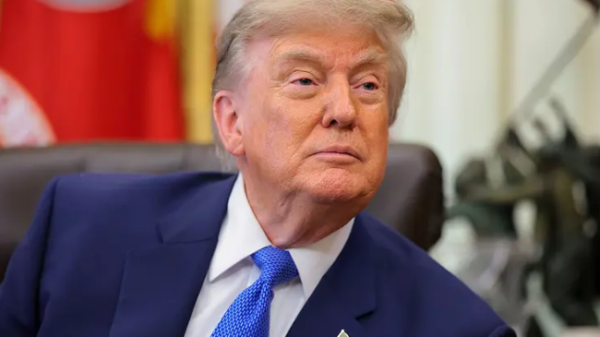
The Trump Organization has announced the debut of “Trump Mobile,” a new cellular service branded with the former president’s name and touted as an “all-American” telecommunications option. The service will operate through a licensing agreement with T1 Mobile LLC and is not directly run by the Trump family’s real estate and hospitality business.

The launch was unveiled Monday by Donald Trump Jr. and Eric Trump, who heads the Trump Organization. Trump Mobile will provide 5G wireless coverage using the infrastructure of all three major U.S. carriers, and it promises contract-free service with no credit checks. A proprietary smartphone, the “T1 Phone,” designed and built in the U.S., will be released in September and is currently available for pre-order.

The flagship offering, dubbed “The 47 Plan” — a reference to Donald Trump’s position as the 45th and potentially 47th U.S. president — will cost $47.45 per month. The plan includes unlimited talk, text, and data, as well as international calling to over 100 countries, 24/7 roadside assistance via Drive America Motor Club, and telehealth services through a third-party partnership with Doctegrity. It remains unclear whether Doctegrity’s $29 monthly fee is included in the Trump Mobile package.

Despite the prominent use of the Trump name and imagery, the Trump Organization has distanced itself from the technical and operational aspects of the business. According to the press release, “Trump Mobile, its products and services are not designed, developed, manufactured, distributed or sold by The Trump Organization.” Instead, T1 Mobile operates under a limited license agreement allowing the use of the Trump name.

The launch is the latest in a series of ventures bearing the Trump brand since Donald Trump left office, joining his media platform Truth Social and various overseas property developments. However, the new mobile service has once again sparked ethics concerns.

During Trump’s first term, the Trump International Hotel in Washington, D.C., drew criticism as a hub for lobbyists and foreign dignitaries. Lawsuits claiming violations of the Constitution’s emoluments clauses were dismissed on procedural grounds. More recently, Trump family ventures into cryptocurrency and Middle East real estate deals — including one in Qatar, announced shortly before a $400 million Qatari aircraft was added to the presidential fleet — have reignited questions about potential conflicts of interest.

As the 2024 election cycle unfolds, the rollout of Trump Mobile adds to the complex web of business and political interests that have long defined the former president’s brand.

Business

Fraudsters are increasingly using AI-generated images and videos to trick people into handing over sensitive personal and financial information, according to FraudSMART, the financial crime awareness initiative operated by the Banking and Payments Federation Ireland (BPFI). The organisation has reported a rise in online adverts promoting fake, State-backed investment schemes. These scams often use fabricated images of well-known politicians and business figures to make the offers appear legitimate and encourage users to click on registration links. Niamh Davenport, head of financial crime at BPFI, said scammers are deliberately exploiting recent media coverage of a planned State-backed savings and investment scheme to give their frauds a sense of credibility. “They often claim the scheme is open to everyone, but that places are limited and being ‘snapped up’ fast, in order to pressure people to act quickly,” she said. “They typically promise guaranteed returns or a guaranteed monthly income.” FraudSMART said that while anyone can be targeted, people in their early 50s are particularly vulnerable to investment scams. This age group is often focused on retirement planning, making them more receptive to financial offers that appear secure or high-yield. According to the organisation, most scams follow a similar pattern. Victims are first directed to click a registration link and complete a short online form providing their contact details. They are then contacted by someone posing as a financial adviser, who urges them to make an immediate “security deposit” to secure participation in the scheme. Once a payment is made, the money is quickly moved through multiple accounts, often overseas, making recovery extremely difficult. Davenport warned that scammers are becoming more sophisticated in their use of technology, particularly AI tools that allow them to create realistic but entirely fake promotional content. These materials are designed to mimic legitimate financial advertisements and build trust with potential victims. Recent figures from An Garda Síochána show investment fraud rose by 20% last year, with losses exceeding €20 million. The scale of individual scams varies widely, ranging from smaller crypto-related frauds involving a few hundred euro to large-scale investment schemes where victims lose tens of thousands. FraudSMART is urging the public to remain cautious when encountering online investment advertisements, especially those promising guaranteed returns or requiring urgent action. It also advises consumers to avoid sharing personal information with unverified sources and to be wary of pressure tactics designed to rush financial decisions. Authorities continue to warn that fraudsters are adapting quickly, using advanced digital tools to target victims across multiple platforms.

Trending

Business

Fraudsters are increasingly using AI-generated images and videos to trick people into handing over sensitive personal and financial information, according to FraudSMART, the financial crime awareness initiative operated by the Banking and Payments Federation Ireland (BPFI). The organisation has reported a rise in online adverts promoting fake, State-backed investment schemes. These scams often use fabricated images of well-known politicians and business figures to make the offers appear legitimate and encourage users to click on registration links. Niamh Davenport, head of financial crime at BPFI, said scammers are deliberately exploiting recent media coverage of a planned State-backed savings and investment scheme to give their frauds a sense of credibility. “They often claim the scheme is open to everyone, but that places are limited and being ‘snapped up’ fast, in order to pressure people to act quickly,” she said. “They typically promise guaranteed returns or a guaranteed monthly income.” FraudSMART said that while anyone can be targeted, people in their early 50s are particularly vulnerable to investment scams. This age group is often focused on retirement planning, making them more receptive to financial offers that appear secure or high-yield. According to the organisation, most scams follow a similar pattern. Victims are first directed to click a registration link and complete a short online form providing their contact details. They are then contacted by someone posing as a financial adviser, who urges them to make an immediate “security deposit” to secure participation in the scheme. Once a payment is made, the money is quickly moved through multiple accounts, often overseas, making recovery extremely difficult. Davenport warned that scammers are becoming more sophisticated in their use of technology, particularly AI tools that allow them to create realistic but entirely fake promotional content. These materials are designed to mimic legitimate financial advertisements and build trust with potential victims. Recent figures from An Garda Síochána show investment fraud rose by 20% last year, with losses exceeding €20 million. The scale of individual scams varies widely, ranging from smaller crypto-related frauds involving a few hundred euro to large-scale investment schemes where victims lose tens of thousands. FraudSMART is urging the public to remain cautious when encountering online investment advertisements, especially those promising guaranteed returns or requiring urgent action. It also advises consumers to avoid sharing personal information with unverified sources and to be wary of pressure tactics designed to rush financial decisions. Authorities continue to warn that fraudsters are adapting quickly, using advanced digital tools to target victims across multiple platforms.

You May Also Like

Politics

WASHINGTON — The Pentagon announced on Sunday that the United States will send a Terminal High Altitude Area Defense (THAAD) battery to Israel, alongside...

Health

NEW YORK — Teen smoking in the United States has reached an all-time low in 2024, with significant declines in overall youth tobacco use,...

Politics

WASHINGTON — As the countdown to the November 5 presidential election continues, former President Donald Trump is urging his supporters to aim for a...

Politics

In September, NASA announced that summer 2024 was the hottest on record. Just days later, the U.S. faced the dual impact of Hurricanes Helene...