











Connect with us

Hi, what are you looking for?

News

Trump Lifts US Whisky Tariffs After Royal Visit, Delivering Relief to Scottish Distillers

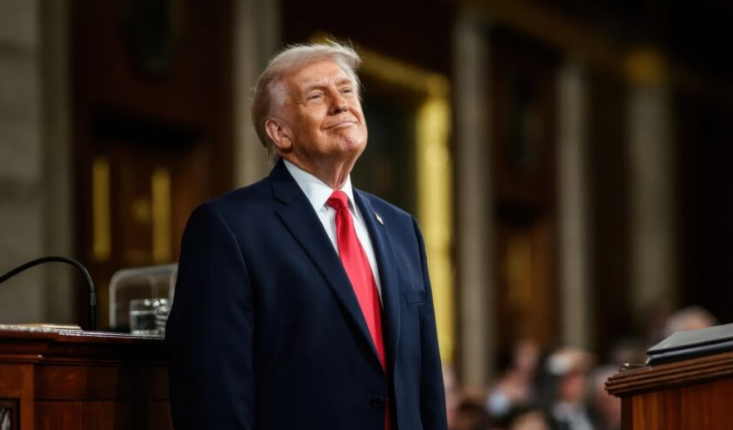
Britain’s whisky industry has received a major boost after US President Donald Trump announced the removal of tariffs and restrictions on whisky imports, a decision he linked to the recent state visit of King Charles and Queen Camilla to the United States.

The announcement was made on Trump’s Truth Social platform shortly after the royal couple returned to the UK, ending a 10% tariff on whisky imports that had placed significant pressure on distillers. According to the Scotch Whisky Association, the levy had been costing the industry around £4 million per week, totalling approximately £150 million over the past year. An additional 25% tariff on single malts had also been expected to take effect in the coming months.

The United States is the largest export market for Scotch whisky, with annual shipments worth close to £1 billion. Industry leaders have described the removal of tariffs as a critical development for both large producers and smaller distilleries already facing rising production costs.

Trump said the decision was influenced by discussions during the royal visit, stating that King Charles and Queen Camilla “got me to do something that nobody else was able to do.” He added that the move was made in recognition of the relationship between the two countries.

Buckingham Palace issued a brief response, saying the King had expressed “sincere gratitude” to the US president and would acknowledge the gesture in a personal manner.

The decision is also expected to strengthen trade links between Scotland and the US state of Kentucky, where bourbon production plays a key role in the supply chain for Scotch whisky. Around £200 million worth of bourbon barrels are imported from Kentucky each year for use in whisky maturation.

Graeme Littlejohn of the Scotch Whisky Association welcomed the development, saying distillers would be relieved after months of financial pressure. He noted that sustained negotiations at senior levels had contributed to the outcome, with the royal visit providing additional momentum.

Political leaders in Scotland also responded positively. First Minister John Swinney described the announcement as “tremendous news,” highlighting the economic losses the sector had faced under the previous tariff regime. UK Business and Trade Secretary Peter Kyle said the move would support an industry that contributes nearly £1 billion in exports and sustains thousands of jobs.

The tariff removal also extends to Irish whiskey, offering relief to producers across the British Isles. Smaller distillers, particularly in rural Scotland, are expected to benefit most, as they have been more vulnerable to export cost increases in the US market.

The decision marks a notable shift in US trade policy and is being viewed as a rare instance where diplomatic engagement has directly influenced commercial outcomes for a major export industry.
Business

Fraudsters are increasingly using AI-generated images and videos to trick people into handing over sensitive personal and financial information, according to FraudSMART, the financial crime awareness initiative operated by the Banking and Payments Federation Ireland (BPFI). The organisation has reported a rise in online adverts promoting fake, State-backed investment schemes. These scams often use fabricated images of well-known politicians and business figures to make the offers appear legitimate and encourage users to click on registration links. Niamh Davenport, head of financial crime at BPFI, said scammers are deliberately exploiting recent media coverage of a planned State-backed savings and investment scheme to give their frauds a sense of credibility. “They often claim the scheme is open to everyone, but that places are limited and being ‘snapped up’ fast, in order to pressure people to act quickly,” she said. “They typically promise guaranteed returns or a guaranteed monthly income.” FraudSMART said that while anyone can be targeted, people in their early 50s are particularly vulnerable to investment scams. This age group is often focused on retirement planning, making them more receptive to financial offers that appear secure or high-yield. According to the organisation, most scams follow a similar pattern. Victims are first directed to click a registration link and complete a short online form providing their contact details. They are then contacted by someone posing as a financial adviser, who urges them to make an immediate “security deposit” to secure participation in the scheme. Once a payment is made, the money is quickly moved through multiple accounts, often overseas, making recovery extremely difficult. Davenport warned that scammers are becoming more sophisticated in their use of technology, particularly AI tools that allow them to create realistic but entirely fake promotional content. These materials are designed to mimic legitimate financial advertisements and build trust with potential victims. Recent figures from An Garda Síochána show investment fraud rose by 20% last year, with losses exceeding €20 million. The scale of individual scams varies widely, ranging from smaller crypto-related frauds involving a few hundred euro to large-scale investment schemes where victims lose tens of thousands. FraudSMART is urging the public to remain cautious when encountering online investment advertisements, especially those promising guaranteed returns or requiring urgent action. It also advises consumers to avoid sharing personal information with unverified sources and to be wary of pressure tactics designed to rush financial decisions. Authorities continue to warn that fraudsters are adapting quickly, using advanced digital tools to target victims across multiple platforms.

Trending

Business

Fraudsters are increasingly using AI-generated images and videos to trick people into handing over sensitive personal and financial information, according to FraudSMART, the financial crime awareness initiative operated by the Banking and Payments Federation Ireland (BPFI). The organisation has reported a rise in online adverts promoting fake, State-backed investment schemes. These scams often use fabricated images of well-known politicians and business figures to make the offers appear legitimate and encourage users to click on registration links. Niamh Davenport, head of financial crime at BPFI, said scammers are deliberately exploiting recent media coverage of a planned State-backed savings and investment scheme to give their frauds a sense of credibility. “They often claim the scheme is open to everyone, but that places are limited and being ‘snapped up’ fast, in order to pressure people to act quickly,” she said. “They typically promise guaranteed returns or a guaranteed monthly income.” FraudSMART said that while anyone can be targeted, people in their early 50s are particularly vulnerable to investment scams. This age group is often focused on retirement planning, making them more receptive to financial offers that appear secure or high-yield. According to the organisation, most scams follow a similar pattern. Victims are first directed to click a registration link and complete a short online form providing their contact details. They are then contacted by someone posing as a financial adviser, who urges them to make an immediate “security deposit” to secure participation in the scheme. Once a payment is made, the money is quickly moved through multiple accounts, often overseas, making recovery extremely difficult. Davenport warned that scammers are becoming more sophisticated in their use of technology, particularly AI tools that allow them to create realistic but entirely fake promotional content. These materials are designed to mimic legitimate financial advertisements and build trust with potential victims. Recent figures from An Garda Síochána show investment fraud rose by 20% last year, with losses exceeding €20 million. The scale of individual scams varies widely, ranging from smaller crypto-related frauds involving a few hundred euro to large-scale investment schemes where victims lose tens of thousands. FraudSMART is urging the public to remain cautious when encountering online investment advertisements, especially those promising guaranteed returns or requiring urgent action. It also advises consumers to avoid sharing personal information with unverified sources and to be wary of pressure tactics designed to rush financial decisions. Authorities continue to warn that fraudsters are adapting quickly, using advanced digital tools to target victims across multiple platforms.

You May Also Like

Politics

WASHINGTON — The Pentagon announced on Sunday that the United States will send a Terminal High Altitude Area Defense (THAAD) battery to Israel, alongside...

Health

NEW YORK — Teen smoking in the United States has reached an all-time low in 2024, with significant declines in overall youth tobacco use,...

Politics

WASHINGTON — As the countdown to the November 5 presidential election continues, former President Donald Trump is urging his supporters to aim for a...

Politics

In September, NASA announced that summer 2024 was the hottest on record. Just days later, the U.S. faced the dual impact of Hurricanes Helene...