













Connect with us

Hi, what are you looking for?

News

Trump Calls UK-China Business “Very Dangerous” as Starmer Secures Trade Deals in Beijing

Donald Trump has warned that it is “very dangerous” for the UK to do business with China, comments made as Prime Minister Keir Starmer continued his official visit to the country. The remarks came shortly after Starmer announced a series of agreements designed to strengthen trade and investment ties between the two nations following his meeting with Chinese President Xi Jinping at the Great Hall of the People in Beijing.

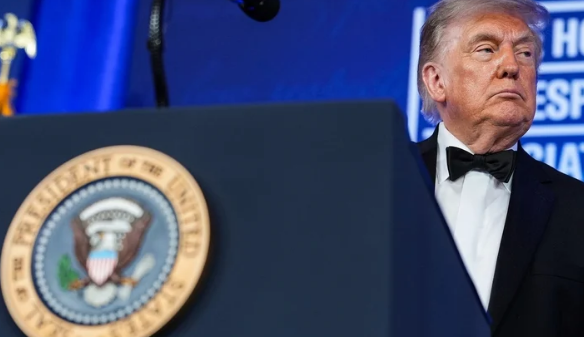
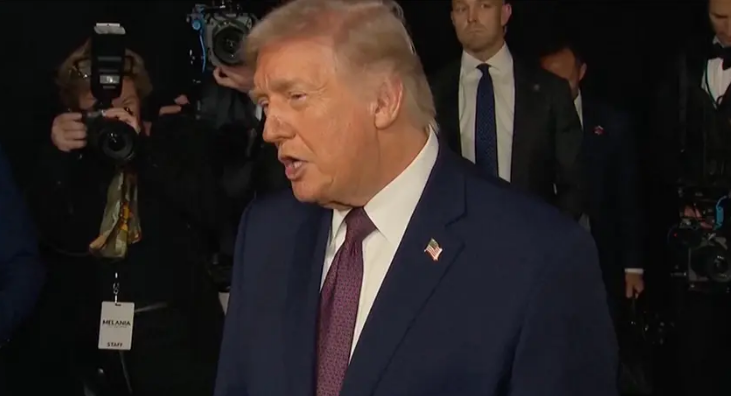
Speaking to reporters at the premiere of a documentary about his wife Melania, Trump described Xi as “a friend” and said he knew the Chinese leader “very well,” but he cautioned against UK engagement with Beijing. He did not provide further detail on his concerns over Britain’s dealings, instead turning his criticism toward Canada, which he said was in an “even more dangerous” economic position after recent discussions with China and the threat of US tariffs.

Downing Street responded by noting that the US had been informed about Starmer’s visit and its objectives in advance. Officials also highlighted that Trump is expected to visit China in April.

Starmer, speaking on Friday at a UK–China Business Forum hosted by the Bank of China, said the talks had achieved “just the level of engagement that we hoped for” and described the UK–China relationship as being in a “good, strong place.” He added: “We warmly engaged and made some real progress. The UK has a huge amount to offer.”

Among the agreements reached were a reduction in Chinese tariffs on UK whisky, the introduction of visa-free travel for British visitors to China, and a £10.9 billion investment by AstraZeneca to build new manufacturing facilities in the country. Both sides also pledged further co-operation on tackling organised crime and illegal immigration.

According to the UK Department for Business and Trade, the US was Britain’s largest single-country trading partner in 2025, with China ranking fourth. Chris Torrens, chair of the British Chamber of Commerce in China, described Starmer’s visit as “successful,” noting that engagement with major trading partners is a practical step for the UK amid shifting global economic dynamics.

The visit has attracted criticism from opposition MPs, who raised concerns about national security and China’s human rights record. Shadow Home Secretary Chris Philp accused the government of “trading national security for economic crumbs.” China has faced widespread international criticism over its treatment of Uyghur and other Muslim ethnic groups, as well as high-profile cases like that of Hong Kong media tycoon Jimmy Lai. Government ministers have maintained that intelligence agencies are closely involved in assessing and managing associated risks.

Starmer’s visit, the first by a UK prime minister to China since 2018, concludes in Shanghai before he travels to Tokyo for talks with Japanese Prime Minister Sanae Takaichi, reflecting London’s broader strategy to strengthen economic and diplomatic ties across Asia.


Business

Fraudsters are increasingly using AI-generated images and videos to trick people into handing over sensitive personal and financial information, according to FraudSMART, the financial crime awareness initiative operated by the Banking and Payments Federation Ireland (BPFI). The organisation has reported a rise in online adverts promoting fake, State-backed investment schemes. These scams often use fabricated images of well-known politicians and business figures to make the offers appear legitimate and encourage users to click on registration links. Niamh Davenport, head of financial crime at BPFI, said scammers are deliberately exploiting recent media coverage of a planned State-backed savings and investment scheme to give their frauds a sense of credibility. “They often claim the scheme is open to everyone, but that places are limited and being ‘snapped up’ fast, in order to pressure people to act quickly,” she said. “They typically promise guaranteed returns or a guaranteed monthly income.” FraudSMART said that while anyone can be targeted, people in their early 50s are particularly vulnerable to investment scams. This age group is often focused on retirement planning, making them more receptive to financial offers that appear secure or high-yield. According to the organisation, most scams follow a similar pattern. Victims are first directed to click a registration link and complete a short online form providing their contact details. They are then contacted by someone posing as a financial adviser, who urges them to make an immediate “security deposit” to secure participation in the scheme. Once a payment is made, the money is quickly moved through multiple accounts, often overseas, making recovery extremely difficult. Davenport warned that scammers are becoming more sophisticated in their use of technology, particularly AI tools that allow them to create realistic but entirely fake promotional content. These materials are designed to mimic legitimate financial advertisements and build trust with potential victims. Recent figures from An Garda Síochána show investment fraud rose by 20% last year, with losses exceeding €20 million. The scale of individual scams varies widely, ranging from smaller crypto-related frauds involving a few hundred euro to large-scale investment schemes where victims lose tens of thousands. FraudSMART is urging the public to remain cautious when encountering online investment advertisements, especially those promising guaranteed returns or requiring urgent action. It also advises consumers to avoid sharing personal information with unverified sources and to be wary of pressure tactics designed to rush financial decisions. Authorities continue to warn that fraudsters are adapting quickly, using advanced digital tools to target victims across multiple platforms.

Trending

Business

Fraudsters are increasingly using AI-generated images and videos to trick people into handing over sensitive personal and financial information, according to FraudSMART, the financial crime awareness initiative operated by the Banking and Payments Federation Ireland (BPFI). The organisation has reported a rise in online adverts promoting fake, State-backed investment schemes. These scams often use fabricated images of well-known politicians and business figures to make the offers appear legitimate and encourage users to click on registration links. Niamh Davenport, head of financial crime at BPFI, said scammers are deliberately exploiting recent media coverage of a planned State-backed savings and investment scheme to give their frauds a sense of credibility. “They often claim the scheme is open to everyone, but that places are limited and being ‘snapped up’ fast, in order to pressure people to act quickly,” she said. “They typically promise guaranteed returns or a guaranteed monthly income.” FraudSMART said that while anyone can be targeted, people in their early 50s are particularly vulnerable to investment scams. This age group is often focused on retirement planning, making them more receptive to financial offers that appear secure or high-yield. According to the organisation, most scams follow a similar pattern. Victims are first directed to click a registration link and complete a short online form providing their contact details. They are then contacted by someone posing as a financial adviser, who urges them to make an immediate “security deposit” to secure participation in the scheme. Once a payment is made, the money is quickly moved through multiple accounts, often overseas, making recovery extremely difficult. Davenport warned that scammers are becoming more sophisticated in their use of technology, particularly AI tools that allow them to create realistic but entirely fake promotional content. These materials are designed to mimic legitimate financial advertisements and build trust with potential victims. Recent figures from An Garda Síochána show investment fraud rose by 20% last year, with losses exceeding €20 million. The scale of individual scams varies widely, ranging from smaller crypto-related frauds involving a few hundred euro to large-scale investment schemes where victims lose tens of thousands. FraudSMART is urging the public to remain cautious when encountering online investment advertisements, especially those promising guaranteed returns or requiring urgent action. It also advises consumers to avoid sharing personal information with unverified sources and to be wary of pressure tactics designed to rush financial decisions. Authorities continue to warn that fraudsters are adapting quickly, using advanced digital tools to target victims across multiple platforms.

You May Also Like

Politics

WASHINGTON — The Pentagon announced on Sunday that the United States will send a Terminal High Altitude Area Defense (THAAD) battery to Israel, alongside...

Health

NEW YORK — Teen smoking in the United States has reached an all-time low in 2024, with significant declines in overall youth tobacco use,...

Politics

WASHINGTON — As the countdown to the November 5 presidential election continues, former President Donald Trump is urging his supporters to aim for a...

Politics

In September, NASA announced that summer 2024 was the hottest on record. Just days later, the U.S. faced the dual impact of Hurricanes Helene...