



















Connect with us

Hi, what are you looking for?

Education

Supreme Court Ruling Clears Path for Trump Administration to Begin Dismantling Department of Education

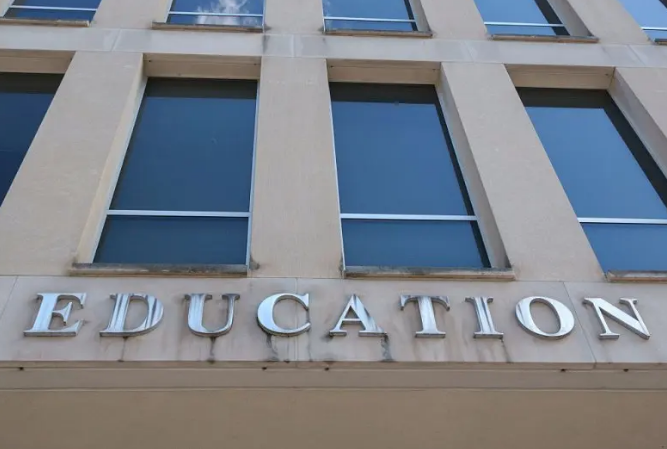
The U.S. Supreme Court has allowed the Trump Administration to move forward with plans to dismantle the Department of Education, temporarily lifting a lower court’s block on layoffs and reinstating a March executive order calling for the department’s closure.

The unsigned order, issued on Monday, gives the administration the green light to resume job cuts affecting nearly 1,400 employees. Their dismissals, initially halted in May, are now expected to take effect from August 1.

President Donald Trump hailed the decision as a “major victory for parents and students,” saying the Supreme Court had cleared the way for education policy to return to the states. Education Secretary Linda McMahon echoed his sentiments, calling the ruling a “significant win” and reiterating her commitment to devolving federal oversight of education.

“This confirms the President’s authority over executive agencies,” McMahon said in a statement. “We can now move ahead with reorganizing and reassigning responsibilities.”

However, fully eliminating the Department of Education—which was established in 1979—would require an act of Congress, and support remains far from unanimous. A previous attempt to shut the department down was voted down by a bipartisan group of lawmakers, including 60 House Republicans.

Still, McMahon told The Wall Street Journal she plans to continue breaking down the department’s functions, potentially transferring key programs to agencies like the Departments of Health and Human Services, Justice, and Treasury.

Critics say the Supreme Court’s ruling could severely undermine public education in the U.S., particularly for low-income students and those with disabilities.

“The justices have dealt a devastating blow to the promise of public education for all children,” said Skye Perryman, president of Democracy Forward, which represented one of the groups challenging the layoffs.

Among the biggest concerns is the future of Title I funding, an $18 billion program that provides critical support to schools serving children from low-income families. Education advocates fear that transferring the program to block grants could lead to misuse or underfunding at the state level.

Trump has also proposed relocating the Individuals with Disabilities Education Act (IDEA) programs—worth $15 billion annually—to HHS, sparking backlash from advocacy groups who warn the move could revert inclusion efforts and shift educational support into a medical framework.

Additionally, the Federal Student Aid office, which currently manages nearly $1.6 trillion in student loans for about 43 million Americans, faces an uncertain future. Trump has suggested shifting loan administration to the Small Business Administration, itself undergoing staffing cuts.

Peter Granville, a fellow at The Century Foundation, called the proposal “a recipe for chaos,” cautioning that dismantling the department without a clear plan could severely disrupt services relied upon by millions of students and borrowers.

As the Trump Administration proceeds with its controversial plans, the ruling marks a pivotal moment in reshaping federal education policy—one that critics say risks leaving the most vulnerable students behind.


Business

Fraudsters are increasingly using AI-generated images and videos to trick people into handing over sensitive personal and financial information, according to FraudSMART, the financial crime awareness initiative operated by the Banking and Payments Federation Ireland (BPFI). The organisation has reported a rise in online adverts promoting fake, State-backed investment schemes. These scams often use fabricated images of well-known politicians and business figures to make the offers appear legitimate and encourage users to click on registration links. Niamh Davenport, head of financial crime at BPFI, said scammers are deliberately exploiting recent media coverage of a planned State-backed savings and investment scheme to give their frauds a sense of credibility. “They often claim the scheme is open to everyone, but that places are limited and being ‘snapped up’ fast, in order to pressure people to act quickly,” she said. “They typically promise guaranteed returns or a guaranteed monthly income.” FraudSMART said that while anyone can be targeted, people in their early 50s are particularly vulnerable to investment scams. This age group is often focused on retirement planning, making them more receptive to financial offers that appear secure or high-yield. According to the organisation, most scams follow a similar pattern. Victims are first directed to click a registration link and complete a short online form providing their contact details. They are then contacted by someone posing as a financial adviser, who urges them to make an immediate “security deposit” to secure participation in the scheme. Once a payment is made, the money is quickly moved through multiple accounts, often overseas, making recovery extremely difficult. Davenport warned that scammers are becoming more sophisticated in their use of technology, particularly AI tools that allow them to create realistic but entirely fake promotional content. These materials are designed to mimic legitimate financial advertisements and build trust with potential victims. Recent figures from An Garda Síochána show investment fraud rose by 20% last year, with losses exceeding €20 million. The scale of individual scams varies widely, ranging from smaller crypto-related frauds involving a few hundred euro to large-scale investment schemes where victims lose tens of thousands. FraudSMART is urging the public to remain cautious when encountering online investment advertisements, especially those promising guaranteed returns or requiring urgent action. It also advises consumers to avoid sharing personal information with unverified sources and to be wary of pressure tactics designed to rush financial decisions. Authorities continue to warn that fraudsters are adapting quickly, using advanced digital tools to target victims across multiple platforms.

Trending

Business

Fraudsters are increasingly using AI-generated images and videos to trick people into handing over sensitive personal and financial information, according to FraudSMART, the financial crime awareness initiative operated by the Banking and Payments Federation Ireland (BPFI). The organisation has reported a rise in online adverts promoting fake, State-backed investment schemes. These scams often use fabricated images of well-known politicians and business figures to make the offers appear legitimate and encourage users to click on registration links. Niamh Davenport, head of financial crime at BPFI, said scammers are deliberately exploiting recent media coverage of a planned State-backed savings and investment scheme to give their frauds a sense of credibility. “They often claim the scheme is open to everyone, but that places are limited and being ‘snapped up’ fast, in order to pressure people to act quickly,” she said. “They typically promise guaranteed returns or a guaranteed monthly income.” FraudSMART said that while anyone can be targeted, people in their early 50s are particularly vulnerable to investment scams. This age group is often focused on retirement planning, making them more receptive to financial offers that appear secure or high-yield. According to the organisation, most scams follow a similar pattern. Victims are first directed to click a registration link and complete a short online form providing their contact details. They are then contacted by someone posing as a financial adviser, who urges them to make an immediate “security deposit” to secure participation in the scheme. Once a payment is made, the money is quickly moved through multiple accounts, often overseas, making recovery extremely difficult. Davenport warned that scammers are becoming more sophisticated in their use of technology, particularly AI tools that allow them to create realistic but entirely fake promotional content. These materials are designed to mimic legitimate financial advertisements and build trust with potential victims. Recent figures from An Garda Síochána show investment fraud rose by 20% last year, with losses exceeding €20 million. The scale of individual scams varies widely, ranging from smaller crypto-related frauds involving a few hundred euro to large-scale investment schemes where victims lose tens of thousands. FraudSMART is urging the public to remain cautious when encountering online investment advertisements, especially those promising guaranteed returns or requiring urgent action. It also advises consumers to avoid sharing personal information with unverified sources and to be wary of pressure tactics designed to rush financial decisions. Authorities continue to warn that fraudsters are adapting quickly, using advanced digital tools to target victims across multiple platforms.

You May Also Like

Politics

WASHINGTON — The Pentagon announced on Sunday that the United States will send a Terminal High Altitude Area Defense (THAAD) battery to Israel, alongside...

Health

NEW YORK — Teen smoking in the United States has reached an all-time low in 2024, with significant declines in overall youth tobacco use,...

Politics

WASHINGTON — As the countdown to the November 5 presidential election continues, former President Donald Trump is urging his supporters to aim for a...

Politics

In September, NASA announced that summer 2024 was the hottest on record. Just days later, the U.S. faced the dual impact of Hurricanes Helene...