

















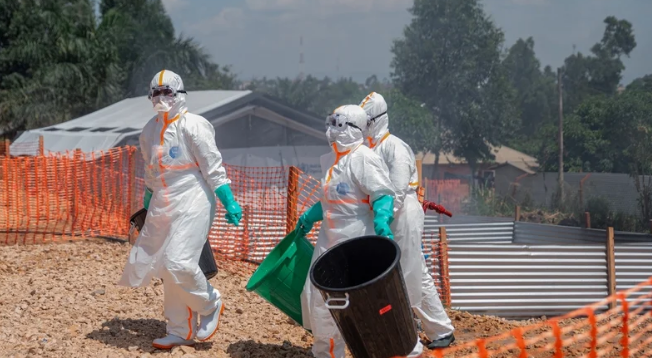
The International Federation of Red Cross and Red Crescent Societies has warned that the Ebola outbreak in the Democratic Republic of Congo has not yet reached its peak, raising concerns that the epidemic could continue for up to a year as it spreads across multiple provinces.
Speaking to reporters via video link from eastern Congo, IFRC operations manager Bruno Michon said it remains difficult to determine the full scale of the outbreak. He cautioned that the situation is still evolving and that the worst phase of the epidemic may still lie ahead.
“It’s very difficult to know exactly to what extent the epidemic is spreading… but yes, the peak is, I think, not behind us, but in front of us,” Michon said. He added that responders fear the outbreak could persist for an extended period before it is brought under control.
Health authorities have confirmed more than 800 cases of the Bundibugyo strain of Ebola, including 192 deaths. The strain is considered rare and particularly challenging because there is currently no approved vaccine or proven treatment available. The virus spreads through direct contact with bodily fluids, including after death, increasing the risk of transmission in affected communities.
Government data indicates the outbreak is now active across three provinces, with infections continuing to spread into new areas. However, humanitarian organisations believe the official figures may not reflect the full extent of the crisis. Médecins Sans Frontières has said in a statement that underreporting remains a serious concern, a view echoed by other aid groups and some local officials.
The outbreak is already recorded as the third deadliest Ebola epidemic in history. Health workers say several factors are slowing the response, including limited testing capacity and shortages of treatment facilities. Community resistance to strict infection-control measures has also complicated efforts to contain the virus.
According to MSF, gaps in testing remain one of the most significant obstacles to managing the outbreak, making it harder to track transmission chains and isolate patients effectively. Health officials say that more than a month after the outbreak was declared, the true scale of infections is still uncertain.
The World Health Organization has also raised concerns about inadequate healthcare capacity. It reports that there are only 14 treatment centres serving nine health zones across the affected provinces of Ituri, North Kivu and South Kivu. In contrast, the outbreak has already spread to 31 of at least 90 health zones in the region.
Aid agencies warn that without a rapid expansion of treatment facilities and improved community engagement, the outbreak could continue to expand before it eventually comes under control.