














Connect with us

Hi, what are you looking for?

Kamala Harris Shifts Campaign Focus to Donald Trump

News

Kamala Harris Shifts Campaign Focus to Donald Trump with “Weird” Label Amid Growing Poll Numbers

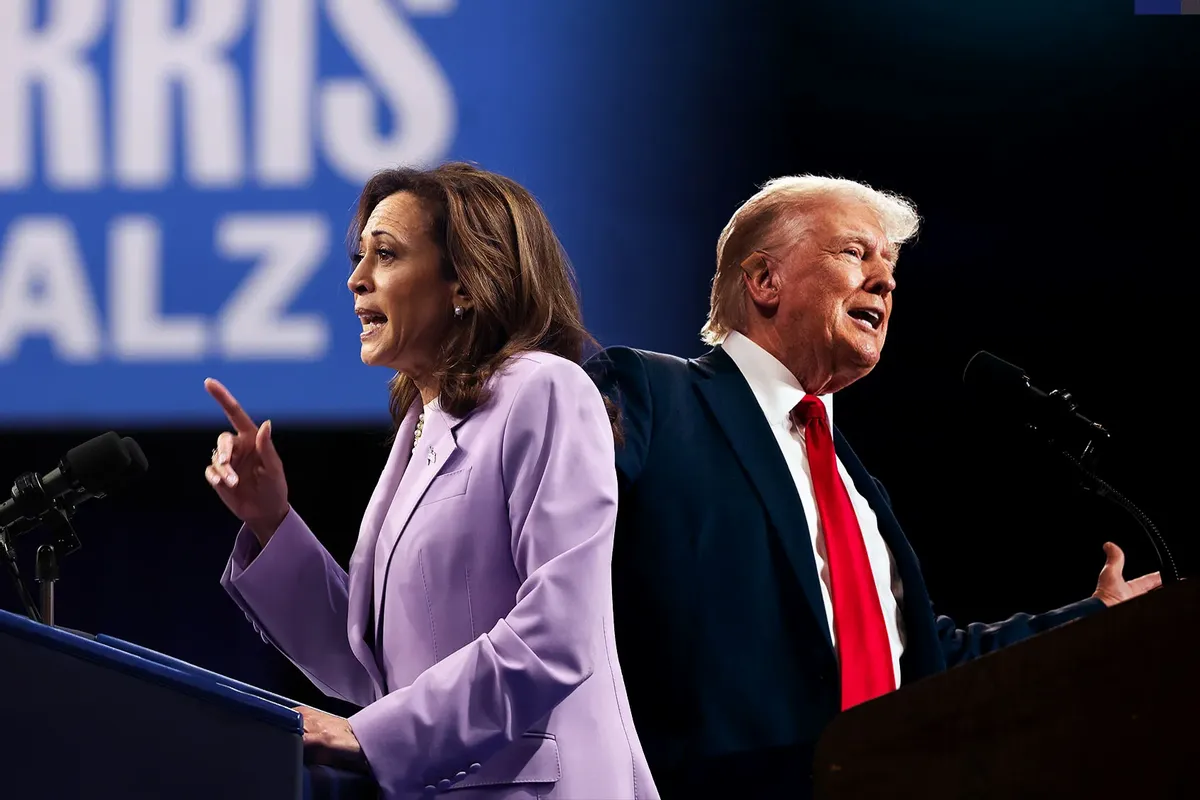
Vice President Kamala Harris’s presidential campaign has made a strategic shift, focusing on her opponent Donald Trump with a new, more streamlined message. This change, marked by the use of the term “weird” to describe Trump and his running mate JD Vance, aims to spotlight perceived flaws in the Republican candidates while diverting attention from the current administration’s challenges.

This new approach was evident during recent rallies where Harris appeared alongside Minnesota Governor Tim Walz. With Beyoncé’s song “Freedom” as their backdrop, the duo emphasized their commitment to protecting American freedoms, contrasting their vision with what they portrayed as the out-of-touch policies of Trump and Vance. “We’re not going back,” Harris declared to a lively crowd in Philadelphia, echoing the campaign’s latest slogan.

The shift in tone represents a departure from President Joe Biden’s 2020 campaign message, which framed Trump as a “threat to democracy.” Harris’s campaign now seeks to simplify the message, portraying Trump as disconnected from American life. The change is also reflected in the campaign’s press releases, which now carry a lighter tone compared to previous, more somber communications. A recent press release even humorously critiqued a Trump speech, likening it to someone you’d avoid sitting next to in a restaurant.

The new messaging strategy seems to resonate with Democrat-leaning voters, making Harris appear as a more relatable and practical choice rather than a political duty. Yet, it remains to be seen if this fresh appeal will sustain through to the November election. California Lieutenant Governor Eleni Kounalakis praised Harris’s ability to connect with voters through humor and straightforward communication.

Trump, known for his combative style, has struggled to counter the “weird” characterization effectively. In response, he dismissed the label, stating, “Nobody’s ever called me weird. I’m a lot of things, but weird I’m not,” during an interview with conservative radio host Clay Travis. At a rally in Montana, Trump further rejected the term, asserting, “We’re very solid people,” and emphasizing his policies on borders and the economy.

The new approach seems to be paying off for Harris, who, according to recent polls, is now ahead of Trump in key battleground states. A New York Times and Siena College survey conducted from August 5 to 9 shows Harris leading Trump 50% to 46% in Wisconsin, Pennsylvania, and Michigan. Additionally, a YouGov poll from early August indicates Harris leading Trump in the popular vote, a significant reversal from previous results.

Walz’s use of the “weird” label has resonated with voters, who appreciate his straightforward and relatable approach. This tactic, described by political consultants as effective due to its authenticity and simplicity, helps to frame the race as a choice between a new direction and a return to the Trump era.

However, not all analysts are convinced of the label’s effectiveness. Republican pollster Frank Luntz expressed skepticism, suggesting that while Harris has gained momentum, the “weird” label might not have substantial impact with voters.

As Harris and Walz continue to promote their campaign’s new messaging, the effectiveness of this strategy in shaping voter perceptions and influencing the election outcome remains to be seen.


Business

Fraudsters are increasingly using AI-generated images and videos to trick people into handing over sensitive personal and financial information, according to FraudSMART, the financial crime awareness initiative operated by the Banking and Payments Federation Ireland (BPFI). The organisation has reported a rise in online adverts promoting fake, State-backed investment schemes. These scams often use fabricated images of well-known politicians and business figures to make the offers appear legitimate and encourage users to click on registration links. Niamh Davenport, head of financial crime at BPFI, said scammers are deliberately exploiting recent media coverage of a planned State-backed savings and investment scheme to give their frauds a sense of credibility. “They often claim the scheme is open to everyone, but that places are limited and being ‘snapped up’ fast, in order to pressure people to act quickly,” she said. “They typically promise guaranteed returns or a guaranteed monthly income.” FraudSMART said that while anyone can be targeted, people in their early 50s are particularly vulnerable to investment scams. This age group is often focused on retirement planning, making them more receptive to financial offers that appear secure or high-yield. According to the organisation, most scams follow a similar pattern. Victims are first directed to click a registration link and complete a short online form providing their contact details. They are then contacted by someone posing as a financial adviser, who urges them to make an immediate “security deposit” to secure participation in the scheme. Once a payment is made, the money is quickly moved through multiple accounts, often overseas, making recovery extremely difficult. Davenport warned that scammers are becoming more sophisticated in their use of technology, particularly AI tools that allow them to create realistic but entirely fake promotional content. These materials are designed to mimic legitimate financial advertisements and build trust with potential victims. Recent figures from An Garda Síochána show investment fraud rose by 20% last year, with losses exceeding €20 million. The scale of individual scams varies widely, ranging from smaller crypto-related frauds involving a few hundred euro to large-scale investment schemes where victims lose tens of thousands. FraudSMART is urging the public to remain cautious when encountering online investment advertisements, especially those promising guaranteed returns or requiring urgent action. It also advises consumers to avoid sharing personal information with unverified sources and to be wary of pressure tactics designed to rush financial decisions. Authorities continue to warn that fraudsters are adapting quickly, using advanced digital tools to target victims across multiple platforms.

Trending

Business

Fraudsters are increasingly using AI-generated images and videos to trick people into handing over sensitive personal and financial information, according to FraudSMART, the financial crime awareness initiative operated by the Banking and Payments Federation Ireland (BPFI). The organisation has reported a rise in online adverts promoting fake, State-backed investment schemes. These scams often use fabricated images of well-known politicians and business figures to make the offers appear legitimate and encourage users to click on registration links. Niamh Davenport, head of financial crime at BPFI, said scammers are deliberately exploiting recent media coverage of a planned State-backed savings and investment scheme to give their frauds a sense of credibility. “They often claim the scheme is open to everyone, but that places are limited and being ‘snapped up’ fast, in order to pressure people to act quickly,” she said. “They typically promise guaranteed returns or a guaranteed monthly income.” FraudSMART said that while anyone can be targeted, people in their early 50s are particularly vulnerable to investment scams. This age group is often focused on retirement planning, making them more receptive to financial offers that appear secure or high-yield. According to the organisation, most scams follow a similar pattern. Victims are first directed to click a registration link and complete a short online form providing their contact details. They are then contacted by someone posing as a financial adviser, who urges them to make an immediate “security deposit” to secure participation in the scheme. Once a payment is made, the money is quickly moved through multiple accounts, often overseas, making recovery extremely difficult. Davenport warned that scammers are becoming more sophisticated in their use of technology, particularly AI tools that allow them to create realistic but entirely fake promotional content. These materials are designed to mimic legitimate financial advertisements and build trust with potential victims. Recent figures from An Garda Síochána show investment fraud rose by 20% last year, with losses exceeding €20 million. The scale of individual scams varies widely, ranging from smaller crypto-related frauds involving a few hundred euro to large-scale investment schemes where victims lose tens of thousands. FraudSMART is urging the public to remain cautious when encountering online investment advertisements, especially those promising guaranteed returns or requiring urgent action. It also advises consumers to avoid sharing personal information with unverified sources and to be wary of pressure tactics designed to rush financial decisions. Authorities continue to warn that fraudsters are adapting quickly, using advanced digital tools to target victims across multiple platforms.

You May Also Like

Politics

WASHINGTON — The Pentagon announced on Sunday that the United States will send a Terminal High Altitude Area Defense (THAAD) battery to Israel, alongside...

Health

NEW YORK — Teen smoking in the United States has reached an all-time low in 2024, with significant declines in overall youth tobacco use,...

Politics

WASHINGTON — As the countdown to the November 5 presidential election continues, former President Donald Trump is urging his supporters to aim for a...

Politics

In September, NASA announced that summer 2024 was the hottest on record. Just days later, the U.S. faced the dual impact of Hurricanes Helene...