
















Connect with us

Hi, what are you looking for?

News

Ireland Issues Travel Warning to Cuba Amid Deepening Crisis

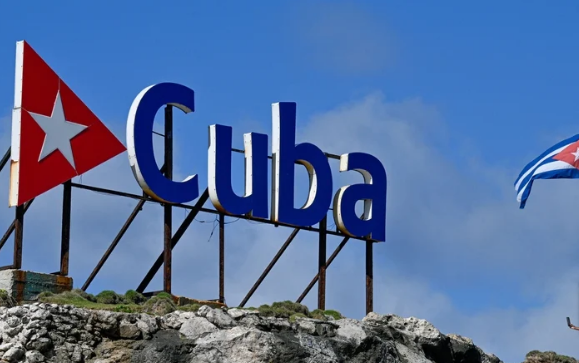
Ireland has joined countries including the United Kingdom and Canada in advising its citizens to avoid travelling to Cuba unless absolutely necessary. The Department of Foreign Affairs and Trade recently updated its guidance, placing the Caribbean island under the second-highest level of warning. Travelling to the country is now considered likely to present “a clear and present danger to your health or safety.”

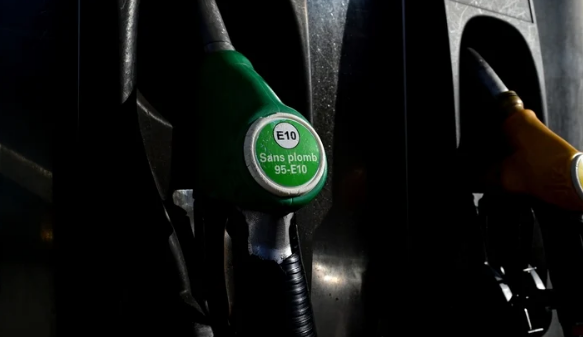
The advisory reflects what officials describe as an increasingly serious economic and humanitarian situation in Cuba. Residents are facing acute shortages of food, fuel, and electricity, with medical services severely restricted. Last month, the United States cut oil shipments from Venezuela, Cuba’s main supplier, after the ousting of Venezuelan President Nicolás Maduro. Weeks later, the US threatened tariffs on other countries sending fuel to the island, effectively creating a near-total oil blockade.

The measures have intensified hardships for Cuba’s population of roughly ten million. Blackouts, already common, now last for days, affecting water supply and sanitation systems. Long queues for essential goods have become a daily occurrence. The United Nations has expressed alarm over the crisis, warning that essential services, including hospital care and food distribution, are at risk nationwide. Marta Hurtado, spokesperson for the UN High Commissioner for Human Rights, said power cuts are undermining access to safe water and hygiene, with the most vulnerable disproportionately affected.

Relations between the US and Cuba have long been tense. Since the early 1960s, the United States has imposed economic sanctions on the island following the overthrow of a US-backed government by Fidel Castro. The US currently describes Cuba as an “unusual and extraordinary threat” to its national security and accuses Havana of supporting transnational terrorist groups, claims the Cuban government denies. Cuba’s Deputy Minister of Foreign Affairs, Carlos de Cossio, described the fuel embargo as “the equivalent to war” and called it collective punishment.

Efforts to ease sanctions internationally have yet to produce substantial changes. Ireland has consistently voted in favour of UN resolutions calling for an end to the embargo and continues to urge political transition and respect for human rights in Cuba. The Department of Foreign Affairs and Trade maintains contact with the small number of Irish citizens living on the island through the Irish Embassy in Mexico.

Tourism has also been hit hard. Direct flights from Ireland to Cuba do not exist, and Irish travellers require a separate US visa to travel onward to the United States. Air Canada recently announced it would suspend flights to Cuba due to uncertainty over fuel supplies. The shortage marks a significant blow to Cuba’s economy, which relies heavily on tourism and is already experiencing deep stagnation.

The situation underscores the severe humanitarian challenges now facing Cuba and the growing risks to visitors and residents alike.


Business

Fraudsters are increasingly using AI-generated images and videos to trick people into handing over sensitive personal and financial information, according to FraudSMART, the financial crime awareness initiative operated by the Banking and Payments Federation Ireland (BPFI). The organisation has reported a rise in online adverts promoting fake, State-backed investment schemes. These scams often use fabricated images of well-known politicians and business figures to make the offers appear legitimate and encourage users to click on registration links. Niamh Davenport, head of financial crime at BPFI, said scammers are deliberately exploiting recent media coverage of a planned State-backed savings and investment scheme to give their frauds a sense of credibility. “They often claim the scheme is open to everyone, but that places are limited and being ‘snapped up’ fast, in order to pressure people to act quickly,” she said. “They typically promise guaranteed returns or a guaranteed monthly income.” FraudSMART said that while anyone can be targeted, people in their early 50s are particularly vulnerable to investment scams. This age group is often focused on retirement planning, making them more receptive to financial offers that appear secure or high-yield. According to the organisation, most scams follow a similar pattern. Victims are first directed to click a registration link and complete a short online form providing their contact details. They are then contacted by someone posing as a financial adviser, who urges them to make an immediate “security deposit” to secure participation in the scheme. Once a payment is made, the money is quickly moved through multiple accounts, often overseas, making recovery extremely difficult. Davenport warned that scammers are becoming more sophisticated in their use of technology, particularly AI tools that allow them to create realistic but entirely fake promotional content. These materials are designed to mimic legitimate financial advertisements and build trust with potential victims. Recent figures from An Garda Síochána show investment fraud rose by 20% last year, with losses exceeding €20 million. The scale of individual scams varies widely, ranging from smaller crypto-related frauds involving a few hundred euro to large-scale investment schemes where victims lose tens of thousands. FraudSMART is urging the public to remain cautious when encountering online investment advertisements, especially those promising guaranteed returns or requiring urgent action. It also advises consumers to avoid sharing personal information with unverified sources and to be wary of pressure tactics designed to rush financial decisions. Authorities continue to warn that fraudsters are adapting quickly, using advanced digital tools to target victims across multiple platforms.

Trending

Business

Fraudsters are increasingly using AI-generated images and videos to trick people into handing over sensitive personal and financial information, according to FraudSMART, the financial crime awareness initiative operated by the Banking and Payments Federation Ireland (BPFI). The organisation has reported a rise in online adverts promoting fake, State-backed investment schemes. These scams often use fabricated images of well-known politicians and business figures to make the offers appear legitimate and encourage users to click on registration links. Niamh Davenport, head of financial crime at BPFI, said scammers are deliberately exploiting recent media coverage of a planned State-backed savings and investment scheme to give their frauds a sense of credibility. “They often claim the scheme is open to everyone, but that places are limited and being ‘snapped up’ fast, in order to pressure people to act quickly,” she said. “They typically promise guaranteed returns or a guaranteed monthly income.” FraudSMART said that while anyone can be targeted, people in their early 50s are particularly vulnerable to investment scams. This age group is often focused on retirement planning, making them more receptive to financial offers that appear secure or high-yield. According to the organisation, most scams follow a similar pattern. Victims are first directed to click a registration link and complete a short online form providing their contact details. They are then contacted by someone posing as a financial adviser, who urges them to make an immediate “security deposit” to secure participation in the scheme. Once a payment is made, the money is quickly moved through multiple accounts, often overseas, making recovery extremely difficult. Davenport warned that scammers are becoming more sophisticated in their use of technology, particularly AI tools that allow them to create realistic but entirely fake promotional content. These materials are designed to mimic legitimate financial advertisements and build trust with potential victims. Recent figures from An Garda Síochána show investment fraud rose by 20% last year, with losses exceeding €20 million. The scale of individual scams varies widely, ranging from smaller crypto-related frauds involving a few hundred euro to large-scale investment schemes where victims lose tens of thousands. FraudSMART is urging the public to remain cautious when encountering online investment advertisements, especially those promising guaranteed returns or requiring urgent action. It also advises consumers to avoid sharing personal information with unverified sources and to be wary of pressure tactics designed to rush financial decisions. Authorities continue to warn that fraudsters are adapting quickly, using advanced digital tools to target victims across multiple platforms.

You May Also Like

Politics

WASHINGTON — The Pentagon announced on Sunday that the United States will send a Terminal High Altitude Area Defense (THAAD) battery to Israel, alongside...

Health

NEW YORK — Teen smoking in the United States has reached an all-time low in 2024, with significant declines in overall youth tobacco use,...

Politics

WASHINGTON — As the countdown to the November 5 presidential election continues, former President Donald Trump is urging his supporters to aim for a...

Politics

In September, NASA announced that summer 2024 was the hottest on record. Just days later, the U.S. faced the dual impact of Hurricanes Helene...