
















Connect with us

Hi, what are you looking for?

News

India and Pakistan Agree to Ceasefire Following U.S.-Brokered Talks, But Tensions Remain

In a breakthrough aimed at halting rising hostilities, India and Pakistan have agreed to an immediate ceasefire following U.S.-led negotiations. However, within hours of the announcement, both sides accused each other of violating the agreement, raising concerns over its durability.

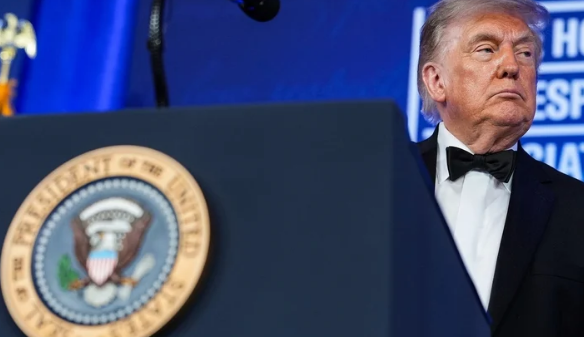
The ceasefire was first announced by former U.S. President Donald Trump on his Truth Social platform early Saturday. “After a long night of talks mediated by the United States, I am pleased to announce that India and Pakistan have agreed to a full and immediate ceasefire,” he wrote. “Congratulations to both countries on using common sense and great intelligence.”

Pakistan’s Foreign Minister Ishaq Dar confirmed the agreement shortly after, stating on X (formerly Twitter) that Islamabad remains committed to peace in the region while preserving its sovereignty. India’s Foreign Secretary Vikram Misri elaborated on the deal, confirming that both nations had agreed to cease all military operations starting at 5 p.m. IST (7:30 a.m. ET).

Indian External Affairs Minister Subrahmanyam Jaishankar added that while India remained firm on its stance against terrorism, it was prepared to halt military action in the interest of de-escalation.

The agreement follows weeks of heightened tension after a terrorist attack on April 22 in Indian-administered Kashmir killed 26 people. India blamed Pakistan for the attack and launched retaliatory strikes under “Operation Sindoor.” Pakistan denied involvement and responded by suspending the Simla Agreement, a key peace accord. In turn, India withdrew from a long-standing water-sharing treaty.

Despite hopes for calm, explosions were reported in Srinagar and Jammu shortly after the ceasefire was implemented. Omar Abdullah, the chief minister of Jammu and Kashmir, posted, “What the hell just happened to the ceasefire?” on X.

India’s Foreign Secretary Misri accused Pakistan of violating the newly brokered agreement during a televised address Saturday evening. Pakistan’s Foreign Ministry denied the charge, stating that it was India who broke the terms, while reaffirming Pakistan’s commitment to the ceasefire.

U.S. Secretary of State Marco Rubio confirmed that high-level talks had taken place with officials from both countries, including Indian Prime Minister Narendra Modi and Pakistani Prime Minister Shehbaz Sharif. While India did not publicly acknowledge U.S. involvement, Sharif expressed gratitude to the United States and specifically to Trump, Rubio, and Vice President J.D. Vance for their roles in facilitating the agreement.

The ceasefire has drawn praise from international figures, including Pope Leo, who in his Sunday address expressed hope that the agreement would lead to lasting peace.

Whether this fragile ceasefire holds remains to be seen, but the development marks the most significant diplomatic engagement between the two rivals in years.


Business

Fraudsters are increasingly using AI-generated images and videos to trick people into handing over sensitive personal and financial information, according to FraudSMART, the financial crime awareness initiative operated by the Banking and Payments Federation Ireland (BPFI). The organisation has reported a rise in online adverts promoting fake, State-backed investment schemes. These scams often use fabricated images of well-known politicians and business figures to make the offers appear legitimate and encourage users to click on registration links. Niamh Davenport, head of financial crime at BPFI, said scammers are deliberately exploiting recent media coverage of a planned State-backed savings and investment scheme to give their frauds a sense of credibility. “They often claim the scheme is open to everyone, but that places are limited and being ‘snapped up’ fast, in order to pressure people to act quickly,” she said. “They typically promise guaranteed returns or a guaranteed monthly income.” FraudSMART said that while anyone can be targeted, people in their early 50s are particularly vulnerable to investment scams. This age group is often focused on retirement planning, making them more receptive to financial offers that appear secure or high-yield. According to the organisation, most scams follow a similar pattern. Victims are first directed to click a registration link and complete a short online form providing their contact details. They are then contacted by someone posing as a financial adviser, who urges them to make an immediate “security deposit” to secure participation in the scheme. Once a payment is made, the money is quickly moved through multiple accounts, often overseas, making recovery extremely difficult. Davenport warned that scammers are becoming more sophisticated in their use of technology, particularly AI tools that allow them to create realistic but entirely fake promotional content. These materials are designed to mimic legitimate financial advertisements and build trust with potential victims. Recent figures from An Garda Síochána show investment fraud rose by 20% last year, with losses exceeding €20 million. The scale of individual scams varies widely, ranging from smaller crypto-related frauds involving a few hundred euro to large-scale investment schemes where victims lose tens of thousands. FraudSMART is urging the public to remain cautious when encountering online investment advertisements, especially those promising guaranteed returns or requiring urgent action. It also advises consumers to avoid sharing personal information with unverified sources and to be wary of pressure tactics designed to rush financial decisions. Authorities continue to warn that fraudsters are adapting quickly, using advanced digital tools to target victims across multiple platforms.

Trending

Business

Fraudsters are increasingly using AI-generated images and videos to trick people into handing over sensitive personal and financial information, according to FraudSMART, the financial crime awareness initiative operated by the Banking and Payments Federation Ireland (BPFI). The organisation has reported a rise in online adverts promoting fake, State-backed investment schemes. These scams often use fabricated images of well-known politicians and business figures to make the offers appear legitimate and encourage users to click on registration links. Niamh Davenport, head of financial crime at BPFI, said scammers are deliberately exploiting recent media coverage of a planned State-backed savings and investment scheme to give their frauds a sense of credibility. “They often claim the scheme is open to everyone, but that places are limited and being ‘snapped up’ fast, in order to pressure people to act quickly,” she said. “They typically promise guaranteed returns or a guaranteed monthly income.” FraudSMART said that while anyone can be targeted, people in their early 50s are particularly vulnerable to investment scams. This age group is often focused on retirement planning, making them more receptive to financial offers that appear secure or high-yield. According to the organisation, most scams follow a similar pattern. Victims are first directed to click a registration link and complete a short online form providing their contact details. They are then contacted by someone posing as a financial adviser, who urges them to make an immediate “security deposit” to secure participation in the scheme. Once a payment is made, the money is quickly moved through multiple accounts, often overseas, making recovery extremely difficult. Davenport warned that scammers are becoming more sophisticated in their use of technology, particularly AI tools that allow them to create realistic but entirely fake promotional content. These materials are designed to mimic legitimate financial advertisements and build trust with potential victims. Recent figures from An Garda Síochána show investment fraud rose by 20% last year, with losses exceeding €20 million. The scale of individual scams varies widely, ranging from smaller crypto-related frauds involving a few hundred euro to large-scale investment schemes where victims lose tens of thousands. FraudSMART is urging the public to remain cautious when encountering online investment advertisements, especially those promising guaranteed returns or requiring urgent action. It also advises consumers to avoid sharing personal information with unverified sources and to be wary of pressure tactics designed to rush financial decisions. Authorities continue to warn that fraudsters are adapting quickly, using advanced digital tools to target victims across multiple platforms.

You May Also Like

Politics

WASHINGTON — The Pentagon announced on Sunday that the United States will send a Terminal High Altitude Area Defense (THAAD) battery to Israel, alongside...

Health

NEW YORK — Teen smoking in the United States has reached an all-time low in 2024, with significant declines in overall youth tobacco use,...

Politics

WASHINGTON — As the countdown to the November 5 presidential election continues, former President Donald Trump is urging his supporters to aim for a...

Politics

In September, NASA announced that summer 2024 was the hottest on record. Just days later, the U.S. faced the dual impact of Hurricanes Helene...