

















Connect with us

Hi, what are you looking for?

North Dakota Abortion Ban Overturned by State Judge

Law

North Dakota Abortion Ban Overturned by State Judge

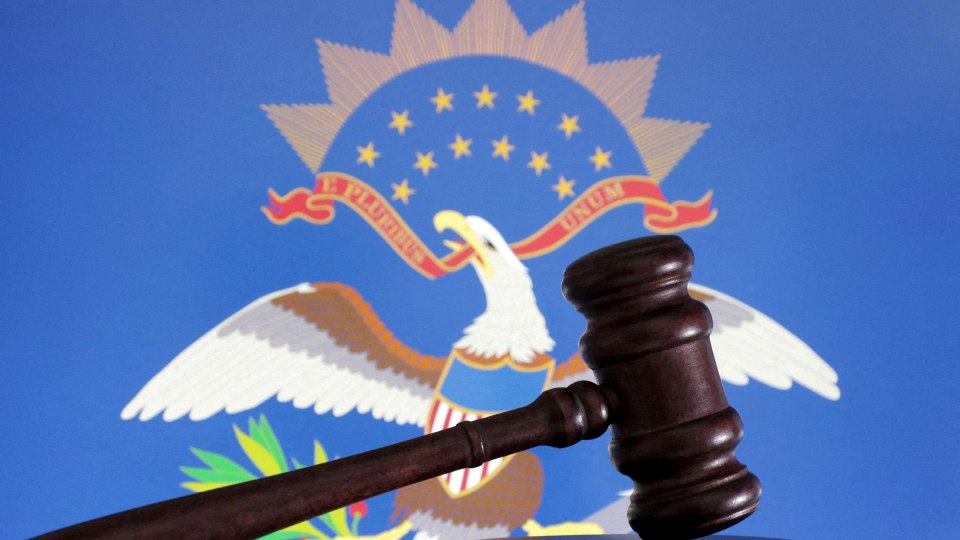
A North Dakota state judge has overturned the state’s ban on abortion, ruling that the state constitution guarantees a fundamental right to access abortion before fetal viability. The decision, issued Thursday by District Judge Bruce Romanick, also found the ban to be too vague and in violation of the state constitution.

The ruling means that abortion would be legal in North Dakota, though the state currently lacks any operational abortion clinics. The Red River Women’s Clinic, previously the state’s sole provider, relocated to Moorehead, Minnesota, in 2022 following the U.S. Supreme Court’s decision to overturn Roe v. Wade. The clinic’s director, Tammi Kromenaker, expressed cautious optimism, stating, “This decision gives us hope,” although she indicated there are no plans to reopen a clinic in North Dakota.

Judge Romanick’s ruling was made in response to a 2022 lawsuit filed by the Red River clinic challenging the state’s abortion ban. The state had sought to dismiss the lawsuit, arguing that a trial would be inconsequential. The judge had previously canceled a scheduled trial in August.

In his 24-page ruling, Judge Romanick referenced the North Dakota Constitution’s guarantees of “inalienable rights,” including “life and liberty.” He stated, “The abortion statutes at issue in this case infringe on a woman’s fundamental right to procreative autonomy and are not narrowly tailored to promote women’s health or protect unborn human life.” He criticized the law for removing a woman’s liberty and right to safety and happiness.

Meetra Mehdizadeh, a staff attorney at the Center for Reproductive Rights, welcomed the ruling but cautioned that opening new clinics could take years. She noted, “The destructive impacts of abortion bans are felt long after they are struck down.”

Judge Romanick acknowledged that past North Dakota court decisions had relied on federal precedents which were upended by the Supreme Court’s 2022 abortion decision. He stated that his ruling represents his “best effort” to apply the law while protecting residents’ fundamental rights.

The judge’s order echoes a 2019 Kansas Supreme Court decision which also declared access to abortion a fundamental right under state constitutional provisions. Kansas voters affirmed this position in an August 2022 referendum.

Romanick also criticized the state’s revised abortion laws, which allow abortions only in cases of rape or incest within the first six weeks of pregnancy and in specific medical emergencies thereafter. He found the law’s exceptions too narrow and criticized its lack of clarity, which he argued could lead to undue prosecution of doctors.

In his ruling, Judge Romanick reflected on historical perspectives, stating that while the state’s founders likely did not view abortion access as a constitutional right in 1889, societal changes should lead to more equitable treatment. “There was a time when we got it wrong and when women did not have a voice,” he wrote. “This does not need to continue for all time.”

The state’s Republican-controlled government, including Governor Doug Burgum and Attorney General Drew Wrigley, has yet to respond officially, but an appeal is anticipated.


Business

Fraudsters are increasingly using AI-generated images and videos to trick people into handing over sensitive personal and financial information, according to FraudSMART, the financial crime awareness initiative operated by the Banking and Payments Federation Ireland (BPFI). The organisation has reported a rise in online adverts promoting fake, State-backed investment schemes. These scams often use fabricated images of well-known politicians and business figures to make the offers appear legitimate and encourage users to click on registration links. Niamh Davenport, head of financial crime at BPFI, said scammers are deliberately exploiting recent media coverage of a planned State-backed savings and investment scheme to give their frauds a sense of credibility. “They often claim the scheme is open to everyone, but that places are limited and being ‘snapped up’ fast, in order to pressure people to act quickly,” she said. “They typically promise guaranteed returns or a guaranteed monthly income.” FraudSMART said that while anyone can be targeted, people in their early 50s are particularly vulnerable to investment scams. This age group is often focused on retirement planning, making them more receptive to financial offers that appear secure or high-yield. According to the organisation, most scams follow a similar pattern. Victims are first directed to click a registration link and complete a short online form providing their contact details. They are then contacted by someone posing as a financial adviser, who urges them to make an immediate “security deposit” to secure participation in the scheme. Once a payment is made, the money is quickly moved through multiple accounts, often overseas, making recovery extremely difficult. Davenport warned that scammers are becoming more sophisticated in their use of technology, particularly AI tools that allow them to create realistic but entirely fake promotional content. These materials are designed to mimic legitimate financial advertisements and build trust with potential victims. Recent figures from An Garda Síochána show investment fraud rose by 20% last year, with losses exceeding €20 million. The scale of individual scams varies widely, ranging from smaller crypto-related frauds involving a few hundred euro to large-scale investment schemes where victims lose tens of thousands. FraudSMART is urging the public to remain cautious when encountering online investment advertisements, especially those promising guaranteed returns or requiring urgent action. It also advises consumers to avoid sharing personal information with unverified sources and to be wary of pressure tactics designed to rush financial decisions. Authorities continue to warn that fraudsters are adapting quickly, using advanced digital tools to target victims across multiple platforms.

Trending

Business

Fraudsters are increasingly using AI-generated images and videos to trick people into handing over sensitive personal and financial information, according to FraudSMART, the financial crime awareness initiative operated by the Banking and Payments Federation Ireland (BPFI). The organisation has reported a rise in online adverts promoting fake, State-backed investment schemes. These scams often use fabricated images of well-known politicians and business figures to make the offers appear legitimate and encourage users to click on registration links. Niamh Davenport, head of financial crime at BPFI, said scammers are deliberately exploiting recent media coverage of a planned State-backed savings and investment scheme to give their frauds a sense of credibility. “They often claim the scheme is open to everyone, but that places are limited and being ‘snapped up’ fast, in order to pressure people to act quickly,” she said. “They typically promise guaranteed returns or a guaranteed monthly income.” FraudSMART said that while anyone can be targeted, people in their early 50s are particularly vulnerable to investment scams. This age group is often focused on retirement planning, making them more receptive to financial offers that appear secure or high-yield. According to the organisation, most scams follow a similar pattern. Victims are first directed to click a registration link and complete a short online form providing their contact details. They are then contacted by someone posing as a financial adviser, who urges them to make an immediate “security deposit” to secure participation in the scheme. Once a payment is made, the money is quickly moved through multiple accounts, often overseas, making recovery extremely difficult. Davenport warned that scammers are becoming more sophisticated in their use of technology, particularly AI tools that allow them to create realistic but entirely fake promotional content. These materials are designed to mimic legitimate financial advertisements and build trust with potential victims. Recent figures from An Garda Síochána show investment fraud rose by 20% last year, with losses exceeding €20 million. The scale of individual scams varies widely, ranging from smaller crypto-related frauds involving a few hundred euro to large-scale investment schemes where victims lose tens of thousands. FraudSMART is urging the public to remain cautious when encountering online investment advertisements, especially those promising guaranteed returns or requiring urgent action. It also advises consumers to avoid sharing personal information with unverified sources and to be wary of pressure tactics designed to rush financial decisions. Authorities continue to warn that fraudsters are adapting quickly, using advanced digital tools to target victims across multiple platforms.

You May Also Like

Politics

WASHINGTON — The Pentagon announced on Sunday that the United States will send a Terminal High Altitude Area Defense (THAAD) battery to Israel, alongside...

Health

NEW YORK — Teen smoking in the United States has reached an all-time low in 2024, with significant declines in overall youth tobacco use,...

Politics

WASHINGTON — As the countdown to the November 5 presidential election continues, former President Donald Trump is urging his supporters to aim for a...

Politics

In September, NASA announced that summer 2024 was the hottest on record. Just days later, the U.S. faced the dual impact of Hurricanes Helene...