















Connect with us

Hi, what are you looking for?

latest
latest

Latest

Trump Criticizes Immigration App in Wisconsin Speech Amid Border Policy Focus

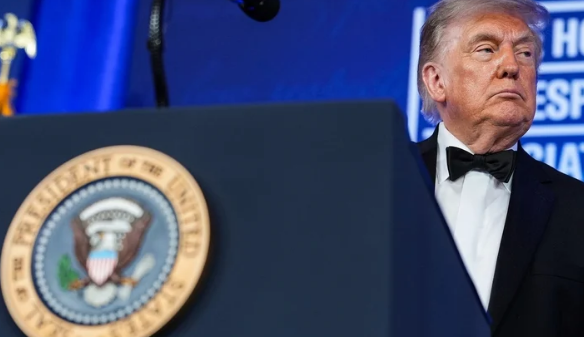
Former President Donald Trump, the Republican nominee for the upcoming 2024 presidential election, delivered a pointed critique of the government’s immigration processes during a campaign speech in Prairie Du Chien, Wisconsin, on Saturday, September 28. As border issues take center stage in the election, Trump targeted the U.S. Customs and Border Protection (CBP) mobile application, known as the CBP One App, which is designed to streamline various immigration services.

Trump expressed his disdain for the app, suggesting that its existence allows immigrants to navigate the immigration system too easily. “They have a phone app so that people can come into our country… these are smart immigrants, I guess, because most people don’t have any idea what the hell a phone app is,” he said to a crowd of about 5,500 people gathered at the Prairie Du Chien Area Arts Center.

His comments prompted a swift response from the campaign of Vice President and Democratic nominee Kamala Harris, which shared a video clip of Trump’s remarks on X (formerly Twitter). The post highlighted Trump’s suggestion that many people are unfamiliar with smartphone applications.

Social media users reacted with surprise, pointing out the absurdity of Trump’s assertion. Former tennis star Andy Roddick quipped, “I feel like most people know what a phone app is,” while others noted that Trump himself operates a social media platform, Truth Social, which includes an app component. One commenter asked, “How out of touch with reality do you have to be to believe most people don’t know what a phone app is?”

The Harris campaign’s strategy appears to involve posting clips from Trump’s speeches to leverage the internet’s viral nature, drawing attention to his remarks. Other clips shared included Trump commenting on a fly that landed on stage during his speech. “Oh, there’s a fly. Oh, I wonder where the fly came from,” Trump said, referencing a similar moment involving Vice President Mike Pence during the 2020 debate against Harris.

This is not the first time Trump has targeted the CBP One App, previously labeling it the “Kamala phone app for smuggling illegals” on his Truth Social account and pledging to eliminate it if elected. Interestingly, the app was launched on October 28, 2020, during Trump’s presidency, and the Biden Administration expanded its use in January 2023, particularly after the end of Title 42, which had allowed for expedited deportations.

Despite its intended function, immigration rights advocates have criticized the CBP One App for failing to meet the growing demand from migrants seeking asylum in the U.S. Trump’s focus on immigration comes on the heels of Harris’s recent visit to the U.S.-Mexico border, where she emphasized a balanced approach to border security and immigration reform.

“I reject the false choice that suggests we must choose either between securing our border and creating a system that is orderly, safe, and humane,” Harris stated. “We can and we must do both.” As the election approaches, immigration continues to be a contentious topic, shaping the strategies of both candidates.


Business

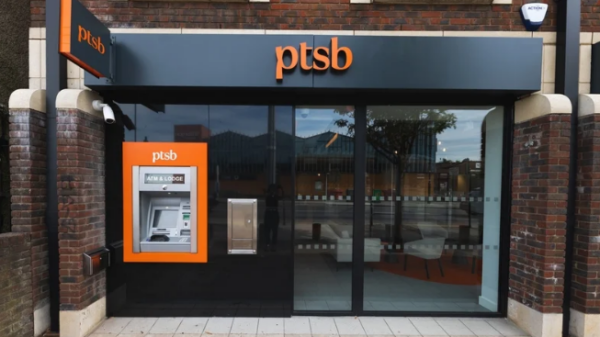
Fraudsters are increasingly using AI-generated images and videos to trick people into handing over sensitive personal and financial information, according to FraudSMART, the financial crime awareness initiative operated by the Banking and Payments Federation Ireland (BPFI). The organisation has reported a rise in online adverts promoting fake, State-backed investment schemes. These scams often use fabricated images of well-known politicians and business figures to make the offers appear legitimate and encourage users to click on registration links. Niamh Davenport, head of financial crime at BPFI, said scammers are deliberately exploiting recent media coverage of a planned State-backed savings and investment scheme to give their frauds a sense of credibility. “They often claim the scheme is open to everyone, but that places are limited and being ‘snapped up’ fast, in order to pressure people to act quickly,” she said. “They typically promise guaranteed returns or a guaranteed monthly income.” FraudSMART said that while anyone can be targeted, people in their early 50s are particularly vulnerable to investment scams. This age group is often focused on retirement planning, making them more receptive to financial offers that appear secure or high-yield. According to the organisation, most scams follow a similar pattern. Victims are first directed to click a registration link and complete a short online form providing their contact details. They are then contacted by someone posing as a financial adviser, who urges them to make an immediate “security deposit” to secure participation in the scheme. Once a payment is made, the money is quickly moved through multiple accounts, often overseas, making recovery extremely difficult. Davenport warned that scammers are becoming more sophisticated in their use of technology, particularly AI tools that allow them to create realistic but entirely fake promotional content. These materials are designed to mimic legitimate financial advertisements and build trust with potential victims. Recent figures from An Garda Síochána show investment fraud rose by 20% last year, with losses exceeding €20 million. The scale of individual scams varies widely, ranging from smaller crypto-related frauds involving a few hundred euro to large-scale investment schemes where victims lose tens of thousands. FraudSMART is urging the public to remain cautious when encountering online investment advertisements, especially those promising guaranteed returns or requiring urgent action. It also advises consumers to avoid sharing personal information with unverified sources and to be wary of pressure tactics designed to rush financial decisions. Authorities continue to warn that fraudsters are adapting quickly, using advanced digital tools to target victims across multiple platforms.

Trending

Business

Fraudsters are increasingly using AI-generated images and videos to trick people into handing over sensitive personal and financial information, according to FraudSMART, the financial crime awareness initiative operated by the Banking and Payments Federation Ireland (BPFI). The organisation has reported a rise in online adverts promoting fake, State-backed investment schemes. These scams often use fabricated images of well-known politicians and business figures to make the offers appear legitimate and encourage users to click on registration links. Niamh Davenport, head of financial crime at BPFI, said scammers are deliberately exploiting recent media coverage of a planned State-backed savings and investment scheme to give their frauds a sense of credibility. “They often claim the scheme is open to everyone, but that places are limited and being ‘snapped up’ fast, in order to pressure people to act quickly,” she said. “They typically promise guaranteed returns or a guaranteed monthly income.” FraudSMART said that while anyone can be targeted, people in their early 50s are particularly vulnerable to investment scams. This age group is often focused on retirement planning, making them more receptive to financial offers that appear secure or high-yield. According to the organisation, most scams follow a similar pattern. Victims are first directed to click a registration link and complete a short online form providing their contact details. They are then contacted by someone posing as a financial adviser, who urges them to make an immediate “security deposit” to secure participation in the scheme. Once a payment is made, the money is quickly moved through multiple accounts, often overseas, making recovery extremely difficult. Davenport warned that scammers are becoming more sophisticated in their use of technology, particularly AI tools that allow them to create realistic but entirely fake promotional content. These materials are designed to mimic legitimate financial advertisements and build trust with potential victims. Recent figures from An Garda Síochána show investment fraud rose by 20% last year, with losses exceeding €20 million. The scale of individual scams varies widely, ranging from smaller crypto-related frauds involving a few hundred euro to large-scale investment schemes where victims lose tens of thousands. FraudSMART is urging the public to remain cautious when encountering online investment advertisements, especially those promising guaranteed returns or requiring urgent action. It also advises consumers to avoid sharing personal information with unverified sources and to be wary of pressure tactics designed to rush financial decisions. Authorities continue to warn that fraudsters are adapting quickly, using advanced digital tools to target victims across multiple platforms.

You May Also Like

Politics

WASHINGTON — The Pentagon announced on Sunday that the United States will send a Terminal High Altitude Area Defense (THAAD) battery to Israel, alongside...

Health

NEW YORK — Teen smoking in the United States has reached an all-time low in 2024, with significant declines in overall youth tobacco use,...

Politics

WASHINGTON — As the countdown to the November 5 presidential election continues, former President Donald Trump is urging his supporters to aim for a...

Politics

In September, NASA announced that summer 2024 was the hottest on record. Just days later, the U.S. faced the dual impact of Hurricanes Helene...