

















Connect with us

Hi, what are you looking for?

Russia Scrambles to Bolster Defenses After Ukraine's Surprise Incursion in Kursk Region

Incidents

Russia Scrambles to Bolster Defenses After Ukraine’s Surprise Incursion in Kursk Region

Russia is rushing to reinforce its defenses more than a week after Ukraine launched a surprise cross-border attack on the southern Kursk region, catching Moscow off guard. The operation has forced the Kremlin to divert thousands of troops from occupied territories in Ukraine to counter the unexpected threat on home soil.

According to U.S. officials, Russian President Vladimir Putin has been compelled to deploy conscripts, backtracking on a previous promise not to use them on the front lines. Satellite imagery reveals a large trench dug near the town of Selektsionnyi, approximately 45 kilometers (28 miles) from the border. The Russian military is also reportedly hiring trench diggers, with online job postings offering weekly payments.

Experts say the Ukrainian operation, meticulously planned in secrecy, has stunned even Kyiv’s closest allies, including the United States, and shifted the dynamics of the war that has raged for more than two years. Ukraine’s ability to breach the Russian border highlights the country’s resilience and strategic acumen, despite facing months of setbacks in other areas of the conflict.

Natia Seskuria, an associate fellow at the UK’s Royal United Services Institute for Defense and Security Studies (RUSI), told CNN that Ukraine’s success in penetrating Russian territory demonstrates the country’s commitment to its defense, signaling that there is no “war fatigue” in Kyiv. The operation was characterized by superb operational security, with no leaks, allowing Ukrainian forces to build up their strength under the cover of dense summer foliage along rural roads in the Sumy region of northeastern Ukraine.

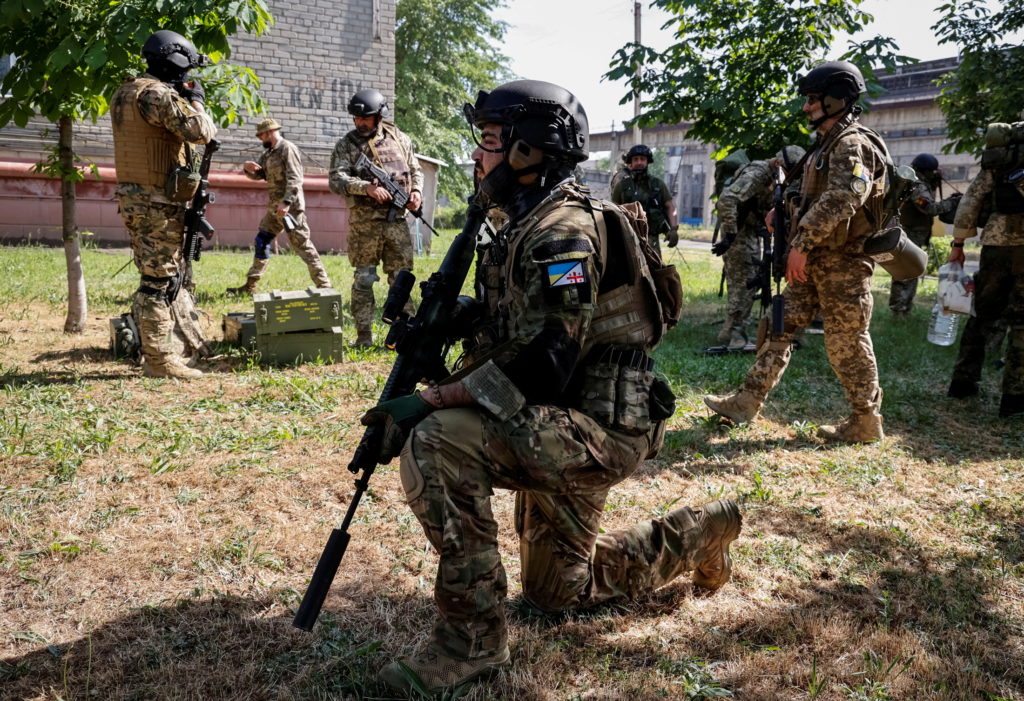
Experienced units, such as the 82nd Air Assault Brigade, were diverted from other regions to participate in the mission. Detailed intelligence on Russian border defenses, combined with knowledge of the local geography, enabled Ukrainian forces to launch their attack with minimal resistance.

The first Ukrainian units stormed into the Kursk region on August 6, exploiting weak points in Russian defenses. Social media videos, geolocated by CNN, show dozens of Russian soldiers surrendering at a heavily damaged border crossing near Sudzha, a key transit point for gas supplies from Russia to Europe.

Ukrainian President Volodymyr Zelensky confirmed on Thursday that Ukrainian forces had taken control of Sudzha. Satellite images show a gas terminal at a nearby border point in ruins, indicating the extent of the Ukrainian advance.

Throughout the operation, Ukrainian forces used fast, resilient Western-made armored vehicles and small mobile groups of special forces to fan out across multiple locations. Their success was supported by air defenses, artillery, and electronic warfare measures that disrupted Russian military communications.

As Ukrainian soldiers posted videos from captured villages, Russian forces struggled to assess the strength of the assault. The surprise attack has left Russia scrambling to reinforce its positions and reassess its strategies in the ongoing conflict.


Business

Fraudsters are increasingly using AI-generated images and videos to trick people into handing over sensitive personal and financial information, according to FraudSMART, the financial crime awareness initiative operated by the Banking and Payments Federation Ireland (BPFI). The organisation has reported a rise in online adverts promoting fake, State-backed investment schemes. These scams often use fabricated images of well-known politicians and business figures to make the offers appear legitimate and encourage users to click on registration links. Niamh Davenport, head of financial crime at BPFI, said scammers are deliberately exploiting recent media coverage of a planned State-backed savings and investment scheme to give their frauds a sense of credibility. “They often claim the scheme is open to everyone, but that places are limited and being ‘snapped up’ fast, in order to pressure people to act quickly,” she said. “They typically promise guaranteed returns or a guaranteed monthly income.” FraudSMART said that while anyone can be targeted, people in their early 50s are particularly vulnerable to investment scams. This age group is often focused on retirement planning, making them more receptive to financial offers that appear secure or high-yield. According to the organisation, most scams follow a similar pattern. Victims are first directed to click a registration link and complete a short online form providing their contact details. They are then contacted by someone posing as a financial adviser, who urges them to make an immediate “security deposit” to secure participation in the scheme. Once a payment is made, the money is quickly moved through multiple accounts, often overseas, making recovery extremely difficult. Davenport warned that scammers are becoming more sophisticated in their use of technology, particularly AI tools that allow them to create realistic but entirely fake promotional content. These materials are designed to mimic legitimate financial advertisements and build trust with potential victims. Recent figures from An Garda Síochána show investment fraud rose by 20% last year, with losses exceeding €20 million. The scale of individual scams varies widely, ranging from smaller crypto-related frauds involving a few hundred euro to large-scale investment schemes where victims lose tens of thousands. FraudSMART is urging the public to remain cautious when encountering online investment advertisements, especially those promising guaranteed returns or requiring urgent action. It also advises consumers to avoid sharing personal information with unverified sources and to be wary of pressure tactics designed to rush financial decisions. Authorities continue to warn that fraudsters are adapting quickly, using advanced digital tools to target victims across multiple platforms.

Trending

Business

Fraudsters are increasingly using AI-generated images and videos to trick people into handing over sensitive personal and financial information, according to FraudSMART, the financial crime awareness initiative operated by the Banking and Payments Federation Ireland (BPFI). The organisation has reported a rise in online adverts promoting fake, State-backed investment schemes. These scams often use fabricated images of well-known politicians and business figures to make the offers appear legitimate and encourage users to click on registration links. Niamh Davenport, head of financial crime at BPFI, said scammers are deliberately exploiting recent media coverage of a planned State-backed savings and investment scheme to give their frauds a sense of credibility. “They often claim the scheme is open to everyone, but that places are limited and being ‘snapped up’ fast, in order to pressure people to act quickly,” she said. “They typically promise guaranteed returns or a guaranteed monthly income.” FraudSMART said that while anyone can be targeted, people in their early 50s are particularly vulnerable to investment scams. This age group is often focused on retirement planning, making them more receptive to financial offers that appear secure or high-yield. According to the organisation, most scams follow a similar pattern. Victims are first directed to click a registration link and complete a short online form providing their contact details. They are then contacted by someone posing as a financial adviser, who urges them to make an immediate “security deposit” to secure participation in the scheme. Once a payment is made, the money is quickly moved through multiple accounts, often overseas, making recovery extremely difficult. Davenport warned that scammers are becoming more sophisticated in their use of technology, particularly AI tools that allow them to create realistic but entirely fake promotional content. These materials are designed to mimic legitimate financial advertisements and build trust with potential victims. Recent figures from An Garda Síochána show investment fraud rose by 20% last year, with losses exceeding €20 million. The scale of individual scams varies widely, ranging from smaller crypto-related frauds involving a few hundred euro to large-scale investment schemes where victims lose tens of thousands. FraudSMART is urging the public to remain cautious when encountering online investment advertisements, especially those promising guaranteed returns or requiring urgent action. It also advises consumers to avoid sharing personal information with unverified sources and to be wary of pressure tactics designed to rush financial decisions. Authorities continue to warn that fraudsters are adapting quickly, using advanced digital tools to target victims across multiple platforms.

You May Also Like

Politics

WASHINGTON — The Pentagon announced on Sunday that the United States will send a Terminal High Altitude Area Defense (THAAD) battery to Israel, alongside...

Health

NEW YORK — Teen smoking in the United States has reached an all-time low in 2024, with significant declines in overall youth tobacco use,...

Politics

WASHINGTON — As the countdown to the November 5 presidential election continues, former President Donald Trump is urging his supporters to aim for a...

Politics

In September, NASA announced that summer 2024 was the hottest on record. Just days later, the U.S. faced the dual impact of Hurricanes Helene...