














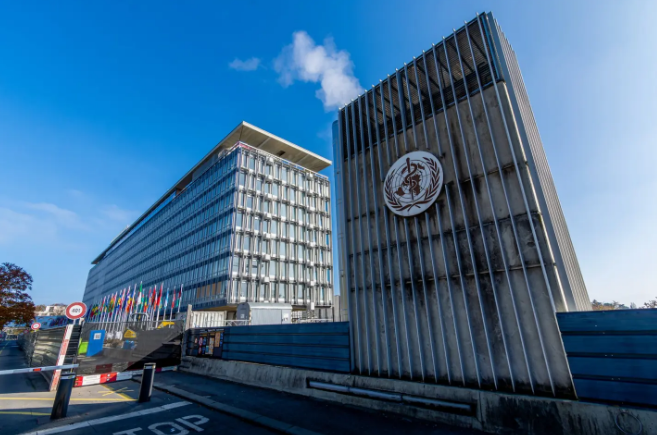
The United States officially left the World Health Organization (WHO) on January 22, 2026, ending nearly eight decades of membership in the United Nations agency. The U.S. has historically been the WHO’s largest financial contributor, providing both assessed and voluntary funding. Experts warn that its departure could disrupt global and domestic health programs.
“This is one of the most penny-wise and billion-dollar-foolish moves,” said Michael Osterholm, director of the Center for Infectious Disease Research and Policy at the University of Minnesota.
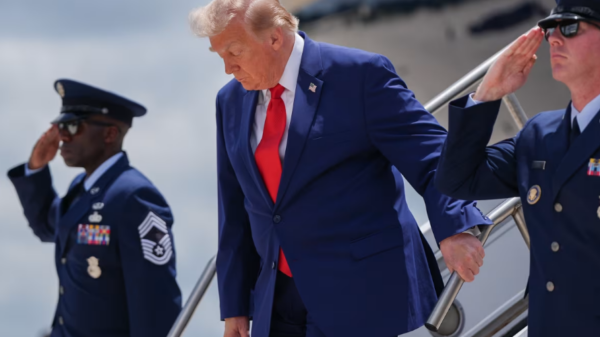
Although the WHO’s charter does not formally allow withdrawals, U.S. law provided a mechanism: Congress required a year’s notice and payment of all outstanding dues. President Donald Trump submitted notice in January 2025, but the U.S. has yet to clear the final payments, including those owed under the Biden administration. WHO officials plan to discuss the implications at upcoming meetings of its executive board in February and the General Assembly in May.
WHO Director-General Tedros Ghebreyesus has signaled that the organization remains open to U.S. re-entry. “Withdrawal from the WHO is a lose for the United States, and also a lose for the rest of the world,” he said at a briefing. “It also makes the U.S. unsafe and the rest of the world unsafe. It’s not really the right decision.”
Although individual U.S. scientists can continue collaborating with WHO committees, experts say federal-level participation was essential for coordinated global health efforts. Dr. Judd Walson, chair of international health at Johns Hopkins Bloomberg School of Public Health, noted that the U.S. will now have less influence in decisions such as selecting strains for the annual influenza vaccine. “We will still have some engagement,” he said, “but we have lost the coordination of all these activities.”
The withdrawal could also limit U.S. access to key data for monitoring infectious diseases, such as emerging flu strains and potential COVID variants. “Early detection is a priceless gift,” Osterholm said. “Without it, we risk facing much larger outbreaks before we know how to respond.”
Beyond health, experts warn the move has geopolitical consequences. With the U.S. stepping back, other countries—including India, Saudi Arabia, Russia, and China—may exert greater influence on WHO priorities and funding decisions. Reduced U.S. contributions have forced the WHO to revise its budget, leaving 25 percent of funding to be raised. This may limit support for low- and middle-income countries, affecting public health, economic stability, and political order worldwide.
“Countries experience worse health, economic conditions worsen, political instability follows, and the consequences eventually affect U.S. health,” Walson said. “When we are no longer supporting them to help them grow, we are constraining our own markets.”
The U.S. exit marks a historic shift in global health cooperation, with far-reaching implications for disease monitoring, vaccine development, and international collaboration.