














Connect with us

Hi, what are you looking for?

Health

Trump’s Foreign Aid Freeze Sparks Global Health Crisis

On his first day back in office, President Donald Trump imposed a sweeping 90-day freeze on nearly all U.S. foreign aid, with only a few exceptions for military assistance to Egypt and Israel and emergency food aid. The move, described as a “stop-work order,” had immediate and devastating consequences for global health programs.

Immediate Impact on Critical Health Services

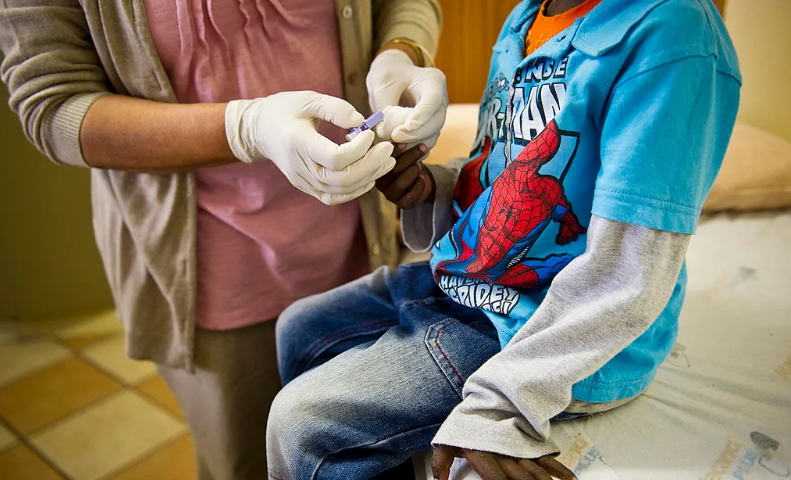
The sudden funding halt forced HIV clinics worldwide, supported by the U.S. President’s Emergency Plan for AIDS Relief (PEPFAR), to cancel appointments and turn away patients. PEPFAR, a highly successful initiative launched by President George W. Bush, has saved over 25 million lives since its inception. The freeze also led to mass layoffs in the President’s Malaria Initiative, the world’s largest funder of malaria control programs.

In Gaza, Sudan, and Syria, humanitarian programs providing clean water, cholera treatment, and oxygen supplies were abruptly shut down. Patients at U.S.-funded hospitals in low-income countries were sent home without treatment, including 60 patients from a refugee camp hospital on the Thai-Myanmar border.

One patient with tuberculosis, who was discharged with only a week’s supply of medicine, told The New York Times:
“It feels like one easy decision by the U.S. president is quietly killing so many lives.”

Confusion Over Emergency HIV Waiver

As reports emerged of HIV patients being denied life-saving antiretroviral drugs, Secretary of State Marco Rubio announced an emergency waiver to allow some HIV treatment funding to continue. However, health workers on the ground reported that the waiver’s vague wording led to continued service disruptions, as many clinics remained uncertain about whether they could resume operations.

On February 1, 2025, the State Department clarified that the waiver covers HIV treatment and prevention for mother-to-child transmission but not other essential prevention services. Experts warn that these narrow and temporary waivers fail to address the widespread damage caused by the freeze.

Lessons from Past Aid Withdrawals

Health experts caution that sudden cuts to global health funding have historically triggered disease resurgences. When international donors abruptly withdrew HIV prevention funding from Romania in 2010, the country saw HIV rates among people who inject drugs skyrocket from 1.1% to 6.9% within three years.

Similarly, a 2012 study on malaria found that nearly 91% of resurgence events across 61 countries were caused by disruptions in funding. Experts warn that Trump’s decision could lead to a deadly backslide in global efforts to combat HIV, malaria, tuberculosis, and other infectious diseases.

Global Outcry and Calls for Reversal

The aid freeze has sparked international criticism, with humanitarian organizations warning of catastrophic consequences. In Uganda, health workers estimate that about 40 newborns per day contracted HIV when U.S. funding for antiretroviral drugs was halted. Experts also fear that interrupted HIV treatment could accelerate the rise of drug-resistant strains, making future treatment more expensive and less effective.

Despite growing pressure, the Trump administration has not indicated whether it will reverse or modify the aid freeze. Health experts stress that careful, long-term planning—not sudden funding cuts—is the only way to transition low-income countries away from foreign aid without putting millions of lives at risk.

Business

Fraudsters are increasingly using AI-generated images and videos to trick people into handing over sensitive personal and financial information, according to FraudSMART, the financial crime awareness initiative operated by the Banking and Payments Federation Ireland (BPFI). The organisation has reported a rise in online adverts promoting fake, State-backed investment schemes. These scams often use fabricated images of well-known politicians and business figures to make the offers appear legitimate and encourage users to click on registration links. Niamh Davenport, head of financial crime at BPFI, said scammers are deliberately exploiting recent media coverage of a planned State-backed savings and investment scheme to give their frauds a sense of credibility. “They often claim the scheme is open to everyone, but that places are limited and being ‘snapped up’ fast, in order to pressure people to act quickly,” she said. “They typically promise guaranteed returns or a guaranteed monthly income.” FraudSMART said that while anyone can be targeted, people in their early 50s are particularly vulnerable to investment scams. This age group is often focused on retirement planning, making them more receptive to financial offers that appear secure or high-yield. According to the organisation, most scams follow a similar pattern. Victims are first directed to click a registration link and complete a short online form providing their contact details. They are then contacted by someone posing as a financial adviser, who urges them to make an immediate “security deposit” to secure participation in the scheme. Once a payment is made, the money is quickly moved through multiple accounts, often overseas, making recovery extremely difficult. Davenport warned that scammers are becoming more sophisticated in their use of technology, particularly AI tools that allow them to create realistic but entirely fake promotional content. These materials are designed to mimic legitimate financial advertisements and build trust with potential victims. Recent figures from An Garda Síochána show investment fraud rose by 20% last year, with losses exceeding €20 million. The scale of individual scams varies widely, ranging from smaller crypto-related frauds involving a few hundred euro to large-scale investment schemes where victims lose tens of thousands. FraudSMART is urging the public to remain cautious when encountering online investment advertisements, especially those promising guaranteed returns or requiring urgent action. It also advises consumers to avoid sharing personal information with unverified sources and to be wary of pressure tactics designed to rush financial decisions. Authorities continue to warn that fraudsters are adapting quickly, using advanced digital tools to target victims across multiple platforms.

Trending

Business

Fraudsters are increasingly using AI-generated images and videos to trick people into handing over sensitive personal and financial information, according to FraudSMART, the financial crime awareness initiative operated by the Banking and Payments Federation Ireland (BPFI). The organisation has reported a rise in online adverts promoting fake, State-backed investment schemes. These scams often use fabricated images of well-known politicians and business figures to make the offers appear legitimate and encourage users to click on registration links. Niamh Davenport, head of financial crime at BPFI, said scammers are deliberately exploiting recent media coverage of a planned State-backed savings and investment scheme to give their frauds a sense of credibility. “They often claim the scheme is open to everyone, but that places are limited and being ‘snapped up’ fast, in order to pressure people to act quickly,” she said. “They typically promise guaranteed returns or a guaranteed monthly income.” FraudSMART said that while anyone can be targeted, people in their early 50s are particularly vulnerable to investment scams. This age group is often focused on retirement planning, making them more receptive to financial offers that appear secure or high-yield. According to the organisation, most scams follow a similar pattern. Victims are first directed to click a registration link and complete a short online form providing their contact details. They are then contacted by someone posing as a financial adviser, who urges them to make an immediate “security deposit” to secure participation in the scheme. Once a payment is made, the money is quickly moved through multiple accounts, often overseas, making recovery extremely difficult. Davenport warned that scammers are becoming more sophisticated in their use of technology, particularly AI tools that allow them to create realistic but entirely fake promotional content. These materials are designed to mimic legitimate financial advertisements and build trust with potential victims. Recent figures from An Garda Síochána show investment fraud rose by 20% last year, with losses exceeding €20 million. The scale of individual scams varies widely, ranging from smaller crypto-related frauds involving a few hundred euro to large-scale investment schemes where victims lose tens of thousands. FraudSMART is urging the public to remain cautious when encountering online investment advertisements, especially those promising guaranteed returns or requiring urgent action. It also advises consumers to avoid sharing personal information with unverified sources and to be wary of pressure tactics designed to rush financial decisions. Authorities continue to warn that fraudsters are adapting quickly, using advanced digital tools to target victims across multiple platforms.

You May Also Like

Politics

WASHINGTON — The Pentagon announced on Sunday that the United States will send a Terminal High Altitude Area Defense (THAAD) battery to Israel, alongside...

Health

NEW YORK — Teen smoking in the United States has reached an all-time low in 2024, with significant declines in overall youth tobacco use,...

Politics

WASHINGTON — As the countdown to the November 5 presidential election continues, former President Donald Trump is urging his supporters to aim for a...

Politics

In September, NASA announced that summer 2024 was the hottest on record. Just days later, the U.S. faced the dual impact of Hurricanes Helene...