













Connect with us

Hi, what are you looking for?

Health

Study Finds Second-Trimester Abortions Doubled in States with Post-Roe Bans, Delays and Costs Soared

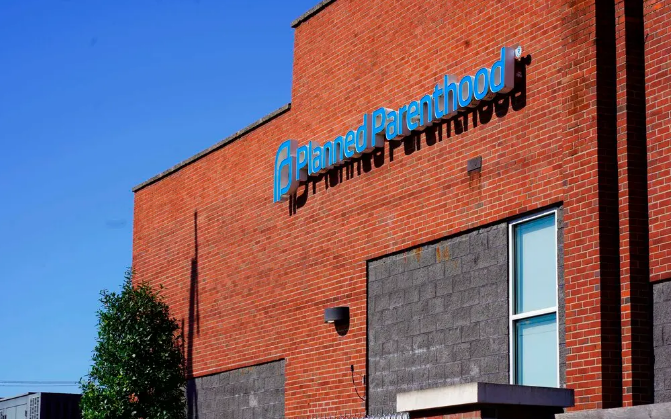
New research has found that the number of abortions performed in the second trimester more than doubled in U.S. states that enacted near-total abortion bans after the Supreme Court overturned Roe v. Wade. The study, published Thursday in the American Journal of Public Health, highlights the significant delays and logistical burdens now facing patients seeking reproductive healthcare in restrictive states.

According to the study, the proportion of abortions performed at or after 13 weeks of pregnancy rose from 8% before a ban to 17% afterward. The average gestational age at which abortions were obtained increased from 7.7 weeks to 8.8 weeks.

“Delays snowball when access is restricted,” said lead author Diana Greene Foster, a professor at the University of California, San Francisco. “People are forced to travel farther, spend more money, miss work—and stay pregnant longer than they want to.”

Researchers surveyed 855 people across 14 states that had implemented near-total abortion bans, including Texas, Alabama, Indiana, and Missouri. Among them, 659 respondents sought abortions after a ban had taken effect. The data showed travel time to obtain an abortion jumped from an average of 2.8 hours to 11.3 hours, while travel costs more than doubled from $179 to $372. The proportion of patients forced to spend the night due to long-distance travel rose from 5% to 58%.

Despite these hurdles, 81% of respondents said they were eventually able to obtain an abortion, most by traveling to another state. A small percentage—between 3% and 11%—carried their pregnancies to term.

“These findings show that even with mounting obstacles, people will do what it takes to get the care they need,” Foster said. “But some still fall through the cracks.”

The study also comes amid funding controversy. Foster revealed that a five-year research grant awarded by the National Institutes of Health (NIH) to continue this work was abruptly canceled. The stated reason, according to the NIH, was that the research no longer aligned with agency priorities—a move Foster described as “deeply frustrating” and politically motivated.

President Donald Trump’s administration has taken a hard line against abortion and diversity-focused research. An executive order signed in January directed federal agencies to eliminate funding for programs and studies that do not adhere to a binary view of sex and gender. Weeks later, NIH announced sweeping funding cuts.

Despite the setback, Foster said she is committed to continuing the work with limited private funding. “We need real data to inform policy—not ideology,” she said. “I won’t stop doing this research because the stakes are too high.”


Business

Fraudsters are increasingly using AI-generated images and videos to trick people into handing over sensitive personal and financial information, according to FraudSMART, the financial crime awareness initiative operated by the Banking and Payments Federation Ireland (BPFI). The organisation has reported a rise in online adverts promoting fake, State-backed investment schemes. These scams often use fabricated images of well-known politicians and business figures to make the offers appear legitimate and encourage users to click on registration links. Niamh Davenport, head of financial crime at BPFI, said scammers are deliberately exploiting recent media coverage of a planned State-backed savings and investment scheme to give their frauds a sense of credibility. “They often claim the scheme is open to everyone, but that places are limited and being ‘snapped up’ fast, in order to pressure people to act quickly,” she said. “They typically promise guaranteed returns or a guaranteed monthly income.” FraudSMART said that while anyone can be targeted, people in their early 50s are particularly vulnerable to investment scams. This age group is often focused on retirement planning, making them more receptive to financial offers that appear secure or high-yield. According to the organisation, most scams follow a similar pattern. Victims are first directed to click a registration link and complete a short online form providing their contact details. They are then contacted by someone posing as a financial adviser, who urges them to make an immediate “security deposit” to secure participation in the scheme. Once a payment is made, the money is quickly moved through multiple accounts, often overseas, making recovery extremely difficult. Davenport warned that scammers are becoming more sophisticated in their use of technology, particularly AI tools that allow them to create realistic but entirely fake promotional content. These materials are designed to mimic legitimate financial advertisements and build trust with potential victims. Recent figures from An Garda Síochána show investment fraud rose by 20% last year, with losses exceeding €20 million. The scale of individual scams varies widely, ranging from smaller crypto-related frauds involving a few hundred euro to large-scale investment schemes where victims lose tens of thousands. FraudSMART is urging the public to remain cautious when encountering online investment advertisements, especially those promising guaranteed returns or requiring urgent action. It also advises consumers to avoid sharing personal information with unverified sources and to be wary of pressure tactics designed to rush financial decisions. Authorities continue to warn that fraudsters are adapting quickly, using advanced digital tools to target victims across multiple platforms.

Trending

Business

Fraudsters are increasingly using AI-generated images and videos to trick people into handing over sensitive personal and financial information, according to FraudSMART, the financial crime awareness initiative operated by the Banking and Payments Federation Ireland (BPFI). The organisation has reported a rise in online adverts promoting fake, State-backed investment schemes. These scams often use fabricated images of well-known politicians and business figures to make the offers appear legitimate and encourage users to click on registration links. Niamh Davenport, head of financial crime at BPFI, said scammers are deliberately exploiting recent media coverage of a planned State-backed savings and investment scheme to give their frauds a sense of credibility. “They often claim the scheme is open to everyone, but that places are limited and being ‘snapped up’ fast, in order to pressure people to act quickly,” she said. “They typically promise guaranteed returns or a guaranteed monthly income.” FraudSMART said that while anyone can be targeted, people in their early 50s are particularly vulnerable to investment scams. This age group is often focused on retirement planning, making them more receptive to financial offers that appear secure or high-yield. According to the organisation, most scams follow a similar pattern. Victims are first directed to click a registration link and complete a short online form providing their contact details. They are then contacted by someone posing as a financial adviser, who urges them to make an immediate “security deposit” to secure participation in the scheme. Once a payment is made, the money is quickly moved through multiple accounts, often overseas, making recovery extremely difficult. Davenport warned that scammers are becoming more sophisticated in their use of technology, particularly AI tools that allow them to create realistic but entirely fake promotional content. These materials are designed to mimic legitimate financial advertisements and build trust with potential victims. Recent figures from An Garda Síochána show investment fraud rose by 20% last year, with losses exceeding €20 million. The scale of individual scams varies widely, ranging from smaller crypto-related frauds involving a few hundred euro to large-scale investment schemes where victims lose tens of thousands. FraudSMART is urging the public to remain cautious when encountering online investment advertisements, especially those promising guaranteed returns or requiring urgent action. It also advises consumers to avoid sharing personal information with unverified sources and to be wary of pressure tactics designed to rush financial decisions. Authorities continue to warn that fraudsters are adapting quickly, using advanced digital tools to target victims across multiple platforms.

You May Also Like

Politics

WASHINGTON — The Pentagon announced on Sunday that the United States will send a Terminal High Altitude Area Defense (THAAD) battery to Israel, alongside...

Health

NEW YORK — Teen smoking in the United States has reached an all-time low in 2024, with significant declines in overall youth tobacco use,...

Politics

WASHINGTON — As the countdown to the November 5 presidential election continues, former President Donald Trump is urging his supporters to aim for a...

Politics

In September, NASA announced that summer 2024 was the hottest on record. Just days later, the U.S. faced the dual impact of Hurricanes Helene...